Follow 


Engineered for extreme wear-resistance, maximum dielectric breakdown strength, and structural integrity across power electronics, nano-slurry dispersion, and precision robotics.
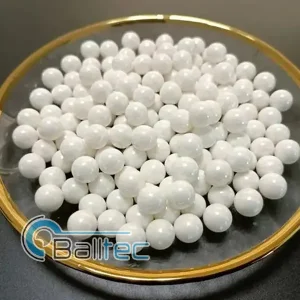
Mini Ceramic Bearing Ball for Micro-Bearings
Product Details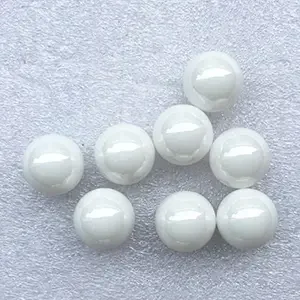
Zirconium Oxide Grinding Bead for Precision Milling
Product Details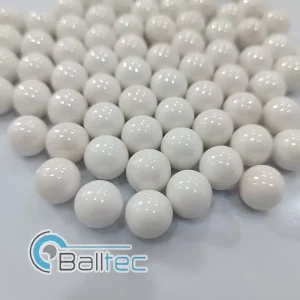
High Strength Zirconium Silicate Ceramic Balls
Product Details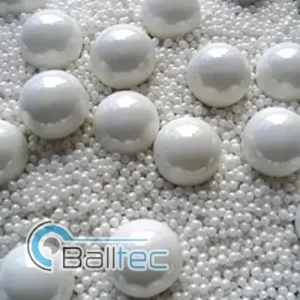
ZrO2 Precision Ball Milling Refinement Beads
Product Details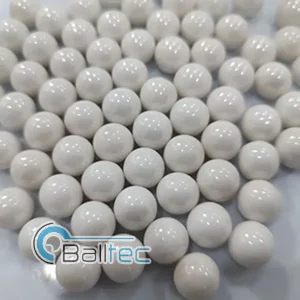
Wear-Resistant Zirconia Dispersive Grinding Media
Product Details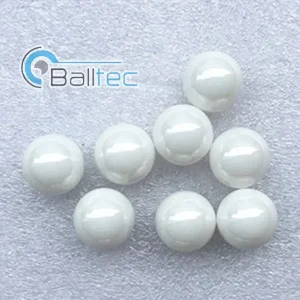
Yttrium Stabilized Zirconia Polishing Beads
Product Details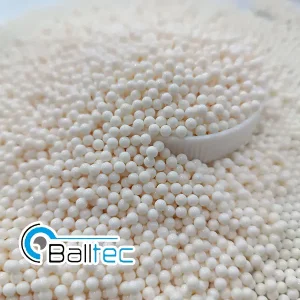
Corrosion Resistant High-Purity Alumina Spheres
Product Details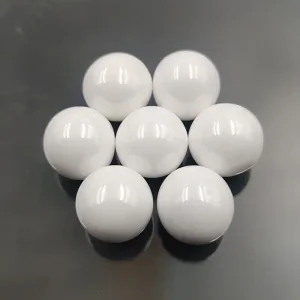
Anti-Corrosion Ceramic Precision Bearing Balls
Product DetailsFounded by materials scientists and senior process engineers formerly affiliated with world-tier Japanese and American advanced ceramic pioneers, integrating continuous hydrothermal synthesis, cold isostatic pressing (CIP), and precision sub-micron lapping.
Operates under verified ISO 9001, ISO 14001, and ISO 45001 (OHSAS 18001) management protocols with automated XRF chemical assaying, helium pycnometry, and ICP-MS lot validation for absolute micro-structural purity and traceability.
Strategic logistics nodes in Pingxiang Ceramic Industrial Park connected directly to global sea-rail conduits, offering custom vacuum moisture-barrier packaging, batch analysis certificates (CoA), and localized RoHS/REACH compliance paperwork.
Passive electrical components—such as multilayer ceramic capacitors (MLCC), thick/thin-film power resistors, high-Q inductors, and dielectric resonators—rely wholly on atomic-level ceramic refinement to achieve peak volumetric efficiency and breakdown reliability.
Modern MLCC manufacturing demands sub-100nm dielectric formulations like Barium Titanate (BaTiO3) and rare-earth dopants. Baitian’s high-density YSZ (Yttria-Stabilized Zirconia) beads (density 6.0 g/cm³) deliver intense kinetic energy without cross-metallic contamination, ensuring uniform grain distribution and preventing micro-pinhole dielectric punch-through.
For high-frequency 5G mmWave and satellite transmission architectures, high-purity microcrystalline alumina (99.99% Al2O3) serves as the core inert substrate. Offering an extremely low dielectric dissipation factor (tan δ < 10⁻⁴) and high thermal conductance, these components safeguard signal precision in compact multi-layer arrays.
Metal oxide varistors (MOVs) and ceramic-core wirewound resistors operate under severe thermal transients. Baitian’s sub-micron engineered zirconia powders and inert alumina structural cores ensure extreme structural thermal shock resistance and zero dimensional creep under rapid thermal cycling.
The automotive electrification (xEV), AI hyperscale infrastructure, and renewable grid sectors have intensified demand for passive electronic stability. Global OEMs face soaring yield challenges that trace directly back to precursor milling quality and substrate consistency.
The global transition to 800V silicon carbide (SiC) inverters demands passive decoupling capacitors and common-mode chokes that tolerate ambient temperatures exceeding 150°C. Standard alumina fails under thermal shock; microcrystalline ceramic media ensure defect-free, zero-porosity capacitor layer sintering.
Hyperscale computing clusters require point-of-load (PoL) regulators with near-zero ESR (Equivalent Series Resistance). Using micro-engineered zirconia media to mill ferrite and titanate pastes to d50 < 80nm yields superior core density and eliminates high-frequency core saturation losses.
Global electronic manufacturing services (EMS) are actively replacing inconsistent uncalcined beads with tightly spherodized YSZ beads to reduce production down-time, mill barrel maintenance costs, and volatile scrap rates during slurry preparation.
From North American wafer fabrication cleanrooms to European automotive assembly plants and Southeast Asian PCB clusters, our components meet rigorous regulatory frameworks and field requirements.
Every batch of Baitian alumina, zirconia media, and bearing balls is independently certified free from hazardous substances, lead (Pb), cadmium (Cd), and PFAS compounds, safeguarding seamless entry into European and American end-use electronics.
We provide full raw material origin documentation, particle size distribution curves (PSD via Malvern Mastersizer), and sintering temperature logging to help Tier-1 passive device manufacturers maintain flawless AEC-Q200 audit compliance.
Our application engineers provide direct consultation on bead mill filling ratios (typically 70% to 85%), tip speeds, and slurry viscosity matching to prevent bead fracture, eliminate unground tail fractions, and optimize electricity consumption.
As microelectronics push the boundary toward quantum computing interfaces, sub-2nm nodes, and wide bandgap (WBG) power switches, Baitian is pioneering cutting-edge ceramic precursor technologies.
Commercializing sub-30 micron high-density YSZ spheres for extreme sub-50nm MLCC dielectric pastes, boosting maximum capacitance per unit volume by 35%.
Synthesizing zirconia-toughened alumina (ZTA) composite formulations optimized for RF packaging, balancing fracture toughness (KIC > 8 MPa·m½) with ultra-low microwave loss.
Transitioning 100,000m² manufacturing lines to closed-loop electric tunnel kilns powered entirely by clean energy, driving product embedded carbon footprint toward net zero.
Developing specialized non-magnetic structural ceramics and dielectric insulators tailored for helium-temperature superconducting circuits and quantum computing cryostats.
Clear answers to crucial engineering, specification, and logistics questions commonly raised by quality control teams and procurement executives.
Grinding efficiency in horizontal bead mills correlates directly to the kinetic impact energy (E = ½mv²). Yttria-stabilized zirconia beads (density ~6.0 g/cm³) provide almost double the impact energy of conventional alumina media (~3.6 g/cm³). This breaks hard agglomerates into primary sub-micron particles much faster, prevents excessive mill dwell time, and avoids micro-contamination that can degrade insulation resistance.
Trace impurities such as Fe₂O₃, SiO₂, and alkali metal ions (Na⁺, K⁺) act as charge carriers and crystal lattice defect points. In high-frequency 5G/6G applications, these defects trigger dielectric absorption losses, causing elevated loss tangents (tan δ) and parasitic heating. Baitian’s 99.99% high-purity alumina guarantees near-zero lattice defects, ensuring high Q factors and minimal insertion loss.
Silicon nitride possesses a lower density (3.2 g/cm³ vs 6.0 g/cm³), exceptionally high electrical resistivity (> 10¹⁴ Ω·cm), and high thermal shock resistance. When deployed in semiconductor handling robots and high-speed spindle motors, Si3N4 ceramic balls eliminate electrical arcing erosion, reduce centrifugal stresses on bearing races, and operate cleanly without grease breakdown.
All precision ceramic beads and spherical components are packed in heavy-duty polyethylene inner bags, vacuum sealed with moisture desiccants, and housed in high-density polyethylene (HDPE) drums or reinforced UN-rated wooden crates. Pallets are heat-treated (ISPM 15 compliant) and stretch-wrapped with edge boards to prevent transit damage.
Explore our full line of industrial media, catalyst supports, high-speed grinding spheres, and high-purity microcrystalline products ready for worldwide export.
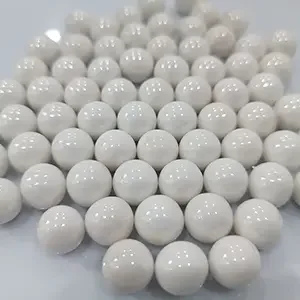
Zirconia Ball for High-Speed Fine Grinding
Product Details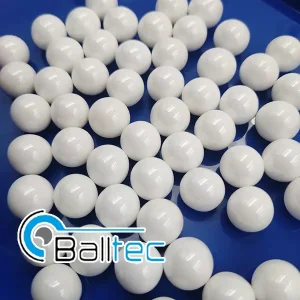
High Strength Zirconium Silicate Beads (0.05–50mm)
Product Details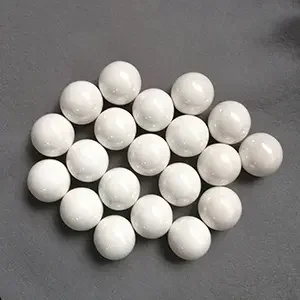
Ultra-Fine Grinding High-Purity Alumina Balls
Product Details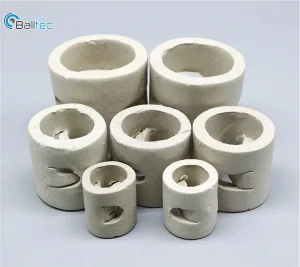
Ceramic Pall Rings Tower Distillation Packing
Product Details
Yttria-Stabilized Media for Battery Processing
Product Details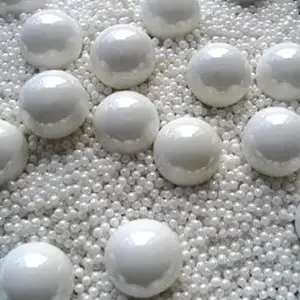
High Density High-Purity Alumina Milling Balls
Product Details
Zirconia Bead for Powder Processing Systems
Product Details
ZrO2 High Efficiency Fine Grinding Media
Product Details