Follow 


Factory-direct high-density zirconia beads, alumina balls, and industrial porous ceramic solutions
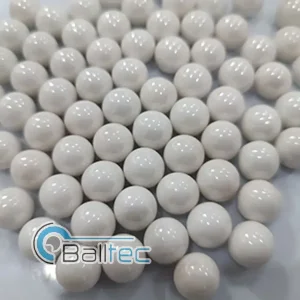
A rigorous material analysis of stress-induced phase transformation, grain boundary stabilization, and extreme wear resistance in ultra-fine milling media.
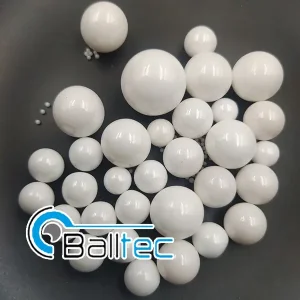
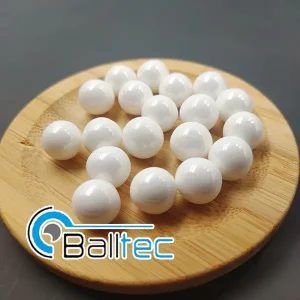
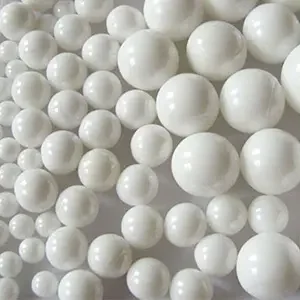
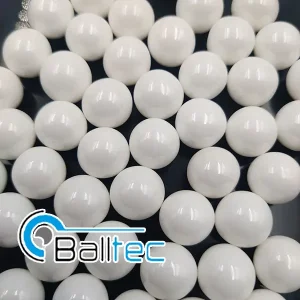
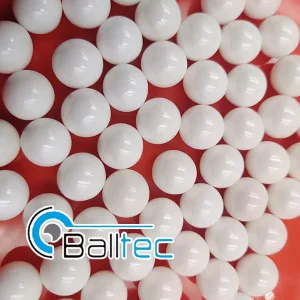
In modern industrial ultra-fine grinding, the efficiency of energy transfer and the purity of ground slurries depend fundamentally on the physical properties of the milling media. Yttria-Stabilized Zirconia (YSZ) balls—specifically 3 mol% Yttria Tetragonal Zirconia Polycrystal (3Y-TZP)—represent the pinnacle of wear-resistant ceramic engineering. Formulated with approximately 95% pure Zirconium Oxide ($\text{ZrO}_2$) stabilized by 5% Yttria ($\text{Y}_2\text{O}_3$), these media deliver an exceptional combination of high density ($6.05 \text{ g/cm}^3$), extreme fracture toughness ($>8.0 \text{ MPa}\cdot\text{m}^{1/2}$), and chemical inertness.
Pure zirconia undergoes a destructive phase transition upon cooling: from cubic ($c$) to tetragonal ($t$) at $2370^\circ\text{C}$, and from tetragonal ($t$) to monoclinic ($m$) at $1170^\circ\text{C}$. The $t \rightarrow m$ transition involves a $3\% \text{ to } 5\%$ volume expansion, generating severe micro-cracking that renders pure un-stabilized ceramic unusable. By introducing Yttria ($\text{Y}_2\text{O}_3$) into the crystal lattice, the metastable tetragonal phase is frozen at ambient room temperatures.
When a propagating micro-crack generated during high-energy agitation impacts a 3Y-TZP bead, the local stress field triggers the metastable tetragonal grains adjacent to the crack tip to transform into the monoclinic phase. This stress-induced phase transformation ($t \rightarrow m$) causes localized volumetric expansion, exerting compressive stress directly onto the crack tip. This phenomenon effectively "clamps" the crack shut, arresting further propagation and giving Y-TZP balls a fracture toughness twice that of conventional alumina media.
Kinetic energy delivered in high-speed agitator bead mills is expressed as $E_k = \frac{1}{2} m v^2$. Due to the high density of YYSZ ($6.0 \text{ g/cm}^3$ vs. $3.6 \text{ g/cm}^3$ for Alumina), Y-TZP beads impart up to 67% higher kinetic impact per collision at identical agitator tip speeds. This drastically reduces milling cycles while achieving sub-100 nanometer particle size distributions.
The wear resistance of yttria-stabilized zirconium oxide balls is heavily governed by grain size distribution. Advanced liquid-phase sintering processes yield ultra-fine grain structures averaging $<0.3 \text{ }\mu\text{m}$. Controlling grain boundary chemistry prevents Low-Temperature Degradation (LTD)—a phenomenon where moisture or hydrothermal environments induce premature $t \rightarrow m$ transformation on the bead surface leading to micro-spalling.
| Physical / Mechanical Property | 95% YYSZ (3Y-TZP) | Ce-Stabilized Zirconia | Zirconium Silicate ($\text{ZrSiO}_4$) | 99.5% Alumina ($\text{Al}_2\text{O}_3$) |
|---|---|---|---|---|
| Specific Density ($\text{g/cm}^3$) | 6.05 | 6.20 | 4.00 | 3.92 |
| Bulk Density ($\text{g/cm}^3$) | 3.75 - 3.85 | 3.80 - 3.90 | 2.50 | 2.35 |
| Vickers Hardness ($\text{HV}_{10}$) | 1,250 - 1,350 | 1,150 | 1,000 | 1,450 |
| Fracture Toughness ($\text{MPa}\cdot\text{m}^{1/2}$) | 8.0 - 10.0 | 12.0 | 4.5 | 4.0 - 4.5 |
| Self-Wear Rate ($\text{ppm/hr}$) | < 2 ppm | < 5 ppm | < 25 ppm | < 35 ppm |
| Sphericity / Roundness | > 98% | > 95% | > 90% | > 92% |
tailored Y-TZP grinding media solutions optimized for high-energy pin-type, disc-type, and basket bead mills across critical global manufacturing sectors.
Essential for ultrafine milling of Lithium Iron Phosphate (LFP), NCM/NCA cathodes, and silicon-carbon anodes down to $D_{50} < 200\text{nm}$. Zero iron contamination ensures maximum energy density, battery safety, and cyclic stability.
Enables homogeneous nano-dispersion of Barium Titanate ($\text{BaTiO}_3$) powders for Multi-Layer Ceramic Capacitors (MLCC) and low-temperature co-fired ceramics (LTCC). Prevents lattice distortion caused by media spalling.
FDA-compliant, non-toxic media designed for wet-milling active pharmaceutical ingredients (APIs), parenteral suspensions, and nano-emulsions. Withstands cGMP steam-in-place (SIP) and autoclave sterilization without degradation.
Designed for dispersion of organic/inorganic pigments, inkjet inks, and OEM clearcoats. Delivers maximum jetness, transparency, color strength, and narrow particle size distributions without equipment rotor wear.
High-throughput processing of Ground Calcium Carbonate (GCC), Kaolin, and Zircon sand for paper coating and advanced ceramics. Achieves high solids loading ($>75\%$) with minimal viscosity buildup.
Crucial for polishing dielectric and metal layers in semiconductor wafer fabrication. Sub-micron micro-beads ($0.05\text{mm} - 0.1\text{mm}$) eliminate scratch-inducing agglomerates in silica/ceria CMP slurries.
Continuous investment in R&D keeps our Y-TZP material platforms ahead of evolving industrial sub-micron milling challenges.
Transitioning from microcrystalline to true nanostructured Y-TZP matrix. Refining crystal grain size down to $<150\text{nm}$ dramatically suppresses micro-yield wear, yielding zero bead wear in critical high-purity processes.
Pioneering ternary stabilized system ($\text{Y}_2\text{O}_3 - \text{CeO}_2 - \text{Al}_2\text{O}_3$). Cerium co-doping provides superior hydrothermal resistance, completely blocking water-induced degradation in hot aqueous slurry grinding.
Moving from traditional rolling/pressing to automated liquid-drop titration forming for ultra-fine beads ($0.05\text{mm} - 0.3\text{mm}$). Ensures perfect sphericity ($>99\%$), zero internal voids, and seamless batch reproducibility.
Leveraging Pingxiang's world-class industrial ceramics cluster, automated production lines, and integrated powder-to-bead supply chains.
Located in the heart of China’s advanced industrial ceramics industrial base in Pingxiang, Jiangxi, our smart manufacturing facility operates complete vertical integration. By manufacturing our own high-purity chemical precursor powders via hydrothermal synthesis, we maintain strict control over trace impurities ($\text{SiO}_2 < 0.01\%$, $\text{Fe}_2\text{O}_3 < 0.005\%$), particle size uniformity, and crystal phase structure.
Our Industry 4.0 smart factory features computer-controlled continuous roller hearth kilns and gas-fired shuttle kilns equipped with dynamic atmosphere regulation. Thermal profiling maintains temperature uniformity within $\pm 1^\circ\text{C}$ throughout the $1450^\circ\text{C} - 1550^\circ\text{C}$ sintering curve, suppressing thermal shock defects and guaranteeing 100% inner density without micro-porosity.
Why switching to high-purity 95% Y-TZP beads lowers long-term operational costs across high-shear wet grinding systems.
For industrial procurement directors and process engineers, selecting grinding media based purely on initial purchase cost per kilogram is a critical mistake. The true economic metric is the Total Cost of Ownership (TCO) per ton of finished milled product.
With self-wear rates below 2 ppm/hr, 95% Y-TZP beads last 10 to 20 times longer than zirconium silicate media and 30 times longer than glass beads. This drastically reduces media top-up frequency and shutdown maintenance labor.
Spherical smooth surface finishes ($Ra < 0.02 \mu\text{m}$) and perfectly consistent bead geometry minimize abrasive wear on expensive mill liners, agitator pins, and separation screens, saving tens of thousands of dollars in mill spare parts.
Higher media density delivers equivalent grinding force at lower agitator tip speeds, cutting electrical energy consumption by up to 30% while accelerating mill throughput times.
Adhering to international quality, environmental, and material safety standards for seamless cross-border supply chains.
Full batch traceability certified under ISO 9001:2015, ISO 14001 environmental management, and ISO 45001 occupational health and safety standard protocols.
Fully compliant with EU REACH regulationEC 1907/2006 and RoHS heavy-metal restriction directives. Free from lead, cadmium, mercury, and hexavalent chromium.
Laser particle analysis, X-ray Fluorescence (XRF) purity verification, and crushing strength testing documentation provided with every single ocean shipment.
Custom packaging solutions including 25kg steel drums, vacuum-sealed buckets, and 1-ton UN-certified export bags with rapid worldwide port delivery.
Expert engineering answers to critical questions regarding media selection, sizing formulas, and mill operation.
The standard rule of thumb in agitator bead milling dictates that the media diameter ($D_m$) should be approximately 20 to 30 times larger than the feed material's initial particle size ($D_{90\_feed}$), and 1,000 times larger than the desired final particle size ($D_{50\_target}$). For example, achieving a target size of $D_{50} = 100\text{nm}$ ($0.1\mu\text{m}$) typically requires micro-beads sized between $0.1\text{mm}$ and $0.2\text{mm}$.
Yttria-stabilized beads ($95\% \text{ZrO}_2$, $5\% \text{Y}_2\text{O}_3$) feature higher hardness ($1300 \text{ HV}$ vs. $1150 \text{ HV}$), smoother surface roughness, and higher wear resistance, making them ideal for high-speed agitator mills and nano-particle dispersion. Cerium-stabilized beads have a higher density ($6.2 \text{ g/cm}^3$) and higher fracture toughness, making them suitable for high-viscosity pastes and heavy-duty vertical attritor mills processing coarse mineral ores.
For horizontal pin-type bead mills, recommended bead charge volume ranges between 75% and 85% of the total grinding chamber net volume. For disc-type mills, 70% to 80% is standard. Operating below 70% volume causes excessive bead-to-liner impact resulting in media breakage, while exceeding 85% causes excessive heat generation and motor current overload.
Yes. As a primary manufacturer and global exporter, we supply precision micro-beads ($0.05\text{mm} - 3.0\text{mm}$) and large grinding spheres ($5\text{mm} - 50\text{mm}$) with strict diameter tolerance bands ($\pm 0.02\text{mm}$). Custom compositions, private label packaging, and pre-washed low-dust media options are available upon inquiry.
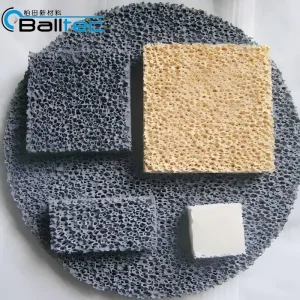
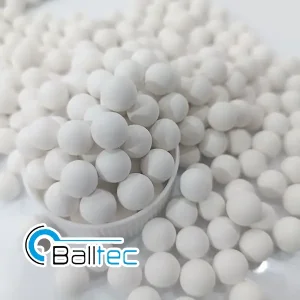
Comprehensive product lineup engineered for chemical, ceramic, and high-purity processing