Follow 


Premium precision media, ceramic packing, and microcrystalline spheres manufactured under ISO-certified process control.
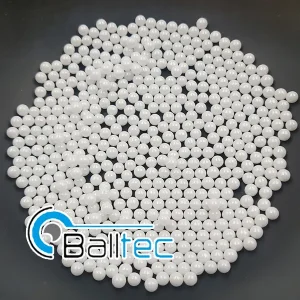
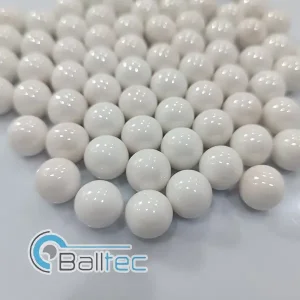
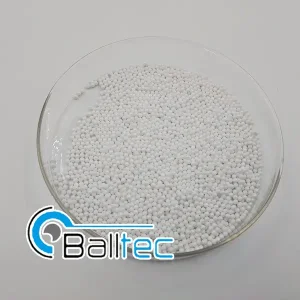
Type 3A molecular sieves represent an essential benchmark in modern chemical process separation and deep dehydration technologies. Structurally classified as an alkali metal aluminosilicate with a LTA (Linde Type A) crystal framework, 3A molecular sieves are manufactured through the partial cation exchange of potassium ($K^+$) into the sodium-form ($Na^+$) Type 4A zeolite matrix.
The chemical stoichiometry of the 3A synthetic zeolite is represented by the formula:
KnNa12-n[(AlO2)12(SiO2)12] · xH2O (where n ≈ 4 to 7)
This controlled ion-exchange alters the effective pore opening aperture to approximately 3 Angstroms (0.3 nm). Because the kinetic diameter of a water molecule ($H_2O$) is roughly $0.265\text{ nm}$, it easily enters the internal cage network (alpha-cages), whereas larger hydrocarbons such as ethylene ($0.39\text{ nm}$), propylene ($0.45\text{ nm}$), and ethanol ($0.44\text{ nm}$) are strictly excluded via steric hindrance.
The exact precision of the potassium ion exchange ratio governs the adsorption selectivity. Insufficient $K^+$ exchange leaves larger 4Å windows, leading to co-adsorption of hydrocarbons, thermal degradation, and coke formation.
Comparing enterprise-grade 3A molecular sieves across key chemical engineering parameters.
| Property Parameter | Standard 3A (General Dehydration) | 3A-EPG (Ethylene/Olefin Grade) | 3A-IG (Insulated Glass Grade) | 3A-ETH (Fuel Ethanol Grade) |
|---|---|---|---|---|
| Bead / Pellet Size Range | 1.6-2.5 mm, 3.0-5.0 mm | 1.6-2.5 mm (8x12 mesh) | 0.5-0.9 mm, 1.0-1.5 mm | 3.0-5.0 mm (4x8 mesh) |
| Potassium Ion Exchange Rate | ≥ 40% | ≥ 60% (High Selectivity) | ≥ 45% | ≥ 55% |
| Static Water Adsorption (25°C, RH 60%) | ≥ 21.5% wt | ≥ 21.0% wt | ≥ 20.5% wt | ≥ 21.5% wt |
| Bulk Density (g/mL) | 0.68 - 0.74 | 0.70 - 0.75 | 0.72 - 0.78 | 0.68 - 0.74 |
| Crush Strength (N/bead avg) | ≥ 35 N (1.6-2.5mm) / ≥ 75 N (3-5mm) | ≥ 40 N (1.6-2.5mm) | ≥ 15 N (0.5-0.9mm) | ≥ 85 N (3-5mm) |
| Attrition Wear Rate (% wt) | ≤ 0.10% | ≤ 0.05% | ≤ 0.05% | ≤ 0.08% |
| Target Dew Point Performance | -60°C to -80°C | < -100°C | < -60°C (No Gas Deflection) | Dry Ethanol < 0.5% H₂O |
| Regeneration Temp Window | 175°C - 230°C | 200°C - 250°C | N/A (Static System) | 200°C - 240°C |
Detailed analysis of real-world chemical processing plants, thermal dynamics, and bed packaging optimization.
In steam cracking units, moisture must be reduced below 1 ppmv to prevent hydrate formation in cryogenic fractionating columns. Standard 4A sieves co-adsorb ethylene, inducing exothermic reactions that polymerize unsaturated hydrocarbons into green oil, fouling the bed. 3A-EPG molecular sieves completely eliminate olefin co-adsorption, ensuring stable temperature profiles and long desiccant life.
Double-pane architectural glass units require static desiccant inside aluminum spacer bars. If the molecular sieve adsorb air (nitrogen/argon), seasonal temperature drops create negative pressure inside the glass cavity, causing glass deflection and structural seal failure. 3A-IG selectively adsorbs water vapor while exhibiting zero adsorption of $N_2$ or $Ar$, maintaining glass planarity over decades.
Traditional benzene-based azeotropic distillation for fuel ethanol dehydration is energy-intensive and toxic. Pressure Swing Adsorption (PSA) systems equipped with 3A-ETH molecular sieves break the ethanol-water azeotrope (95.6% ethanol) to produce anhydrous ethanol (>99.9% purity), drastically reducing operating thermal energy costs by up to 40%.
Prior to liquefaction at $-162^\circ\text{C}$, raw natural gas feeds must be thoroughly dried. 3A molecular sieves operate in Temperature Swing Adsorption (TSA) twin-tower configurations, lowering feed gas dew points beneath $-100^\circ\text{C}$, ensuring zero ice blockage across aluminum plate-fin heat exchangers.
HFC and HFO refrigerants used in automotive air conditioning and home appliances can hydrolyze into fluorinated acids if moisture is present. Specialized 3A filter-drier cores continuously scrub trace moisture without reacting with oil lubricants or stripping fluorinated compounds.
Activated 3A molecular sieve powder is blended directly into polyurethane formulation matrices as a static moisture scavenger, preventing micro-foaming, pinholes, and carbon dioxide gas bubbling during cure reactions in sealants and industrial coatings.
Pingxiang, Jiangxi Province stands as the world's highest-density manufacturing hub for industrial ceramics, catalyst supports, and synthetic zeolites. By controlling the entire upstream raw material chain—including high-purity kaolin clay refining, sodium silicate synthesis, and automated hydrothermal crystallization—our facilities achieve unmatched batch-to-batch consistency.
Every batch undergoes rigorous quality check protocols according to ASTM D2854, ASTM D3802, and ISO 9001 guidelines before dispatch.
Pioneering Binderless Molecular Sieves and Low-Energy Regeneration Protocols for Carbon-Neutral Chemical Processing.
Traditional 3A sieves contain 15-20% inert clay binder. Our binderless technology chemically converts the clay binder into crystalline zeolite A, increasing mass adsorption capacity by 20% while reducing bed vessel volume requirements.
Developing nano-modified crystal surfaces that lower desorption heat enthalpy by 15%, permitting full bed thermal regeneration using low-grade waste heat streams at temperatures as low as 140°C.
Tailoring high-pore-volume 3A beads to dry green hydrogen gas output from PEM and Alkaline electrolyzers down to ISO 14687 Grade D standards (<5 ppm moisture).
Because active molecular sieves react aggressively with atmospheric humidity, proper barrier packaging is crucial to ensure zero pre-adsorption during transoceanic shipping.
150 Kg net weight sealed steel drums fitted with inner polyethylene liner bags and vacuum sealing locks.
500 Kg or 1000 Kg UV-resistant woven big bags with aluminum foil moisture barrier spouts.
Our factory management and products fully adhere to global regulatory standards:
Comprehensive engineering guidance to solve common adsorption column design challenges.
Explore our full line of wear-resistant zirconia media, high-purity alumina grinding spheres, and chemical packed bed columns.