Follow 


Explore our export-grade 95% Yttria-Stabilized Zirconia media engineered for extreme attrition resistance, sub-micron particle refinement, and zero-contamination milling environments.
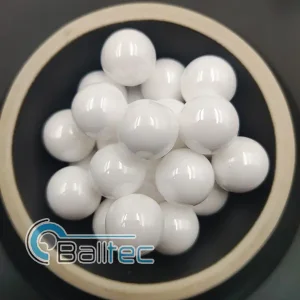
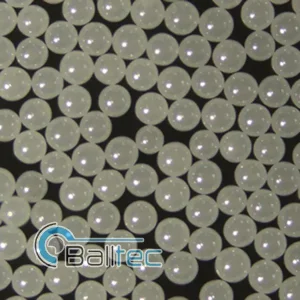
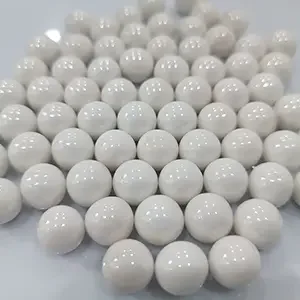
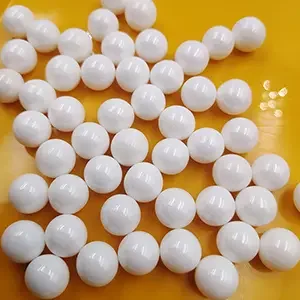
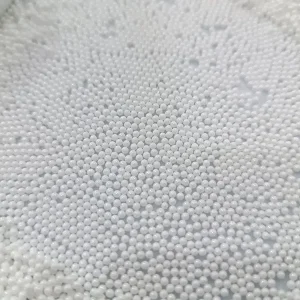
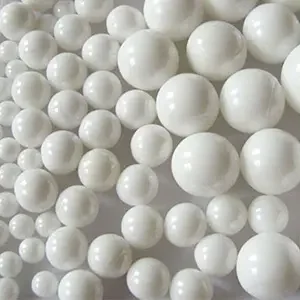
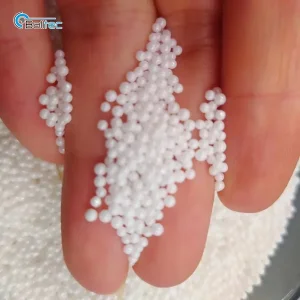
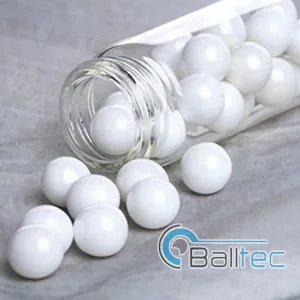
The international powder processing market is experiencing an unprecedented structural shift toward sub-micron and nanometer-scale particle size distributions. Driven by rapid technological convergence across renewable energy storage, advanced semiconductor packaging, automotive clearcoats, and pharmaceutical synthesis, industrial manufacturers no longer treat grinding media as simple consumables, but as critical process control variables.
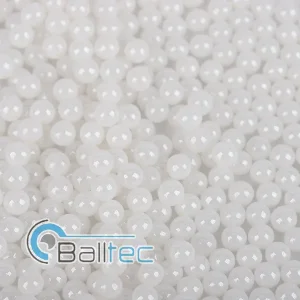
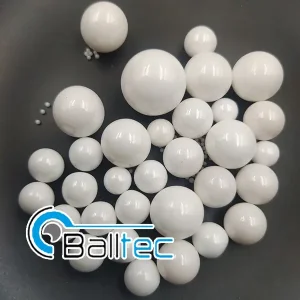
Among the spectrum of ceramic media, 95% Yttria-Stabilized Zirconia (Y-TZP) beads have emerged as the absolute gold standard for high-energy bead mills, horizontal pin mills, and vertical agitator ball mills. Synthesized by doping high-purity zirconium dioxide (ZrO₂) with approximately 5 wt% (or 3 mol%) yttrium oxide (Y₂O₃), these microcrystalline spheres deliver a unique synergy of extreme density (~6.0 g/cm³), exceptional fracture toughness (8–10 MPa·m1/2), and near-zero attrition loss under intense shear field velocities exceeding 16 m/s.
Lithium Iron Phosphate (LFP), Nickel Manganese Cobalt (NMC), and solid-state battery slurry prep demand non-contaminating, ultra-dense grinding media to achieve narrow D90 particle sizes (< 200 nm) without introducing iron or heavy metal impurities.
Multi-Layer Ceramic Capacitors (MLCC) require ultra-fine BaTiO₃ dielectric powders pulverized uniformly to prevent dielectric breakdown. 95% zirconia media offer the crushing strength needed for continuous sub-micron slurry milling.
Automotive OEM paints, high-solid inkjet inks, and titanium dioxide (TiO₂) dispersions rely on Y-TZP beads to eliminate color shifting and ensure superior gloss levels, transparency, and jetness without media fragmentation.
China accounts for over 75% of global high-purity chemical zirconium precursor production. Regions like Jiangxi (Pingxiang) feature fully integrated industrial chains—spanning synthetic zirconium chemical refining, titrited liquid-phase co-precipitation, auto-titration dripped bead forming, and high-temperature rotary tunnel sintering. Purchasing directly from qualified Chinese exporters allows global plants to achieve a 30% to 50% TCO (Total Cost of Ownership) reduction while maintaining strict compliance with Western ISO and REACH standards.
Understanding the microstructural mechanics of Yttria-Stabilized Tetragonal Zirconia Polycrystals (Y-TZP) explains why 95% zirconia beads outperform traditional glass, fused zirconium silicate, and alumina media.
Unlike brittle monocrystalline ceramics, 95% Y-TZP utilizes a self-healing kinetic mechanism known as Stress-Induced Phase Transformation. At ambient temperatures, the 3 mol% Y₂O₃ additive traps the zirconia crystal structure in a metastable tetragonal (t) phase. When an external mechanical shock or high-stress impact occurs—such as bead collisions inside high-energy mills—a microcrack propagates toward the bead interior. The stress field localized at the crack tip triggers a phase transformation from the metastable tetragonal structure to a stable monoclinic (m) phase.
This phase transition is accompanied by a localized volumetric expansion of approximately 3% to 5%. The expansion exerts compressive stress directly onto the crack tip, pinching the crack shut and absorbing impact kinetic energy. Consequently, 95% zirconia beads exhibit exceptional resistance to micro-fracturing, flaking, and catastrophic breakage even under peripheral disc speeds exceeding 18 m/s.
| Physical / Chemical Property | 95% Y-TZP Zirconia Beads | Zirconium Silicate (65% ZrO₂) | High Purity Alumina (99.5% Al₂O₃) |
|---|---|---|---|
| Chemical Composition | ZrO₂ 94.5 - 95%, Y₂O₃ 5.0 ± 0.5% | ZrO₂ 65%, SiO₂ 33% | Al₂O₃ ≥ 99.5% |
| Bulk Density (g/cm³) | ≥ 6.00 g/cm³ | 4.00 - 4.20 g/cm³ | 3.90 - 3.95 g/cm³ |
| Packed Density (g/cm³) | 3.60 - 3.75 g/cm³ | 2.50 - 2.60 g/cm³ | 2.30 - 2.40 g/cm³ |
| Vickers Hardness (HV10) | ≥ 1250 kg/mm² (12.5 GPa) | 1000 kg/mm² | 1600 kg/mm² |
| Fracture Toughness (K1c) | 8.0 - 10.0 MPa·m1/2 | 5.0 MPa·m1/2 | 4.5 MPa·m1/2 |
| Wear Rate (Self-Attrition) | < 0.01 g/kg·h (ppm level) | < 0.20 g/kg·h | < 0.08 g/kg·h |
| Sphericity / Roundness | ≥ 98% (Laser Optical Metrology) | ≥ 90% | ≥ 92% |
In wet grinding, kinetic energy transfer determines efficiency. The mechanical energy ($E_k$) transferred from the agitator disc or pin to a grinding bead is directly proportional to the bead's mass ($m$) and the square of its velocity ($v$):
Because density ($\rho$) is embedded within mass, switching from a low-density medium (e.g., Alumina at 3.9 g/cm³) to 95% Zirconia (6.0 g/cm³) increases individual bead impact energy by over 53% at identical tip speeds. This allows engineers to run mills at lower RPMs to conserve energy, or maintain tip speeds to dramatically accelerate cycle throughput times.
Matching bead diameter ($d$) to target slurry feed ($D_{50}$) and target product fine ($D_{90}$) is critical to prevent media fluidization, screen clogging, and over-grinding. Standard operational guidelines include:
Target Applications: Quantum dots, inkjet inks, pharmaceutical nano-suspensions, battery cathode sub-100nm dispersions.
Mill Compatibility: High-efficiency horizontal pin mills (e.g., Netzsch Zeta, Buhler MicroMedia) with zero-clearance centrifugal separation screens.
Key Benefit: Provides billions of contact points per cubic centimeter, maximizing surface shear without fracturing delicate crystal structures.
Target Applications: MLCC dielectrics, automotive finish coatings, crop protection chemicals, industrial pigment pastes.
Mill Compatibility: Standard disc and peg high-speed horizontal bead mills.
Key Benefit: Optimal balance between kinetic impact energy and shear frequency, delivering tight particle size distribution curves.
Target Applications: Calcium carbonate (GCC), zircon sand pulverization, mining ores, ceramic body glazes.
Mill Compatibility: Large-capacity vertical open/closed agitator mills, basket mills, continuous ball mills.
Key Benefit: High mass delivers sufficient force to break down coarse agglomerates and raw feed particles exceeding 50 microns.
Target Applications: Planetary ball mills, jar rolling mills, high-grade dental zirconia block polishing, valve ball finishing.
Mill Compatibility: Low-speed tumbling mills, batch ball mills, high-frequency vibratory mills.
Key Benefit: Superior roundness ensures consistent friction polishing and uniform pressure distribution across media beds.
Our 95% zirconia grinding media are deployed across diverse global manufacturing ecosystems. Below are representative operational case studies demonstrating tangible ROI and process improvements.
Client Profile: Tier-1 European Battery Material Synthesizer.
Challenge: The client experienced excessive iron contamination (>15 ppm) and frequent screen plugging when using lower-grade 65% zirconium silicate beads during ultra-fine LFP precursor milling ($D_{50} < 300\text{ nm}$).
Solution: Converted entire 500L horizontal pin mill line to Chinese 0.3mm 95% Y-TZP Zirconia Beads manufactured via titrited liquid co-precipitation.
Measured Outcome: Iron wear contamination dropped below 0.5 ppm, media consumption decreased by 82%, and slurry batch milling time was cut from 14 hours to 8.5 hours per batch.
Client Profile: North American OEM Coating Manufacturer.
Challenge: High rate of bead micro-fracturing in high-shear mills led to hazing, gloss reduction, and nozzle clogging in automated spray painting robots.
Solution: Sourced 0.8mm high-density 95% zirconia media featuring an ultra-fine grain size (<0.3 µm) and zero internal porosity.
Measured Outcome: Coating gloss units ($GU\text{ at }20^\circ$) increased by 14%, filter mesh replacement cycles expanded 5-fold, and media replacement costs dropped by 38% annually.
Establishing trust with international buyers requires rigorous verification of material consistency, international environmental standards, and dependable export logistics.
Every export lot undergoes strict Chemical Analysis via Inductively Coupled Plasma Optical Emission Spectrometry (ICP-OES) to guarantee ZrO₂ + Y₂O₃ ≥ 99.5% and trace Fe₂O₃ < 0.002%. Grain size is verified through Field Emission Scanning Electron Microscopy (FE-SEM).
Our 95% zirconia products fully comply with European Union REACH (Registration, Evaluation, Authorisation and Restriction of Chemicals), RoHS directives, and US FDA non-heavy metal release standards for food contact and cosmetic grinding applications.
Supplies are packaged in 25 kg steel drums lined with dual high-density polyethylene (HDPE) moisture-proof bags, mounted on heat-treated ISPM-15 compliant wooden or plastic pallets (1000 kg per pallet) designed for ocean and multimodal container shipping.
The next decade will demand unprecedented precision from advanced ceramic materials. Our R&D centers in Pingxiang are driving innovations across three primary technological frontiers:
Engineering ultra-small 0.03mm and 0.01mm 95% Y-TZP beads using microfluidic droplet generation to enable sub-10nm quantum dot polishing and CMP semiconductor slurry production.
Transitioning all rotary tunnel kilns to pure electric and green-hydrogen firing systems, reducing the carbon footprint per ton of zirconia media produced by 45% by 2028.
Deploying 360-degree high-speed optical laser sorters to eliminate non-spherical beads, guaranteeing 99.9% sphericity consistency across multi-ton production lots.
Expert technical answers to common questions asked by international procurement directors, process engineers, and mill operators.
While Cerium-stabilized zirconia (Ce-TZP) offers high density (~6.2 g/cm³), its lower Vickers hardness makes it prone to heavy wear in abrasive mineral slurries. Alumina-Toughened Zirconia (ATZ) is less dense (~4.5 g/cm³), yielding lower kinetic energy. 95% Yttria-Stabilized Zirconia (Y-TZP) provides the optimal balance of ultra-high density (6.0 g/cm³), high hardness (1250 HV10), and superior phase transformation toughness, yielding the lowest self-attrition rate across high-energy grinding applications.
For standard horizontal disc mills processing coatings or inks, the recommended media loading volume is 70% to 80% of the total net grinding chamber capacity. For high-energy pin or peg mills processing nano-slurries (e.g., LFP battery materials), loading ratios typically range from 80% to 85%. Overfilling causes excessive heat generation and motor overload, while underfilling leads to inefficient bead-to-bead contact and slow milling speeds.
Bead breakage is primarily caused by: 1) Running the mill without sufficient slurry viscosity or flow rate (dry grinding shock), 2) Mismatched separator screen gap sizes causing bead pinching, 3) Mixing worn beads of different sizes/densities in the same chamber, or 4) Excessive tip speed exceeding 16 m/s with low-toughness media. Our 95% Y-TZP media undergo 100% crush testing to prevent stress failures.
Standard sizes (e.g., 0.6–0.8mm, 0.8–1.0mm, 1.0–1.2mm, 2.0mm) are kept in stock with an MOQ of 25 kg (1 drum) for trial evaluations. Custom micro-bead sizes (< 0.1mm) or specialized packaging orders generally ship within 10 to 14 working days from Shanghai or Ningbo ports via ocean or air freight.
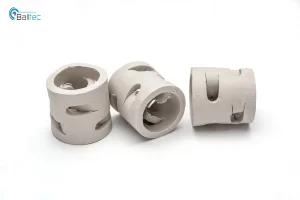
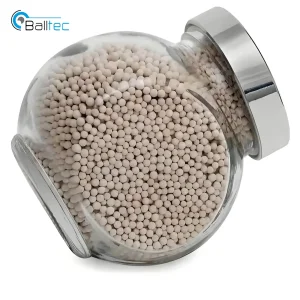
In addition to 95% zirconia media, our integrated manufacturing plants produce industrial molecular sieves, chemical tower packings, and bio-ceramic raw materials.