Follow 


High-precision ceramic components, dielectric spheres, molecular sieves, and bearing assemblies engineered for demanding high-voltage, chemical, and wear-resistant applications.
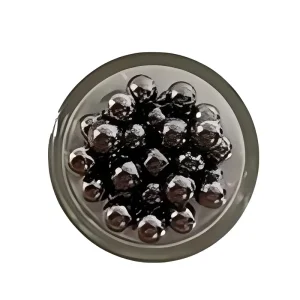
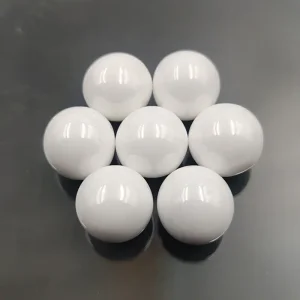
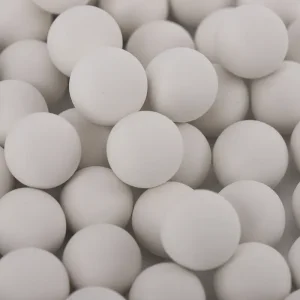
Understanding the physics, material formulations, and industrial demands shaping modern high-voltage electrostatic passive components.
Electrostatic capacitors store energy purely through non-resonant physical charge separation across a dielectric medium, operating without electrochemical redox reactions. This non-chemical mechanism provides an operational lifespan exceeding tens of millions of charge-discharge cycles, near-instantaneous power release profiles (nanosecond response times), and zero thermal runaway risk from internal chemical degradation.
In modern industrial applications, electrostatic capacitors—spanning ultra-high voltage ceramic disc capacitors, polypropylene film units, and specialized gas-dielectric assemblies—serve as critical power quality anchors in medical imaging, high-frequency RF heating, smart power grids, pulse lasers, and electric vehicle powertrain filtering.
China has evolved into the central hub for advanced electrostatic dielectric synthesis, precision automated winding, vacuum epoxy encapsulation, and high-voltage burn-in testing. Chinese manufacturing clusters combine raw earth material refining (such as Barium Titanate $\text{BaTiO}_3$, Strontium Titanate $\text{SrTiO}_3$, and high-purity Alumina $\text{Al}_2\text{O}_3$) with automated assembly technologies.
By leveraging end-to-end supply chain integration—from precursor chemical synthesis to automated partial discharge verification—China-based OEM/ODM factories offer unprecedented scalability, tight tolerance control, and compliance with rigorous global automotive and energy grid standardizations.
Technical breakdown of dielectric formulations, temperature coefficients, and physical architectures utilized in Chinese electrostatic manufacturing facilities.
Utilizing titanium dioxide ($\text{TiO}_2$) and neodymium-based titanates, Class 1 ceramics (such as NP0 / C0G and SL formulations) exhibit near-zero dielectric constant temperature drift ($\pm 30\text{ ppm}/^\circ\text{C}$). They deliver ultra-low dissipation factors ($\tan \delta < 0.0015$) and zero voltage coefficient of capacitance, making them essential for high-frequency RF matching networks and resonant tank circuits.
Formulated around modified Barium Titanate ($\text{BaTiO}_3$), materials such as Y5P, X7R, and Z5U achieve extraordinarily high dielectric constants ($\varepsilon_r$ up to 15,000). Engineered with anti-reducing dopants and micro-grain boundaries, these capacitors deliver dense energy storage in compact physical footprints for high-voltage snubbers and DC-link energy storage.
Biaxially Oriented Polypropylene (BOPP) film capacitors utilize ultra-thin self-healing metallized aluminum-zinc patterns. When electrical breakdown occurs at a localized defect, the ultra-thin metallization evaporates within microseconds, isolating the fault without loss of global dielectric integrity. Ideal for high-current pulse discharge and traction inverters.
| Dielectric Type | Dielectric Constant ($\varepsilon_r$) | Operating Temperature | Dissipation Factor ($\tan \delta$) | Primary Industrial Application |
|---|---|---|---|---|
| C0G / NP0 Ceramic | 15 – 500 | -55°C to +125°C | < 0.001 | RF Tank Circuits, High-Freq Snubbers, Precision Radar |
| Y5P Ceramic | 2,000 – 4,500 | -30°C to +85°C | < 0.005 | High Voltage Pulse Power, Smart Grid Switchgear |
| BOPP Metallized Film | 2.2 | -40°C to +105°C | < 0.0005 | EV Traction Inverters, Solar String Inverters, DC-Link |
| Strontium Titanate ($\text{SrTiO}_3$) | 7,000 – 10,000 | -25°C to +85°C | < 0.002 | Ultra-High Voltage DC Transmission, Particle Accelerators |
Why global OEMs, system integrators, and Tier-1 automotive suppliers partner with Chinese electrostatic capacitor manufacturers.
Chinese factories are directly co-located with critical rare-earth processing facilities and high-purity chemical refiners. Control over raw material synthesis—including sub-micron grain sizing of $\text{BaTiO}_3$ via hydrothermal processing—ensures batch-to-batch structural uniformity, eliminating internal voiding and micro-cracks before tape-casting or disc-pressing begins.
Leading Chinese production lines incorporate 100% automated optical inspection (AOI), acoustic micro-imaging for internal delamination detection, and partial discharge ($\text{PD}$) testing. Components undergo dielectric breakdown screening at $1.5\times$ to $2.0\times$ rated voltage under controlled ambient conditions.
Deploying electrostatic capacitors in critical high-reliability industrial infrastructure worldwide.
Ultra-high voltage ceramic disc capacitors (10kV to 50kV DC) serve as voltage dividers, lightning surge suppressors, and static VAR compensator (SVC) snubbers in electrical sub-stations, protecting transformer infrastructure against fast transient overvoltages.
Medical imaging systems require high-energy, pulse-discharge ceramic matrix arrays capable of rapid peak energy delivery ($<1\mu\text{s}$) to drive high-voltage generator tubes without voltage droop or dielectric hysteresis.
Automotive-grade polypropylene film electrostatic capacitors provide smooth filtering across 800V SiC (Silicon Carbide) architecture DC-links, handling extreme ripple currents ($I_{\text{rms}} > 150\text{A}$) while maintaining low Equivalent Series Inductance ($\text{ESL} < 10\text{nH}$).
High-power RF door-knob capacitors operating at 13.56 MHz / 27.12 MHz deliver stable reactive power compensation in plasma-enhanced chemical vapor deposition (PECVD) semiconductor manufacturing equipment.
Ensuring international engineering specifications, environmental standards, and quality certifications are met with full documentation integrity.
Full conformance with EU RoHS 3 (Directive 2015/863) and REACH (EC 1907/2006). All encapsulation resins, solder terminations, and dielectric formulations are strictly lead-free, halogen-free, and heavy-metal compliant, supported by annual SGS/TÜV test reports.
Class X1/Y1 and X2/Y2 safety ceramic capacitors certified under UL 60384-14, ENEC, CQC, and VDE standards. Essential for line-bypass and antenna coupling applications where line failure could present an immediate electrical shock hazard.
Production processes conform to automotive PPAP Level 3 documentation requirements. Statistical process controls ($\text{Cpk} > 1.67$) ensure PPM defect rates approach zero across high-volume automated SMT and leaded production runs.
Analyzing key breakthroughs shaping the next decade of electrostatic capacitor manufacturing in China.
As Silicon Carbide (SiC) and Gallium Nitride (GaN) power electronics push switching frequencies past 500 kHz, electrostatic capacitors must lower Equivalent Series Resistance ($\text{ESR}$) and inductance ($\text{ESL}$). Chinese R&D centers are developing nano-crystalline ceramic structures optimized for megahertz-frequency power conversion.
Next-gen aerospace and deep-well geothermal logging applications demand capacitors capable of sustained operation at 200°C without dielectric voltage derating. Formulations using bismuth titanate ($\text{Bi}_4\text{Ti}_3\text{O}_{12}$) matrices are proving crucial for these harsh operating environments.
Advancements in nano-composite polymer films—blending polyarylenetherketones with surface-modified ceramic nanoparticles—are doubling energy density ($\text{J/cm}^3$), enabling dramatic size reductions for portable medical defibrillators and space-constrained pulsed lasers.
Detailed answers to critical engineering and procurement inquiries regarding electrostatic capacitors manufactured in China.
Electrostatic capacitors store electrical energy through physical dipole alignment and charge separation across an insulating dielectric material without electrochemical reactions. This enables response times in the sub-microsecond range, essentially infinite charge-discharge endurance cycles, and extremely low Equivalent Series Resistance ($\text{ESR}$). Conversely, electrolytic capacitors rely on chemical aluminum/tantalum oxide layers and liquid/solid electrolytes (higher capacitance per volume but shorter lifespan and higher ESR), while supercapacitors utilize electrochemical double-layer capacitance (EDLC) for high energy density but significantly slower discharge speeds and lower voltage limits per cell.
Partial discharge occurs when micro-voids or impurities within the dielectric experience localized voltage breakdown under strong electric fields. Chinese manufacturers mitigate $\text{PD}$ through three primary mechanisms: (a) Hydrothermal Powder Synthesis ensuring uniform sub-micron grain boundaries; (b) Isostatic Vacuum Pressing & Controlled Atmosphere Sintering to achieve high relative density (> 99.5% theoretical density) without internal air pockets; and (c) Degassed Vacuum Epoxy Encapsulation using high-dielectric-strength resins. Finished components undergo 100% partial discharge screening to ensure $\text{PD} < 5\text{ pC}$ at operating voltages.
Chinese suppliers offer full custom modification across: (1) Electrode Metallization (Silver, Palladium-Silver, Nickel, or Zinc-Aluminum metallized film patterns); (2) Dielectric Formulations (Class 1 NP0/SL for frequency stability vs. Class 2 Y5P/X7R for maximum voltage/capacitance density); (3) Mechanical Enclosures (Screw terminals, axial door-knob housings, radial leads, or custom busbar-integrated packages); and (4) Environmental Sealing (Class 94V-0 flame-retardant epoxy coating, ceramic-to-metal hermetic sealing, or oil-filled stainless steel cans).
Standard shipment documentation packages include: Certificate of Analysis (CoA), Batch Inspection & Test Reports (showing Dielectric Withstanding Voltage, Insulation Resistance, Capacitance Tolerance, and Dissipation Factor), SGS RoHS 3 and REACH compliance declarations, and ISO 9001/IATF 16949 certificate copies. For high-reliability sectors, PPAP Level 3 documentation, Full Reliability Test Data (Life Test, Humidity Load, Temperature Cycling), and Third-Party Lab Calibration Reports are available upon request.
Standard catalog items generally maintain stock for fast dispatch within 5–7 business days. Custom engineering prototypes typically take 2 to 3 weeks for tooling, tape casting/pressing, sintering, and testing. Production batch lead times range from 3 to 5 weeks depending on volume and testing requirements. Prototype sample quantities (5 to 50 pieces) are readily supported to facilitate pre-production testing and design-in evaluation.
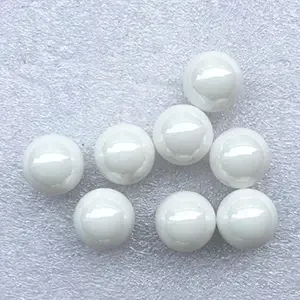
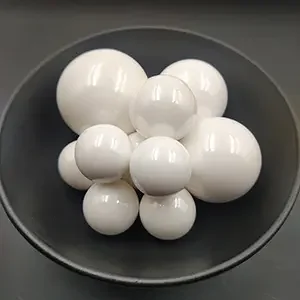
Explore high-density Zirconium Oxide ($\text{ZrO}_2$) media, precision ceramic balls, and specialized molecular sieves engineered for high-energy industrial processing.