Follow 


Explore high-performance ceramic media, advanced structural elements, and process solutions engineered for demanding international manufacturing applications.
Analyzing the strategic role of Chinese manufacturing hubs in supplying high-Q, low-loss silver mica capacitors to global defense, RF broadcasting, aerospace, and energy sectors.
Unlike standard Class 1 MLCC ceramic dielectrics or film capacitors, silver mica dielectrics maintain ultra-low dissipation factors ($\tan \delta < 0.001$) across temperatures from -55°C to +200°C under extreme high-voltage RF stresses.
Mica capacitors remain indispensable in high-power RF transmitters, plasma generators, induction heating, and pulsed laser systems due to their exceptional reactive power rating (kVAr) and physical immunity to dielectric aging.
China hosts over 65% of the global raw mica processing capacity (Muscovite and Phlogopite). Integrated manufacturing clusters combine precision micro-sheeting, vacuum silver-screen printing, and automated resonance testing.
Understanding the crystallographic properties, chemical purity, and manufacturing methodologies that differentiate high-reliability Chinese exported mica capacitors from standard commercial components.
Mica is a naturally occurring phyllosilicate mineral characterized by its near-perfect basal cleavage. This physical characteristic permits the mechanical splitting of mica blocks into micro-thin, uniform sheets down to 0.025 mm (0.001 inch) without structural fracturing. In dielectric engineering, two primary crystalline structures dominate:
Modern Chinese exporters utilize state-of-the-art pure silver screen-printing directly onto selected mica films (Silvered Mica), eliminating air voids between electrodes. The stacks are compressed, clamp-bound, and encapsulated using vacuum epoxy impregnation or transfer-molded phenolic resins. This prevents corona breakdown under multi-kilovolt RF loading.
| Dielectric Parameter | Muscovite Silver Mica | C0G/NP0 Ceramic (MLCC) | Polypeptone / PTFE Film | Phlogopite High-Temp Mica |
|---|---|---|---|---|
| Dielectric Constant ($\varepsilon_r$) | 6.8 – 8.0 | 15 – 90 | 2.1 – 2.2 | 5.0 – 6.0 |
| Operating Temperature Range | -55°C to +150°C (Up to +200°C) | -55°C to +125°C | -55°C to +105°C | -55°C to +300°C+ |
| Temperature Coefficient ($\text{ppm/}^\circ\text{C}$) | 0 to +70 (Class E/F) | 0 ± 30 | -200 | +100 to +300 |
| Dissipation Factor ($\tan \delta$ at 1MHz) | < 0.0005 (Q > 2000) | < 0.0010 | < 0.0003 | < 0.0020 |
| Dielectric Absorption | Virtually Zero (< 0.05%) | 0.6% | 0.02% | < 0.1% |
| Self-Healing Ability | Non-Self-Healing (Destructive) | No | Yes (Metallized) | No |
From high-power broadcasting grids to aerospace radar networks, explore where Chinese silver mica capacitor technology delivers maximum operational stability.
High-voltage transmitting mica capacitors (such as CY, CZ, or custom cast-case configurations) manage severe reactive current loads in megawatt-level HF amplifiers, plasma etching chambers, and industrial metal induction heating equipment without microphonic flutter or thermal runaway.
Compliant with rigorous MIL-PRF-39001 and MIL-STD-202 vibration/shock metrics, potted radial dipped silver mica units are deployed in radar pulse-forming networks (PFN), avionics communication filter circuits, and missile guidance tracking assemblies requiring sub-percent capacitance retention over decades.
Sub-surface logging tools operated inside boreholes experience ambient temperatures surpassing 175°C to 200°C alongside severe mechanical shocks. Custom high-temperature potted mica units maintain insulation resistance ($>10,000 \text{ M}\Omega$) under extreme pressure environments.
In high-voltage DC (HVDC) power transmission, pulse-discharge mica stacks act as snubber capacitors across fast-switching thyristors and IGBT modules, absorbing high $dV/dt$ transients without dielectric fatigue.
Due to extremely low hysteresis, negligible moisture absorption when epoxy dipped, and linear temperature coefficients, metrology laboratories rely on customized silver mica banks as transfer capacitance standards.
Under ionizing radiation exposure, polymer dielectrics degrade through chain scission. Inorganic Muscovite mineral lattices remain atomically intact, proving essential for beamline control systems and radiation detectors.
How leading Chinese exporters implement rigorous burn-in procedures, automated optical inspections, and international environmental compliance for seamless global integration.
To eliminate early-life infant mortality in high-stress applications, reputable Chinese manufacturers subject 100% of export-grade mica capacitors to high-voltage burn-in screening, thermal shock cycling, and partial discharge testing.
The manufacture of ultra-pure electronic components relies on high-purity chemical processing, ultra-fine grinding, and advanced filtration infrastructure.
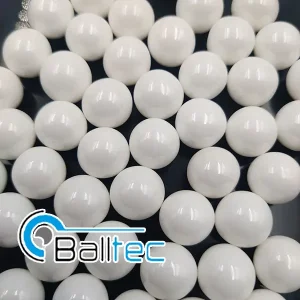
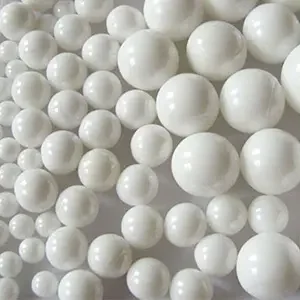
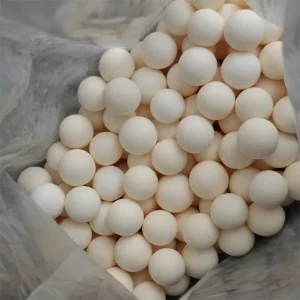
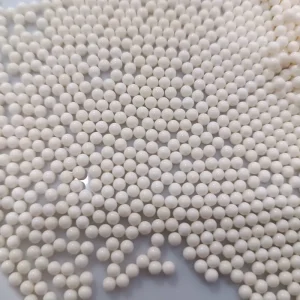
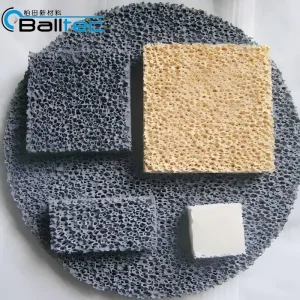
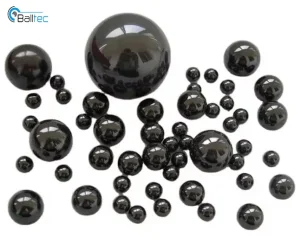
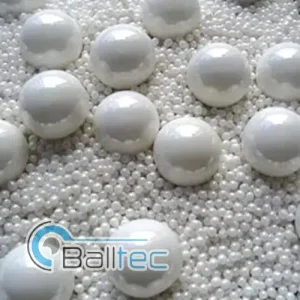
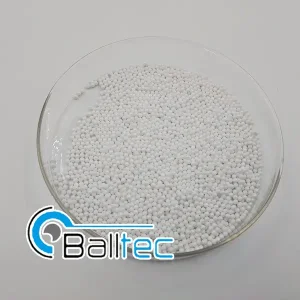
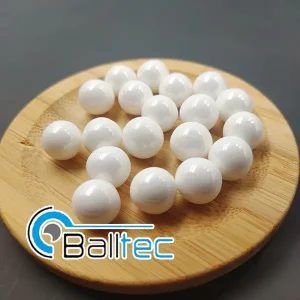
The production of high-grade mica encapsulants, silver pastes, and high-frequency ceramic substrates requires an advanced material ecosystem. High-purity alumina grinding beads (up to 99.99% $\text{Al}_2\text{O}_3$) and yttria-stabilized zirconia media are essential for milling electrode slurry inks down to sub-micron scales without introducing metallic contamination.
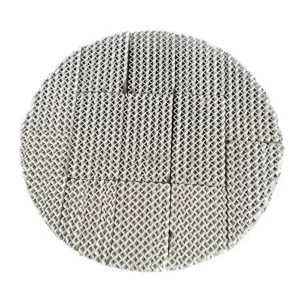
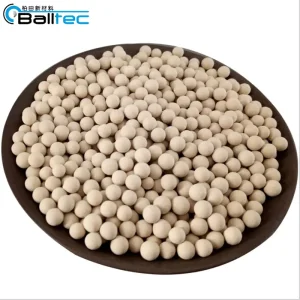
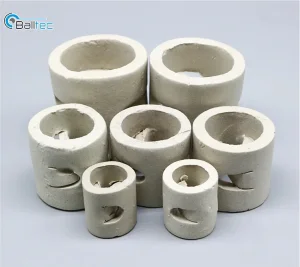
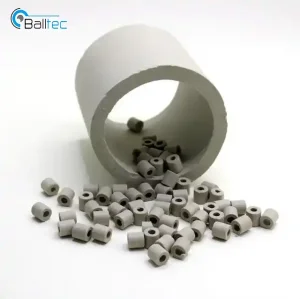
Furthermore, chemical purification and gas-drying during vacuum silver-firing processes depend on industrial molecular sieves (4A, 5A, 13X) and chemical tower packing (Pall Rings, Raschig Rings, and Corrugated Structured Packings). By integrating advanced ceramic engineering with precision dielectric manufacturing, Chinese industrial clusters deliver unmatched product purity and reliability across the global supply chain.
Emerging innovations in mica nanocomposites, automated micro-stacking, and wide-bandgap (SiC/GaN) power electronics integration.
R&D focused on fluorophlogopite synthetic mica single crystals aims to eliminate natural impurity variations, raising breakdown voltages above 300 kV/mm for high-density pulse energy storage.
As Silicon Carbide (SiC) and Gallium Nitride (GaN) power switches push frequencies above MHz levels, low-inductance $(<5\text{ nH})$ silver mica chips are evolving to replace ceramics in fast power-converter snubbers.
Next-generation Chinese smart factories are replacing manual mica sheet alignment with high-speed AI optical sorting and laser silver-pattern etching, achieving tight capacitance tolerances down to $\pm 0.1\%$.
Expert engineering answers to technical, procurement, and application inquiries regarding silver mica capacitors.
Browse our additional industrial grinding media, molecular sieves, and chemical packing solutions for global industrial applications.