Follow 


Explore our high-density ceramic substrates, zirconia structural elements, and micro-bead grinding media engineered to deliver ultra-high dielectric strength, severe thermal shock resilience, and zero-drift electrical insulation under heavy current stresses.
An authoritative technical analysis of global supply chains, material thermal dynamics, and high-power resistor engineering for next-generation energy infrastructures.
In modern electrical engineering, the humble Ohm Resistor has evolved from a passive current-limiting component into an indispensable pillar of high-power grid management, dynamic motor braking, and extreme-environment energy dissipation. As global industries accelerate toward electrification, renewable energy integration, and smart automated manufacturing, electrical engineers and global procurement directors face unprecedented challenges regarding thermal dissipation, electrical breakdown resistance, and long-term ohmic stability.
As a world-class Ohm Resistor Factory & Global Exporter, our facility leverages decades of ceramic substrate synthesis, precision metallurgy, and specialized winding techniques. High-power resistors must operate continuously under harsh environmental stresses—including high ambient temperatures, mechanical vibration, atmospheric moisture, and extreme voltage surges. The critical bottleneck in high-power resistor longevity has always been the dielectric and thermal management performance of the underlying ceramic core. By integrating advanced 99% High-Purity Alumina ($Al_2O_3$) and Yttria-Stabilized Zirconia ($ZrO_2$) structural ceramics, our resistor assemblies deliver superior thermal conductivity and mechanical strength, effectively eliminating thermal fatigue and localized resistance drift.
High-Voltage Direct Current (HVDC) transmission networks require ultra-reliable grounding and pre-charge Ohm resistors capable of absorbing megajoules of energy during fault transients. Our ceramic-core wirewound resistors feature non-inductive Ayrton-Perry winding options, minimizing parasitic inductance and maintaining voltage pulse integrity across high-frequency switching operations.
Wind turbine pitch control systems and photovoltaic central inverters utilize heavy-duty braking Ohm resistors to bleed off excess kinetic and electrical energy. Our aluminum-housed and tubular ceramic power resistors are built with flameproof inorganic encasements, supporting continuous operating temperatures up to 375°C without dielectric degradation.
Electric locomotives, mining haul trucks, and automated seaport cranes demand resistor banks that withstand severe mechanical shock (up to 50G) and continuous thermal cycling. Our stainless-steel grid resistors and cast-iron Ohm resistors provide rugged resistance paths designed specifically for heavy-duty traction acceleration and regenerative braking energy absorption.
Comparing ceramic substrate core materials and resistance wire alloys to maximize thermal transfer and eliminate electrical breakdown.
At the core of every premium industrial Ohm resistor lies a meticulously fabricated insulator rod or substrate plate. Cheap commercial resistors often utilize low-grade steatite ceramic cores that suffer from thermal expansion mismatch, leading to micro-cracking of the resistance wire under sudden electrical loads. As a lead manufacturer, our factory utilizes high-density Alumina ($Al_2O_3$) micro-crystalline ceramics and Tetragonal Zirconia Polycrystals (TZP) produced via precision cold isostatic pressing and high-temperature sintering.
| Material / Parameter | Thermal Conductivity (W/m·K) | Dielectric Strength (kV/mm) | Max Operating Temp (°C) | TCR Range (PPM/°C) | Typical Application |
|---|---|---|---|---|---|
| 99% High-Alumina Substrate | 30 - 35 | 18 - 22 | 1550°C | ±10 to ±50 | High-Power Braking & Grid Resistors |
| Yttria-Stabilized Zirconia (YSZ) | 2.5 - 3.0 | 25 - 30 | 1200°C | ±5 to ±25 | Ultra-High Voltage Impulse & Pulse Resistors |
| Nickel-Chromium Alloy Wire (NiCr 80/20) | 13.4 | N/A (Conductor) | 1150°C | ±80 | Precision Power Wirewound Resistors |
| Iron-Chromium-Aluminum (FeCrAl) | 11.0 | N/A (Conductor) | 1350°C | ±30 to ±100 | Heavy Industrial Steel Grid Resistors |
Standard wirewound resistors introduce significant parasitic inductance ($L$), which severely distorts high-speed switching waveforms in modern SiC (Silicon Carbide) and GaN (Gallium Nitride) power converters. Our non-inductive Ohm resistors utilize dual-wire counter-winding (Ayrton-Perry method) where currents flow in opposing directions along adjacent paths. This design cancels magnetic flux, reducing internal inductance by over 98% and ensuring clean high-frequency performance.
Environmental sealing is critical for outdoor substations and marine industrial applications. Our resistors are sealed in high-grade inorganic silicone resin or encapsulated inside aluminum housing with high-thermal-conductivity cement. This ensures compliance with UL 94-V0 flammability standards, offering complete protection against salt spray, chemical vapor erosion, and extreme humidity.
Pioneering smart sensing, dynamic thermal management, and zero-carbon grid compatibility in next-generation resistor manufacturing.
As power electronics shift toward higher switching frequencies and higher power densities, the functional requirements of industrial Ohm resistors are undergoing a fundamental transformation. Over the next decade, market growth will be driven by three core technological transitions:
Future high-power resistor banks will no longer operate as passive components. Our R&D division is pioneering embedded optical fiber and micro-thin thermocouple arrays embedded directly inside the ceramic core. This enables real-time temperature, current pulse, and strain monitoring over IoT protocol gateways, allowing power plant engineers to perform predictive maintenance prior to insulation breakdown.
To replace bulk resistance wires in space-constrained applications (such as electric vehicle power electronics and aerospace actuators), our engineers are developing ceramic-matrix nanocomposite films. By screen-printing ruthenium oxide and noble metal pastes onto ultra-smooth zirconia ceramics, we achieve megohm resistance values with dielectric breakdown thresholds exceeding 40 kV/mm.
For laboratory calibration equipment, medical imaging systems, and battery test equipment, temperature-induced resistance drift compromises measurement accuracy. By combining laser trimming with proprietary vacuum-annealed nickel-copper alloys, our factory is lowering the Temperature Coefficient of Resistance (TCR) to less than ±5 PPM/°C across a wide range of -55°C to +200°C.
Full traceability, zero-defect quality systems, and stringent international standards compliance for global trade.
To maintain our standing as a trusted exporter to over 80 countries, our state-of-the-art 100,000 m² manufacturing plant strictly enforces an ISO 9001:2015, ISO 14001:2015, and ISO 45001 certified quality management framework.
Every single batch of Ohm resistors undergoes 100% automated electrical parameter verification before export packaging. Our testing protocol includes 100% Resistance Tolerance Verification, High-Voltage Dielectric Withstand Testing (Hipot), Surge Impulse Load Cycling, and Automated Optical Inspection (AOI) for structural surface integrity.
Fully compliant with EU Directive 2011/65/EU and 2015/863, ensuring zero lead, mercury, or cadmium hazard.
All ceramic housings, cements, and outer encapsulations meet the highest self-extinguishing flame retardancy ratings.
Substance compliance checked against SVHC chemical lists for environmentally safe global importation.
Full engineering support for custom ohm values, tight tolerances (0.01%), power ratings, and specialized mounting hardware.
In-depth technical answers addressing common engineering queries regarding resistor selection, power rating calculations, and ceramic core materials.
The thermal conductivity of the ceramic core substrate directly dictates how efficiently heat is drawn away from the resistive element (wire or thick film) into ambient air or attached heat sinks. High-purity Alumina ($Al_2O_3$) offers thermal conductivity of roughly 30 W/m·K, which is nearly 10 times higher than basic porcelain or steatite. A higher thermal dissipation rate prevents hot-spot formation, allowing the resistor to operate at higher continuous power ratings without drifting in resistance value or burning out the wire coil.
Standard wirewound resistors are constructed by winding a metallic alloy wire spirally around a cylindrical ceramic rod, which inherently creates a solenoid coil with significant parasitic inductance. In AC applications, high-frequency circuits, or pulse switching environments (such as snubbers and RF dummy loads), this inductance induces phase shifts and voltage spikes. Non-inductive resistors solve this by utilizing Ayrton-Perry windings, where two wires are wound in opposite directions, canceling their respective electromagnetic fields and reducing parasitic inductance to negligible levels.
Power resistors are rated for full power ($P_{rated}$) at a baseline ambient temperature (typically 25°C or 70°C). As ambient operating temperatures rise, the resistor's ability to dissipate thermal energy diminishes. The derating curve follows a linear formula down to zero power at the maximum allowable temperature ($T_{max}$, usually 275°C to 375°C depending on coating). The derated power ($P_{derated}$) is calculated as: $P_{derated} = P_{rated} \times \frac{T_{max} - T_{ambient}}{T_{max} - T_{rating\_baseline}}$. Operating a resistor without proper thermal derating causes thermal stress, wire oxidation, and accelerated resistance drift.
TCR expresses the change in electrical resistance as a function of temperature, measured in parts per million per degree Celsius (PPM/°C). When high current flows through an Ohm resistor, self-heating occurs. If a resistor has a high TCR (e.g., +300 PPM/°C), its resistance will increase substantially as it heats up, altering circuit calibration, current feedback accuracy, or motor control parameters. Precision industrial resistors utilize specialized alloy compositions (such as Evanohm or Manganin) combined with stable ceramic substrates to achieve ultra-low TCR values under ±20 PPM/°C.
As a direct factory exporter, we offer complete OEM/ODM customization. Buyers can specify target resistance values ($0.01\Omega$ to $10M\Omega$), tight tolerance levels (down to ±0.01%), high voltage insulation ratings up to 100kV, specialized bracket mountings, and customized terminal connections (solder lug, threaded stud, or quick-connect tab). Standard sample prototyping takes 3-5 business days, while full production runs are typically shipped via sea or air freight within 2-3 weeks, complete with traceable batch test reports and ISO/CE certificates.
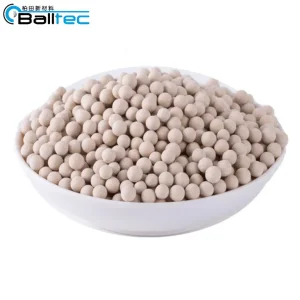
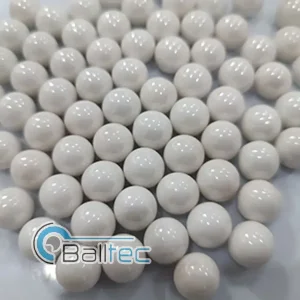
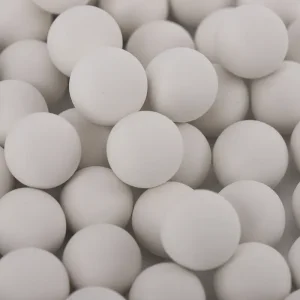
Review our second collection of ultra-dense zirconia, high-alumina micro-beads, molecular sieves, and bearing steel media manufactured for demanding industrial applications worldwide.