Follow 


The global industrial power electronics market is experiencing a profound paradigm shift driven by decarbonization, electrification of transportation, and high-frequency renewable energy grid infrastructure. At the core of modern power conversion systems lies the Poly Capacitor (Polymer Film Capacitor), an indispensable component engineered to withstand massive ripple currents, ultra-high voltage stresses, and severe ambient temperature fluctuations. As leading poly capacitor manufacturers and advanced material factories, state-of-the-art facilities leverage precision polymer extrusion, vacuum metal deposition, and advanced ceramic substrate synthesis to meet strict global performance criteria.
Industrial buyers and power system architects prioritize poly capacitors—specifically metallized polypropylene film (MPPF), polyester (PET), polyphenylene sulfide (PPS), and hybrid polymer-ceramic dielectrics—over traditional aluminum electrolytic alternatives due to their extraordinary self-healing capabilities, low Equivalent Series Resistance (ESR), near-zero Equivalent Series Inductance (ESL), and non-catastrophic failure modes. In high-power applications such as Electric Vehicle (EV) traction inverters, solar central inverters, wind turbine converters, and medical resonance systems, polymer dielectric capacitors guarantee uninterrupted operational stability spanning over 100,000 operational hours.
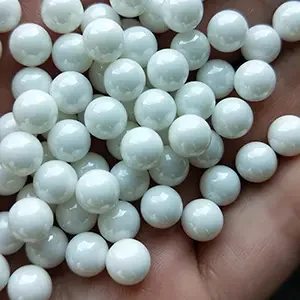
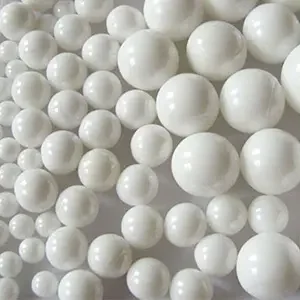
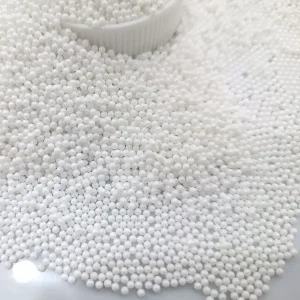
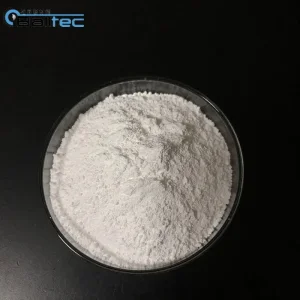
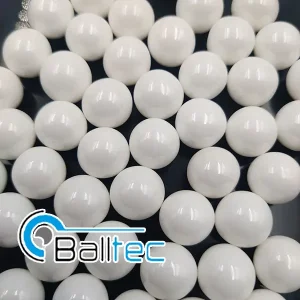
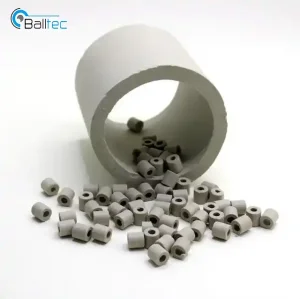
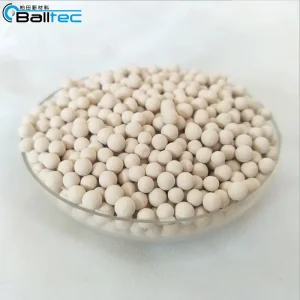
Furthermore, modern industrial supply chains demand seamless integration between ultra-clean organic polymer dielectric films and inorganic ceramic dielectric fillers (such as high-purity yttria-stabilized zirconia and sub-micron alumina powders). By introducing micro- and nano-structured ceramic particles into the polymer matrix, top-tier factories achieve hybrid dielectric materials with elevated permittivity ($\kappa$), superior thermal conductivity, and unparalleled mechanical toughness under intense mechanical shock and thermal cycling environments.
To select the ideal poly capacitor configuration, electrical engineering teams must evaluate physical dielectric properties across operating frequency spectra, temperature thresholds, and pulse handling demands ($dv/dt$). The dielectric material dictates capacitance stability, volumetric efficiency, and thermal breakdown limits. Below is an engineering analysis of major capacitor dielectric tech specs manufactured in modern OEM production facilities:
| Dielectric Type | Dielectric Constant ($\kappa$) | Dissipation Factor ($\tan \delta$) | Max Temp Limit (°C) | Self-Healing Ability | Primary Industrial Use Case |
|---|---|---|---|---|---|
| Metallized Polypropylene (BOPP) | 2.2 | < 0.0005 (Ultra Low) | 105°C - 125°C | Exceptional (High Safety) | EV DC-Link, Snubber Circuits, High Pulse Inverters |
| Metallized Polyester (PET) | 3.3 | < 0.0050 (Medium) | 125°C | Good | General Coupling, Decoupling, Automotive ECU |
| Polyphenylene Sulfide (PPS) | 3.0 | < 0.0015 (Low) | 150°C (High Temp) | Excellent | Severe Automotive Under-hood, Aerospace Electronics |
| Nano-Ceramic Polymer Hybrid | 5.5 - 12.0 | < 0.0020 (Low) | 150°C - 175°C | Controlled Self-Healing | Ultra-Dense Power Electronics, Defense Radar Power Supply |
| High Purity Ceramic (MLCC / Class I) | 15 - 100+ | < 0.0010 (Very Low) | 150°C+ | None (Brittle Breakdown) | Ultra-High Frequency RF, Resonant Tank Circuits |
When a micro-dielectric fault occurs within a metallized poly film layer due to voltage spikes or transient surges, high energy density vaporizes the microscopic zinc-aluminum metallization layer (thickness < 50 nanometers) surrounding the breakdown site within microseconds. This process isolates the short circuit without causing dielectric breakdown or thermal runaway, restoring electrical insulation instantaneously.
By utilizing zinc-alloy heavy-edge metallization pattern spraying (Sch Schoopage layer) paired with high-purity copper busbars and non-inductive flat-winding techniques, high-quality poly capacitor factories achieve ESR values below 0.5 mΩ and continuous ripple current ratings exceeding 100 Arms, making them far superior to electrolytic capacitors in modern SiC and GaN switching circuits.
As wide-bandgap (WBG) semiconductors based on Silicon Carbide (SiC) and Gallium Nitride (GaN) push power electronic switching frequencies beyond 100 kHz, conventional passive components face severe thermal and volumetric stress. Leading poly capacitor manufacturers are pioneering advanced material R&D and ultra-precise manufacturing methodologies to keep pace with these market shifts:
Factories are advancing biaxially oriented polypropylene (BOPP) film extrusion down to 1.8 microns. Ultra-thin films significantly boost volumetric capacitance density, enabling miniaturized DC-link modules for 800V automotive EV platforms.
Incorporating T-type, mosaic, and diamond-pattern segmented metallization grids on the film surface prevents total device loss during catastrophic overvoltage events by fusing off isolated local micro-segments.
Eliminating liquid oil fillers in favor of non-toxic polyurethane dry resin encapsulation or SF6-free protective inert gas atmospheres improves thermal dissipation, fire safety, and environmental compliance.
Poly capacitors are deployed across diverse demanding operating environments worldwide. Engineering specifications vary significantly depending on localized atmospheric conditions, humidity profiles, mechanical vibration levels, and electrical grid characteristics:
Custom low-profile poly capacitor DC-link busbars are directly integrated into dual-side cooled SiC power modules. AEC-Q200 qualification ensures resistance against extreme automotive vibration profiles (up to 20G), thermal shock (-40°C to +125°C), and harsh humidity conditions (85°C / 85% RH THB testing).
In megawatt-scale solar central inverters and offshore wind power conversion systems, high-voltage poly capacitors filter high-frequency switching harmonics. Engineered for low losses and long lifespan, these heavy-duty capacitors withstand continuous DC bias voltages up to 3,000 VDC.
High-current AC resonant poly capacitors are utilized in high-frequency induction smelting, tube welding, and heat treating units. Water-cooled or high-convection aluminum casing options prevent thermal runaway during sustained mega-Var reactive power processing.
MRI pulse generators, X-ray power supplies, and particle accelerator pulse shaping networks rely on custom metallized film poly capacitors capable of delivering rapid discharge currents ($dv/dt > 1000 V/\mu s$) without dielectric breakdown.
As a turnkey manufacturer of advanced poly capacitors and technical ceramic materials, our factory architecture provides enterprise tier-1 clients with complete end-to-end quality assurance, custom mechanical co-design, and rapid prototyping capabilities:
Co-engineering laminated copper busbars directly onto poly capacitor modules reduces stray inductance to under 10 nH, eliminating voltage overshoot spikes on ultra-fast switching SiC MOSFETs.
Utilizing Finite Element Analysis (FEA) thermal and mechanical strain simulation, our engineers optimize capacitor thermal dissipate pathways, extending operational life under continuous peak loading conditions.
100% of manufactured units undergo automated electrical parameter verification, including high-voltage breakdown proof testing, dissipation factor clearance, and insulation resistance measurement prior to export shipping.