Follow 


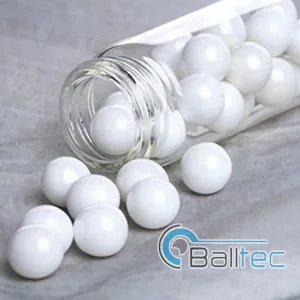
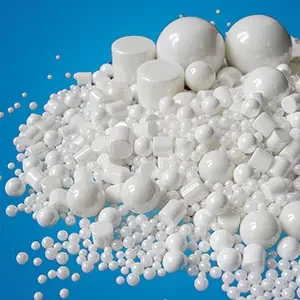
High-density spheres and beads manufactured under strict ISO quality controls for agitator bead mills, ball mills, and precision surface polishing systems.
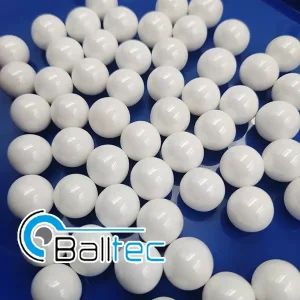
In modern industrial ultra-fine wet milling, the selection of grinding media directly dictates operational energy efficiency, product purity, and total manufacturing costs. As global industries transition toward sub-micron and nanometer particle size distributions—driven by energy storage technologies, electronic ceramics, advanced coatings, and pharmaceutical suspensions—the market demand for premier High-Quality Zirconium Oxide Grinding Beads Manufacturers & Exporters has reached unprecedented heights.
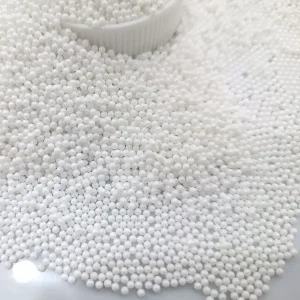
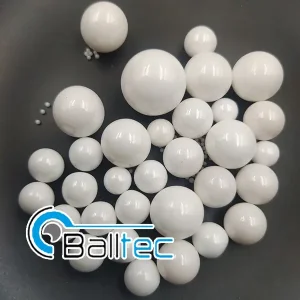
Zirconium oxide ($ZrO_2$), stabilized with yttrium oxide ($Y_2O_3$) or cerium oxide ($CeO_2$), represents the pinnacle of industrial ceramic grinding media technology. Exhibiting a theoretical density exceeding $6.05\,g/cm^3$, high fracture toughness ($K_{IC} \ge 9.0\,MPa\cdot m^{1/2}$), and extreme Mohs hardness (9.0+), Yttria-Stabilized Tetragonal Zirconia Polycrystal (Y-TZP) beads offer unmatched kinetic impact energy transfer inside high-energy agitator bead mills. This white paper serves as an authoritative guide for global procurement directors, chemical process engineers, and plant managers seeking to optimize wet milling circuits while minimizing total cost of ownership (TCO).
Key macroeconomic and technological shifts accelerating the global adoption of microcrystalline zirconia grinding media across high-value chemical sectors.
The global surge in EV battery production requires cathode active materials like Lithium Iron Phosphate (LFP) and NCM to be milled to $D_{50} < 300\,nm$. Zirconia beads eliminate iron contamination while ensuring hyper-uniform dispersion, critical for battery energy density and charging cycles.
Miniaturization of Multi-Layer Ceramic Capacitors (MLCC) demands ultra-fine Barium Titanate ($BaTiO_3$) sub-micron powders. Furthermore, Chemical Mechanical Planarization (CMP) slurries depend on high-purity $ZrO_2$ beads to prevent scratching semiconductor wafers.
Modern inkjet pigments and luxury automotive finishes demand sub-100nm colorant grinding. Zirconia beads prevent color hue shifts caused by media degradation, achieving high transparency, gloss, and UV-durability.
Rigorous engineering metrics comparing yttria-stabilized zirconia (Y-TZP), ceria-stabilized zirconia (Ce-TZP), and zirconia toughened alumina (ZTA).
| Performance Parameter | 95% Y-TZP (Yttria Stabilized) | Ce-TZP (Ceria Stabilized) | ZTA (Zirconia Toughened Alumina) | Zirconium Silicate ($ZrSiO_4$) |
|---|---|---|---|---|
| Chemical Composition | $95\%\,ZrO_2 + 5\%\,Y_2O_3$ | $80\%\,ZrO_2 + 20\%\,CeO_2$ | $20-30\%\,ZrO_2 + Al_2O_3$ | $65\%\,ZrO_2 + 33\%\,SiO_2$ |
| Specific Density ($g/cm^3$) | ≥ 6.00 | ≥ 6.20 | 4.10 – 4.50 | 4.00 – 4.20 |
| Bulk Density ($g/cm^3$) | 3.60 – 3.80 | 3.75 – 3.90 | 2.50 – 2.70 | 2.45 – 2.55 |
| Vickers Hardness ($HV_{10}$) | ≥ 1250 | ≥ 1180 | ≥ 1400 | ≥ 1000 |
| Fracture Toughness ($MPa\cdot m^{1/2}$) | 9.0 – 10.0 | 12.0 – 13.0 | 5.5 – 6.5 | 4.5 – 5.0 |
| Wear Rate (PPM / Hour) | < 0.01% | < 0.015% | < 0.05% | < 0.08% |
| Available Diameters | 0.05mm – 30mm | 0.4mm – 5.0mm | 0.5mm – 50mm | 0.6mm – 6.0mm |
The stellar wear resistance of yttria-stabilized zirconia grinding media stems from its stress-induced phase transformation capability ($t \rightarrow m$ transformation). During high-velocity collisions inside a horizontal bead mill, stress concentrated at micro-crack tips induces a localized crystallographic phase change from the metastable tetragonal phase to the stable monoclinic phase. This transformation is accompanied by a ~3-5% volume expansion, placing the crack tip under severe compressive stress and effectively blocking further crack propagation.
How technical procurement officers evaluate grinding media value beyond initial price per kilogram.
In electronic slurries and pharmaceutical manufacturing, media wear introduces heavy metals or unreacted phase elements. Premium Y-TZP beads utilize high-purity synthetic powders ($ZrO_2 + HfO_2 > 99.5\%$), ensuring zero heavy metal contamination during multi-day continuous milling cycles.
Media density directly scales kinetic energy transfer ($E_k = \frac{1}{2} m v^2$). Replacing standard glass or silicate media with $6.0\,g/cm^3$ zirconia beads reduces required milling retention time by up to 60%, yielding dramatic electrical power savings across manufacturing sites.
Perfectly spherical, smooth surface finish ($Ra < 0.01\,\mu m$) prevents abrasive gouging of mill agitator discs, pins, and inner chamber liners. Superior bead roundness reduces overall capital equipment maintenance expenses by extending sleeve lifespan.
Tailored bead size sizing strategies for high-energy horizontal pin mills, basket mills, and planetary ball mills.
Selecting the optimum bead diameter ($d_{media}$) is a crucial hydrodynamic variable in wet grinding system design. As a rule of thumb, the grinding media diameter should be 20 to 30 times larger than the initial feed particle size ($D_{90\_feed}$), and capable of grinding down to a final product target size where media diameter is roughly 1000 times larger than the desired target $D_{50}$.
Ensuring seamless international supply chain integration with certified quality management systems and local technical service.
All production operations strictly comply with ISO 9001:2015 Quality Management Systems, ISO 14001 Environmental Management, and ISO 45001 Occupational Health & Safety. Every shipment includes full batch traceability certificates (COA) specifying laser diffraction particle size, density, and wear metrics.
For pharmaceutical wet milling (API size reduction) and matcha green tea food milling, our zirconia ceramic media pass rigorous FDA food contact standard tests, as well as EU REACH and RoHS heavy-metal compliance screenings.
Standard export packaging includes heavy-duty 25kg plastic drums placed inside ISPM-15 compliant heat-treated wooden crates, or 1000kg reinforced FIBC super sacks. Express air freight sampling and global container shipping logistics are available worldwide.
Pioneering the next era of ceramic material synthesis through sub-micron powder tailoring and green manufacturing.
As nanomanufacturing requirements push past the 50-nanometer threshold, next-generation zirconia grinding media development is focusing on three key technology pillars:
By implementing ultra-fast spark plasma sintering (SPS) and low-temperature hot isostatic pressing (HIP), ceramic engineers are successfully suppressing grain growth during densification. Maintaining average grain sizes below 100 nm doubles the material's flexural strength, virtually eliminating surface micro-chipping even at extreme shaft rotation speeds (up to 20 m/s).
Transitioning from traditional gas-fired tunnel kilns to automated high-efficiency electric roller hearth kilns powered by renewable energy sources drastically reduces the carbon footprint per ton of ceramic media produced, aligning with global ESG compliance mandates for battery supply chains.
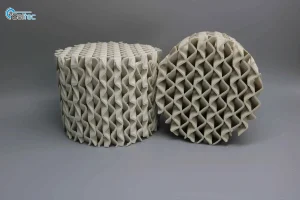
Explore our extended portfolio of premium yttria-stabilized, alumina, and structured ceramic components for global export.
Expert answers to common engineering questions regarding zirconia bead loading, wear rates, and chemical compatibility.