Follow 


Global Whitepaper on Precision Ceramic Media, Active Mass Transfer Adsorbents, and Passive Structural Engineering Components for Demanding Industrial Environments.
Engineered for wet and dry milling in ultra-fine particle refinement, battery cathode slurries, and precision glaze operations.
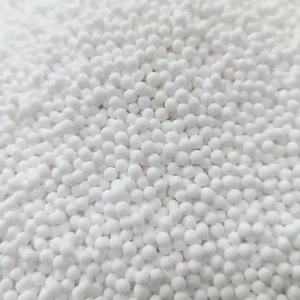
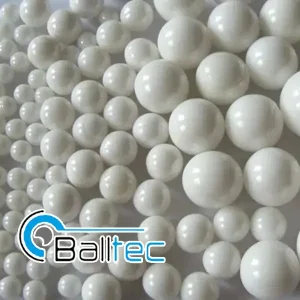
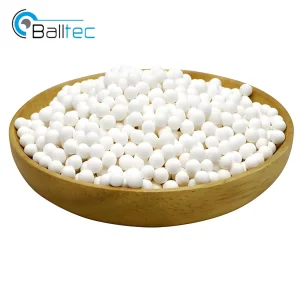
In modern process engineering and high-performance manufacturing, components are engineered either to actively drive catalytic/adsorptive reactions or passively deliver exceptional structural resilience.
Active components engage directly in chemical equilibrium, moisture capture, molecular discrimination, and catalysis. They provide high surface areas, tunable crystal pore diameters, and chemical kinetics.
Passive ceramic components provide structural inertia, extreme compressive strength, thermal buffering, and corrosion-free operation under aggressive chemical and tribological exposure.
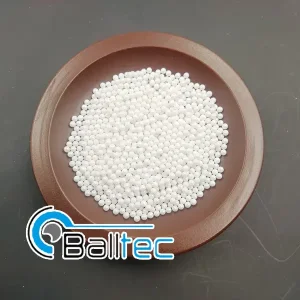
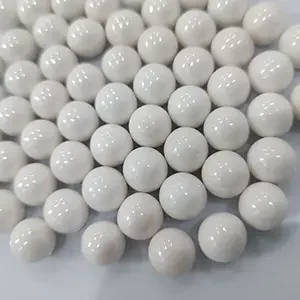
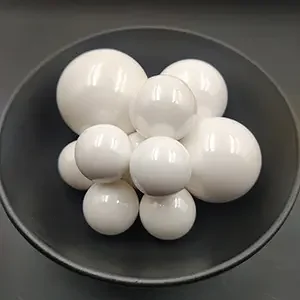
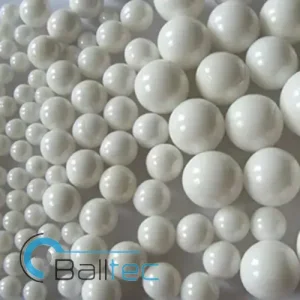
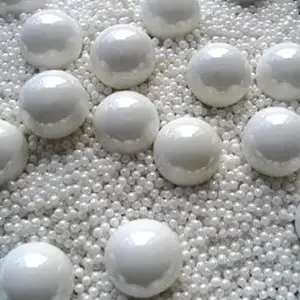
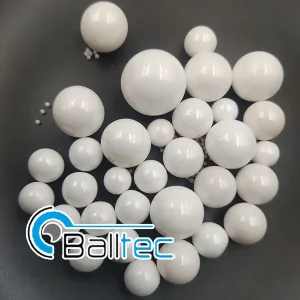
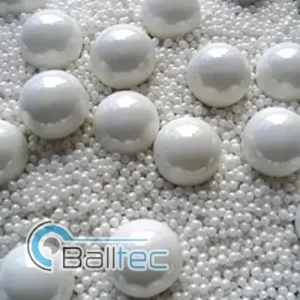
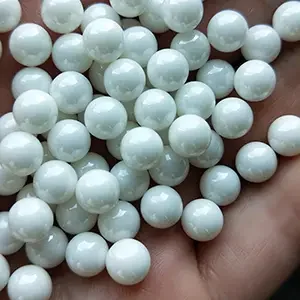
Bridging active kinetics and passive wear endurance, advanced zirconia (Y-TZP, Ce-TZP) and high-density alumina balls act as kinetic transfer nodes for nanometer-scale particle comminution.
Industrial demand across Europe, North America, and the Asia-Pacific region is shifting away from low-cost fused silicates toward engineered sintered microcrystalline ceramics.
Reliable procurement depends on consistent mechanical tolerances, regulatory conformity, and stable bulk supply chains.
Every production campaign follows closed-loop tracking from primary mineral beneficiation through spray drying, isostatic compaction, and tunnel kiln firing. Certified under international quality, environmental, and occupational safety systems.
Engineered for moisture-sensitive materials. Molecular sieves and activated alumina are delivered in hermetically sealed 200L steel drums or 25kg foil-lined multi-wall bags, preventing premature saturation during transit.
Complete documentation packages accompany every order, including ICP-OES chemical analysis, XRD crystallographic phase determinations, SEM grain boundary scans, and pycnometric true density verifications.
Real-world integration where material durability, phase purity, and dimensional tolerances dictate operational efficiency.
During the wet milling of Lithium Iron Phosphate (LFP) precursor materials, any contamination by free iron (Fe) or metallic impurities reduces battery cycle life and cell safety. Ultra-fine Y-TZP beads (0.1mm - 0.6mm) deliver the kinetic energy needed for sub-micron sizing with near-zero wear.
Refineries operating heavy feedstocks use inert high-crush-strength alumina ceramic balls (99% and 92% Al2O3) to hold noble-metal catalyst beds in place under severe thermal cycling and corrosive sulfide environments.
Silicon Nitride (Si3N4) ceramic bearing balls (grades G3, G5) provide high dielectric strength, eliminating the electrical erosion and fluting caused by stray inverter currents in high-voltage EV drive motors.
Continuous investment in advanced powder synthesis, nano-grain boundary engineering, and precision post-processing.
Development of mixed oxide stabilization (Y-Ce-TZP) to eliminate low-temperature hydrothermal degradation in aqueous milling systems.
Scaling sub-micron 99.999% chemical co-precipitation routes for dental aesthetics and solid oxide fuel cell (SOFC) thin-film membranes.
Transition to electric atmosphere-controlled continuous tunnel kilns, cutting embedded energy consumption by 35% across mass production lines.
Integration of multi-camera optical sorters with AI vision to guarantee zero dimensional deviation on high-speed bearing ball production.
Direct technical answers addressing physical criteria, chemical compatibility, and procurement logistics.
Yttria-stabilized zirconia beads provide a density of ~6.0 g/cm³, whereas 99% alumina media is ~3.6-3.9 g/cm³. The higher mass of zirconia generates significantly higher kinetic energy per impact, reducing milling duration and making it suitable for sub-micron dispersion in paints, inks, and battery materials. High-purity alumina offers a lower-cost option where alumina trace wear is process-compatible.
Type 4A molecular sieves feature an effective pore opening of 4 Angstroms, ideal for drying natural gas, refrigerants, and air streams without co-adsorbing larger hydrocarbons. Type 5A (5 Angstroms) separates normal paraffins from branched hydrocarbons and enriches oxygen. Type 13X (10 Angstroms) is selected for cryogenic pre-purification to eliminate both H2O and CO2.
Defined by ISO 3290 and ABMA standards, ball precision grades specify limits on sphericity, diameter variation, and surface roughness (Ra). A G3 ball has a sphericity tolerance of 0.08 µm and maximum roughness of 0.014 µm Ra, whereas G5 permits up to 0.13 µm sphericity. Lower numbers denote tighter geometric accuracy, essential for high-speed dental spindles and EV motors.
Every shipment is accompanied by verified Certificates of Analysis (COA) specifying particle size distribution, pycnometric density, wear-rate metrics, and chemical purity. We provide full copies of our ISO 9001, ISO 14001, and ISO 18001 management certificates, as well as RoHS/REACH declarations upon request.
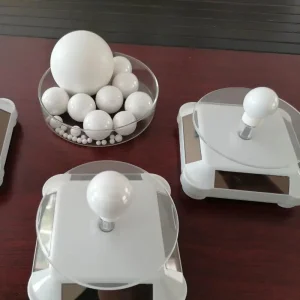
Yes. Supported by our 100,000 m² integrated production base in Pingxiang, Jiangxi, we manufacture customized diameters from 0.05mm micro-beads up to 75mm industrial balls. Custom doping profiles (such as ceria stabilization or customized alumina blends) can be formulated for specific milling machines or catalyst architectures.
Standard grades are maintained in regional safety stocks for rapid turnaround. Full container loads (FCL) of custom sintering runs typically ship within 14 to 21 business days from our port hubs in Shanghai and Shenzhen, with palletized, shrink-wrapped steel drum packaging.
Complete your supply chain requirements with our direct factory catalog of specialized engineered media.