Follow 


Direct factory supply manufactured under rigorous ISO standards for extreme wear resistance and chemical purity.
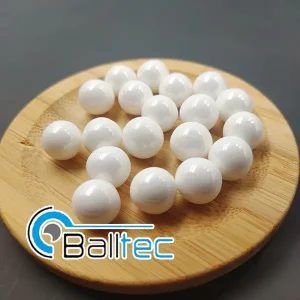
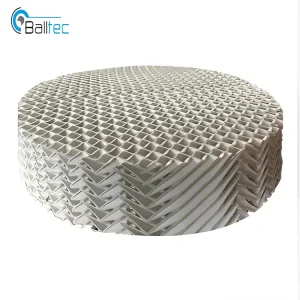
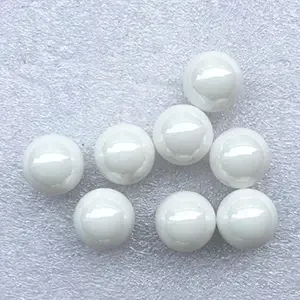
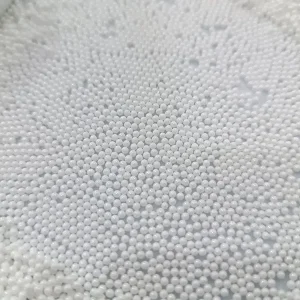
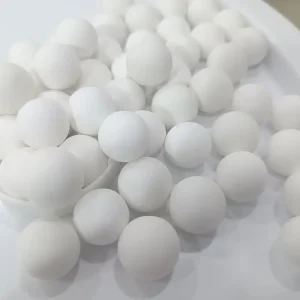
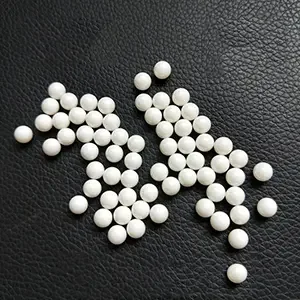
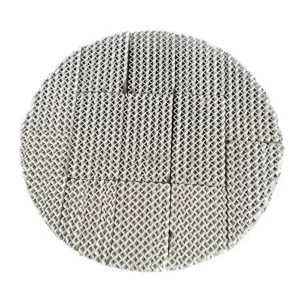
In modern industrial processing, particle size reduction, dispersion stability, and fluid mass transfer dictate the thermal efficiency, chemical purity, and operational economy of end-tier products. As global manufacturing transitions into sub-micron and nanometer regimes—spanning lithium-ion battery precursor synthesis, semiconductor CMP (Chemical Mechanical Planarization) slurries, and advanced dielectric ceramics—the selection of grinding media directly determines total cost of ownership (TCO) and product quality.
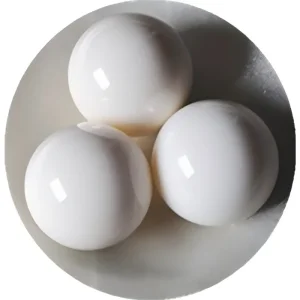
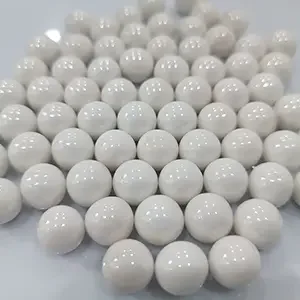
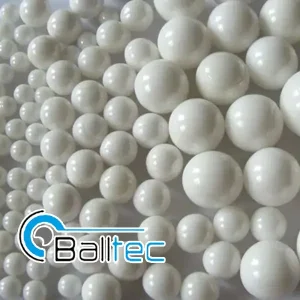
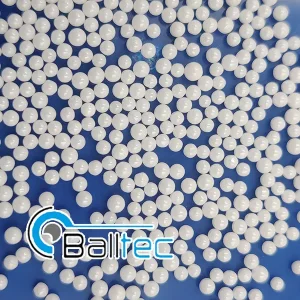
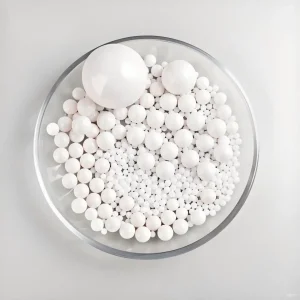
Alumina beads (consisting primarily of alpha-alumina, $\alpha-Al_2O_3$) represent the benchmark ceramic media for high-energy stirred mills, vertical attritors, and horizontal bead mills. Unlike traditional glass beads or silica media, high-purity alumina micro-beads exhibit exceptional mechanical hardness (Vickers $>14\text{ GPa}$), high specific density ($3.60 - 3.95\text{ g/cm}^3$), and supreme chemical inertness across corrosive acid and alkaline matrices.
Sintered at $1600^\circ\text{C}-1700^\circ\text{C}$ to form dense, fine-grained alpha-alumina crystals with internal porosity near zero ($<0.01\%$).
Optimized density delivers maximum kinetic impact energy ($E_k = \frac{1}{2}mv^2$), significantly reducing required milling residence times.
Wear loss rates under $<0.005\text{ g/kg}\cdot\text{h}$ prevent silica or heavy-metal contamination in ultra-pure chemical processes.
Isostatic pressing and drip-forming techniques ensure sphericity ratio $>0.95$, preventing bead compaction and screen clogging.
As premier wholesale alumina bead manufacturers & exporters, industrial facilities rely on our engineered ceramic spheres to lower operational energy draw, minimize batch contamination, and ensure narrow particle size distribution (PSD) in high-throughput liquid dispersion operations.
Analyzing cross-regional adoption of advanced ceramic media across North America, Europe, and the Asia-Pacific industrial belts.
Driven by heavy investments in domestic battery giga-factories and specialty chemical production. High demand for $95\%$ to $99.5\%$ purity micro-alumina beads ($0.1\text{mm} - 2.0\text{mm}$) capable of operating continuously in high-tip-speed horizontal mills ($14\text{ m/s}$) for automotive paint primers, ink formulations, and lithium iron phosphate ($LiFePO_4$) wet milling.
EU manufacturing emphasizes REACH compliance, low carbon footprint manufacturing, and extreme chemical purity. European chemical and mining processing plants favor high-density alumina balls and inert support media for catalysis towers, gas scrubbers, and ultra-fine calcium carbonate processing for paper and plastic fillers.
Accounting for over $60\%$ of global ceramic grinding media consumption. Rapid expansion in electronic ceramics (MLCCs), semiconductor materials, and non-metallic mineral refinement across China, Japan, Korea, and Southeast Asia demands scalable B2B wholesale supply chains with minimal batch-to-batch variance.
The performance of alumina beads is governed by powder stoichiometry, forming homogeny, and thermal sintering profiles. Modern production eliminates internal voids, micro-cracks, and structural asymmetry through a tightly controlled four-stage technical process:
| Grade Standard | $Al_2O_3$ Content | Density ($\text{g/cm}^3$) | Mohs Hardness | Water Absorption | Primary Application |
|---|---|---|---|---|---|
| High-Purity 99.5% | $\ge 99.5\%$ | $\ge 3.90$ | 9.0 | $<0.01\%$ | Battery Cathode/Anode, CMP Slurries, Pharma |
| Industrial 95% Grade | $\ge 95.0\%$ | $\ge 3.65$ | 9.0 | $<0.02\%$ | Zircon Sand Milling, Technical Ceramics, Inks |
| Medium Alumina 92% | $\ge 92.0\%$ | $\ge 3.60$ | 8.5 | $<0.05\%$ | Glaze Grinding, Mineral Processing, Ball Mills |
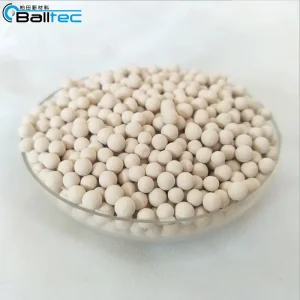
| Inert Catalyst Bed Media | $90\% - 99\%$ | $2.4 - 3.4$ | 8.0 | $<5.0\%$ | Petrochemical Reactor Towers, Distillation Beds |
Deploying tailored ceramic solutions across high-wear, thermal, and chemical industrial environments.
In New Energy manufacturing ($LiFePO_4$, NCM cathodes, and graphite anodes), particle size uniformity controls energy density and charge-discharge rates. Micro alumina beads ($0.3\text{mm} - 0.8\text{mm}$) provide rapid particle breakdown to $D_{90} < 1\,\mu\text{m}$ without introducing magnetic metallic iron contamination.
For high-end automotive primers, metallic inks, and inkjet formulations, agglomerated pigment particles must be dispersed to sub-micron dimensions. High sphericity alumina beads reduce mill hydraulic resistance, enabling max flow rates and brilliant color strength.
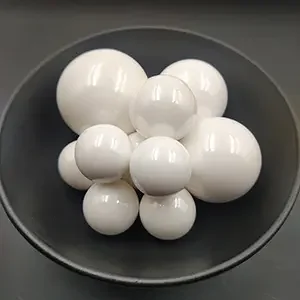
Large-diameter inert alumina balls ($13\text{mm} - 50\text{mm}$) act as bed toppers and bottom support structures in ammonia converters, desulfurizer columns, and hydrocracking units, enduring extreme thermal shock ($>1000^\circ\text{C}$) and acid corrosion.
Processing raw materials such as kaolin, calcium carbonate, and zircon sand requires cost-effective high-crush-strength media. Medium-high alumina balls optimize energy efficiency in large continuous ball mills, reducing per-ton grinding costs.
Global procurement directors face persistent challenges regarding raw material cost volatility, supply bottlenecks, and batch inconsistency. Our manufacturing base, situated in the renowned Pingxiang Industrial Ceramic Cluster in Jiangxi, China, offers unequaled structural resilience and supply agility:
From raw bauxite refinement and calcined alumina preparation to shape forming and high-temperature kiln firing, 100% of processing occurs in-house, safeguarding cost structures against external supply disruptions.
Integrated automated packing lines allow standard bead sizes ($0.5\text{mm} - 10\text{mm}$) to be fulfilled from ready inventory within 7 days, with direct rail and port access via Ningbo, Shanghai, and Shenzhen harbors.
Operating multiple continuous roller kilns with a combined annual ceramic media throughput exceeding 35,000 metric tons, easily accommodating large enterprise spot and long-term contract orders.
By leveraging standardized, eco-friendly natural gas sintering kilns and automated size-sorting equipment, our facilities ensure that every bulk shipment matches technical specifications delivered during sample testing phases.
Maintaining full traceability and laboratory verification for international industrial compliance.
Certified under ISO 9001:2015 Quality Management, ISO 14001:2015 Environmental Systems, and ISO 45001 Occupational Health & Safety standards.
Microhardness evaluated via Vickers diamond indenter methodology ($HV_{0.5}$) to ensure peak resistance to attrition and structural fracturing.
Fully compliant with EU REACH regulations and RoHS directives. Zero lead, mercury, or harmful heavy metal leaching in liquid systems.
Every shipment is accompanied by a Factory Inspection Certificate detailing specific gravity, bulk density, crush strength, and PSD curves.
Comprehensive grinding, packing, and adsorption materials for specialized process engineering.
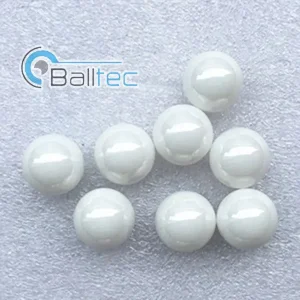
Engineering insights regarding selection, wear metrics, and mill loading calculations.