Industrial-Grade Advanced Ceramics

Wholesale Zirconia Bearing Balls Manufacturer & Exporters

Ultra-Precision Y-TZP, Ce-TZP, and Composite Zirconia Spheres Engineerd for Extreme Wear, High-Speed Spindles, Acid-Alkali Pumps, and Semiconductor Processing.

Featured Zirconia & Precision Ceramic Products

Direct factory supply of high-sphericity ceramic bearing balls, micro-milling media, and specialized tower packings manufactured under stringent ISO 9001 quality standards.
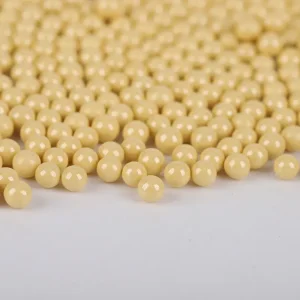
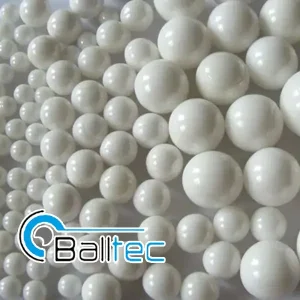
High-Quality Ceria Stabilized Zirconia Bead
High-Quality Ceria Stabilized Zirconia Bead/Cerium Zirconia Oxide Bead/Ce-TZP Bead Factories, Exporters
View Details
Wholesale Zirconia Bead for Grinding
Wholesale Zirconia Bead for Grinding Precision Ball Milling and Powder Processing Manufacturers, Suppliers
View Details
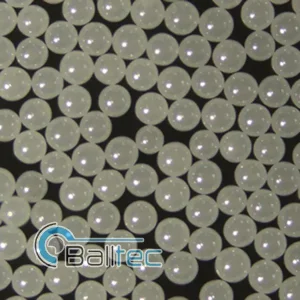
Zirconium Silicate Bead
High-Quality Zirconium Silicate Bead for Sand Mill Use Factory, Exporters
View Details
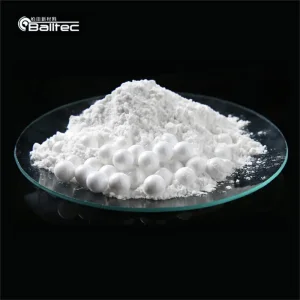
Nanometer Zirconia Powder
High-Quality Nanometer Zirconia Powder/ Monoclinic Zirconium Oxide Powder /ZrO₂ Factories, Exporter
View Details
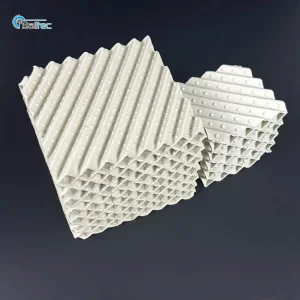
Ceramic Corrugated Structure Tower Packing
China Ceramic Corrugated Structure Tower Packing & Ceramic Bellow Packing for Tower Manufacturers, Factory
View Details
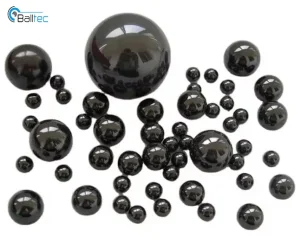
G3-G5 Ultra Precision Silicon Nitride Ceramic Balls
Wholesale G3-G5 Ultra Precision Silicon Nitride Ceramic Balls High Speed Anti-Friction Bearing Balls Suppliers, Exporters
View Details
Yttria Stabilized Zirconia Ceramic Ball
Wholesale High Strength Yttria Stabilized Zirconia Ceramic Zirconium Oxide Ball Grinding Beads Factory, Exporter
View Details
Characteristics of Zirconia Ceramic Balls
High-Quality Characteristics of Zirconia Ceramic Balls Manufacturers, Suppliers
View Details
Industrial Ceramic Whitepaper

Global Commercial Status & Material Engineering of Zirconia Bearing Balls

An authoritative analysis of transformation toughening mechanisms, microstructural density, tribological behavior, and global supply chain dynamics shaping next-generation precision ceramic bearing components.

Transformation Toughening & Stress Resistance

Unlike conventional structural ceramics, Yttrium-stabilized Tetragonal Zirconia Polycrystal (Y-TZP) utilizes a phase transformation mechanism ($t \rightarrow m$) to mitigate crack propagation. Under localized mechanical stress, the metastable tetragonal phase transforms into a monoclinic phase, expanding by 3% to 5% in volume. This volume expansion induces compressive micro-stress around crack tips, effectively arresting crack growth and imparting exceptional fracture toughness ($K_{IC} > 8-10 \text{ MPa}\cdot\text{m}^{1/2}$).

Sub-Micron Tribology & Contact Fatigue

In high-speed hybrid bearings, Zirconia ($ZrO_2$) bearing balls yield a density of ~6.05 g/cm³, providing ideal inertial balance between lighter Silicon Nitride ($Si_3N_4$) and heavy bearing steels. Their near-zero porosity and surface roughness (down to $Ra \le 0.005 \ \mu\text{m}$ for G3 grades) virtually eliminate adhesive wear and fretting corrosion in unlubricated or chemically aggressive environments.

Comparative Material Metrics: Advanced Ceramic Spheres vs. Bearing Steel

Material Property Y-TZP Zirconia ($ZrO_2$) Ceria Zirconia (Ce-TZP) Silicon Nitride ($Si_3N_4$) Alumina ($Al_2O_3$ 99.8%) Chrome Steel (AISI 52100)
Density (g/cm³) 6.05 6.20 3.25 3.95 7.85
Vickers Hardness (HV10) 1250 - 1350 1150 - 1250 1400 - 1700 1600 - 1800 700 - 800
Fracture Toughness ($MPa\cdot m^{1/2}$) 9.0 - 12.0 13.0 - 15.0 6.0 - 7.5 3.5 - 4.5 20.0
Thermal Expansion ($10^{-6}/K$) 10.5 9.8 3.2 8.0 12.5
Max Operating Temp (°C) 800 750 1000 1300 160
Electrical Resistivity ($\Omega\cdot cm$) $>10^{12}$ (Insulator) $>10^{11}$ (Insulator) $>10^{14}$ (Insulator) $>10^{14}$ (Insulator) $10^{-5}$ (Conductor)
Information Gain Note: Thermal Coefficient Matching Advantage

A crucial engineering advantage of Y-TZP Zirconia over Silicon Nitride is its coefficient of thermal expansion ($10.5 \times 10^{-6}/K$), which closely matches carbon steel and stainless steel housing components. This prevents thermal stress mismatches, shaft binding, or premature micro-clearance failures in high-temperature industrial pumps and automotive valvetrains.

Precision Manufacturing Scale

China Manufacturing Supremacy & Capacity Metrics

Integrating ultra-fine powder synthesis, Cold Isostatic Pressing (CIP), and precision lapping into a high-yield global export platform.

100,000 m²
Integrated Production Campus
≤ G3
Ultra Precision Sphericity
6.05 g/cm³
Theoretical Density Achieved
80+
Global Export Countries
Application Engineering

Targeted Industrial Use Cases for Zirconia Bearing Balls

Engineered for severe-service environments where standard steel or lower-tier ceramics fail due to chemical attack, electrical erosion, or extreme mechanical wear.

Chemical & Corrosive Fluid Pumps

In check valves and centrifugal pumps handling concentrated acids, alkalis, and slurry suspensions, Zirconia balls offer total chemical inertness. They prevent seal leakage and valve seat deformation caused by chemical cavitation.

EV Motor & Wind Turbine Bearings

Electric motor bearings suffer from stray current arcing (electrical erosion). Zirconia's high dielectric breakdown strength ($>10 \text{ kV/mm}$) acts as a physical electrical barrier, eliminating micro-pitting on inner and outer bearing races.

Semiconductor Processing Equipment

Vacuum robotics, CMP (Chemical Mechanical Planarization) slurry valves, and cleanroom handling systems utilize high-purity Y-TZP balls to prevent metallic ion contamination during microchip fabrication.

High-Speed CNC Machine Tool Spindles

Hybrid ceramic bearings incorporating G3 precision Zirconia balls reduce centrifugal load at high RPMs ($> 30,000 \text{ RPM}$), lowering internal operating temperatures and extending spindle precision maintenance intervals by up to 300%.

Aerospace & Deep-Space Flow Meters

Cryogenic liquid oxygen and fuel flow meters rely on custom-dimensioned Zirconia bearing balls for non-magnetic operation, dimensional stability at $-196^\circ\text{C}$, and resistance to extreme thermal shocks.

Ultra-Fine Nanoparticle Grinding

Micro-ball mills processing lithium iron phosphate ($LiFePO_4$), MLCC dielectric powders, and pharmaceutical actives utilize sub-millimeter Zirconia beads to achieve narrow particle size distributions ($D_{90} < 100 \text{ nm}$).

Market Dynamics

Industry Development Trends Shaping Zirconia Ceramics

The global industrial landscape for precision ceramics is experiencing a structural pivot toward nanocrystalline grain structures and green manufacturing processes. Key developments include:

  • Nanoscale Grain Refinement: Transitioning from 300nm sub-micron powders to <100nm ultra-fine powders to enhance Weibull modulus ($m > 14$) and eliminate catastrophic brittle failures.
  • Additive-Free Hot Isostatic Pressing (HIP): Post-sintering under high argon pressure (200 MPa at 1450°C) eliminates residual micro-voids, yielding 99.99% density.
  • Hybrid Composite Formulations: Zirconia Toughened Alumina (ZTA) and Alumina Toughened Zirconia (ATZ) tailored for specific trade-offs between extreme hardness and crack resistance.
Strategic Procurement

Global Procurement Needs & Supply Chain Assurance

International OEM purchasing directors and technical procurement managers demand more than competitive wholesale pricing. Critical supply chain requirements include:

  • Lot-to-Lot Microstructural Consistency: Strict controls over grain size variance, phase composition ($ZrO_2 + Y_2O_3$), and chemical purity (trace $SiO_2, Fe_2O_3 < 0.01\%$).
  • Full Metrology Traceability: Complete inspection certificates for sphericity (ISO 3290 Grade 3/5/10), diameter variation, surface roughness ($Ra$), and crush strength.
  • China Export Efficiency: Leveraging the Pingxiang industrial ceramic cluster for rapid mold turnaround, custom diameter tooling, and resilient international freight logistics.

Extended Industrial & Grinding Media Portfolio

Explore our comprehensive range of high-density grinding balls, molecular sieves, and custom industrial ceramic formulations.
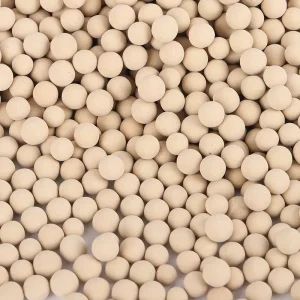
4A Molecular Sieve
High-Quality 4A Molecular Sieve High Quality Molecular Sieve 4A for Removal of Hydrocarbons Ammonia and Methanol From Gas Streams Manufacturers, Factory
View Details
Food Grade Zirconia Media
China Food Grade Zirconia Media Dairy Powder High Purity Milling Factories, Exporters
View Details
Zirconia Grinding Media for Pigment
Wholesale Wear-Resistant Zirconia Grinding Media for Pigment Dispersion Suppliers, Factory
View Details
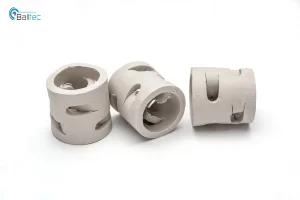
Ceramic Pall Ring
High-Quality Factory Price Scrubber Random Tower Packing Ceramic Pall Ring for Drying and Dehydration in Chemical Industry Factory, Factories
View Details
Zirconium Oxide Grinding Bead
China Zirconium Oxide Grinding Bead for Uniform Dispersion and Material Refinement Suppliers, Exporters
View Details
Zirconia Ceramic Grinding Solution
Wholesale Zirconia Ceramic Grinding Solution for Industrial Battery Materials Suppliers, Factories
View Details
ZrO2 Grinding Ball
Wholesale ZrO2 Grinding Ball for Efficient Material Grinding and Homogenization Manufacturer, Factory
View Details
High-Quality Zirconium Oxide Grinding Bead
High-Quality Zirconium Oxide Grinding Bead for Reliable Ball Milling and Powder Milling Manufacturer, Manufacturers
View Details
Technical & Procurement Insights

Frequently Asked Questions (Q&A)

In-depth technical clarifications for process engineers, quality control teams, and international supply managers.

What key differences exist between Yttria-Stabilized (Y-TZP) and Ceria-Stabilized (Ce-TZP) Zirconia bearing balls?
Yttria-Stabilized Zirconia (Y-TZP) is stabilized with ~3 mol% $Y_2O_3$, yielding exceptionally high mechanical strength (>1000 MPa bending strength) and fine grain size (<0.5 $\mu m$). It is the preferred choice for high-precision bearing balls (G3-G10) and high-speed rotary applications. Ceria-Stabilized Zirconia (Ce-TZP), stabilized with ~10-12 mol% $CeO_2$, possesses superior fracture toughness and remarkable resistance to Low-Temperature Degradation (LTD) or hydrothermal aging in hot aqueous environment, making it ideal for wet chemical slurries and heavy-impact grinding.
How does Zirconia ($ZrO_2$) compare against Silicon Nitride ($Si_3N_4$) for bearing ball applications?
Silicon Nitride ($Si_3N_4$) is lighter (density 3.25 g/cm³) and operates at higher maximum temperatures (up to 1000°C), making it dominant in extreme-speed jet engine bearings and high-RPM machine tool spindles. However, Zirconia ($ZrO_2$) has a density of ~6.05 g/cm³ and a thermal expansion coefficient ($10.5 \times 10^{-6}/K$) that matches carbon steel. This matching thermal expansion prevents clearance distortion in standard steel bearing rings, reducing system redesign costs for industrial pumps, automotive actuators, and chemical valves.
What precision grades are available for wholesale orders, and how are they measured?
We manufacture ceramic bearing balls conforming to ISO 3290 and ABMA Grade standards, ranging from Grade 3 (G3) to Grade 25 (G25). G3 precision requires a sphericity (deviation from spherical form) within $0.08 \ \mu m$, diameter variation within $0.08 \ \mu m$, and surface roughness $Ra \le 0.005 \ \mu m$. Every batch undergoes optical laser interferometry and ultrasonic micro-defect testing prior to export dispatch.
Why is Pingxiang, China recognized as the premier manufacturing hub for advanced industrial ceramics?
Pingxiang hosts China's most mature industrial ceramic ecosystem, integrating specialized raw material refining, Cold Isostatic Pressing (CIP) equipment manufacturers, high-temperature continuous tunnel kilns, and centralized quality testing facilities. This industrial clustering provides unparalleled production efficiency, ultra-fast custom tooling creation, and robust cost competitiveness for wholesale global exporters.
What packaging and quality documentation are provided for international sea & air export?
All wholesale precision balls are vacuum-sealed in cleanroom polyethylene bags with desiccant agents, placed inside shock-resistant foam linings, and packed into heavy-duty export wooden crates or steel drums. Accompanying documentation includes Certificate of Analysis (COA), ISO 9001 quality audit reports, Material Safety Data Sheets (MSDS), and full batch mill test certificates detailing density, hardness, and wear-rate metrics.