Industrial Ceramic Media Technical White Paper

Wholesale Zirconia Grinding Ball Manufacturer & Suppliers

High-Density Y-TZP, MSZ & Ultra-Pure Zirconium Silicate Media Engineered for Sub-Micron & Nanometer Ultrafine Grinding

Featured Media Portfolio

Precision Zirconia Media & Ceramic Components

Factory-direct advanced grinding media and ceramic solutions for ultrafine milling, dispersions, and heavy wear industrial environments.
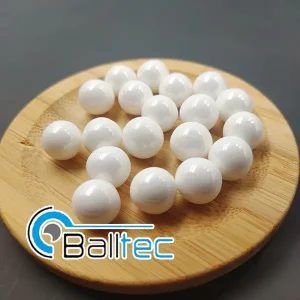
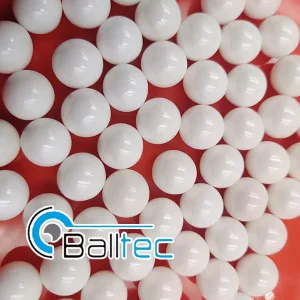
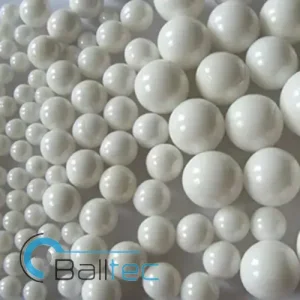
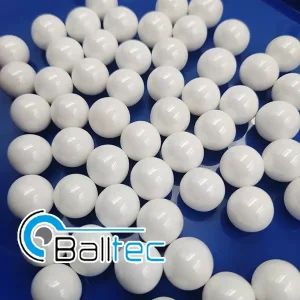
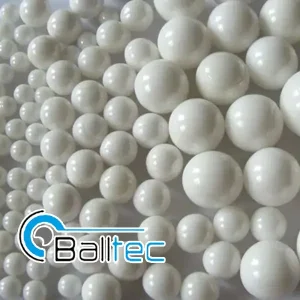
High-Quality Zirconia Grinding Ball

High-Quality Zirconia Grinding Ball for Fine Particle Grinding and Uniform Dispersion

View Technical Specs
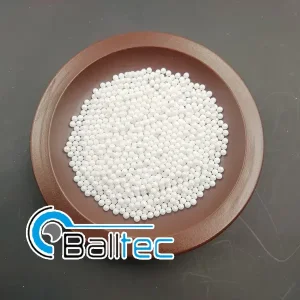
Low-Impurity Zirconia Grinding Media

China Low-Impurity Zirconia Grinding Media for Electronic Ceramic Production

View Technical Specs
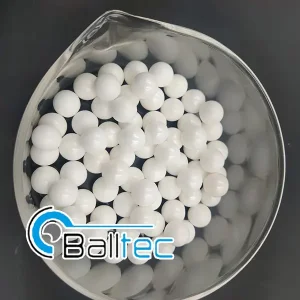
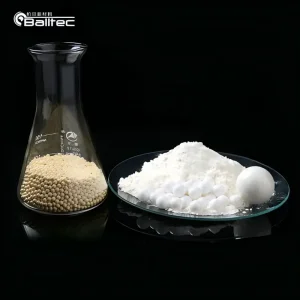
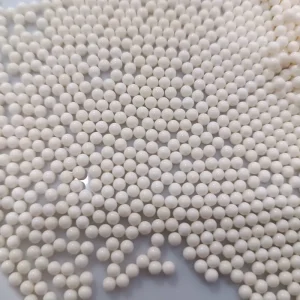
Wholesale ZrO2 Bead

Wholesale ZrO2 Bead for Grinding Uniform Dispersion and Particle Size Reduction

View Technical Specs
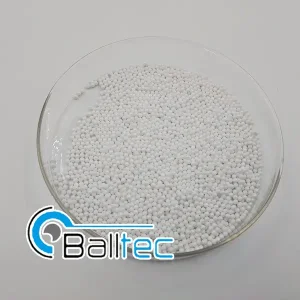
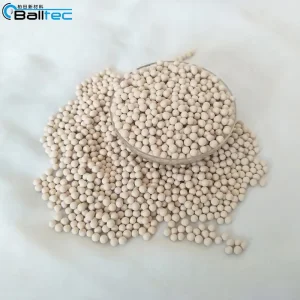
ZrO2 Grinding Bead Fine Grinding

Wholesale ZrO2 Grinding Bead for High Efficiency Fine Grinding Applications

View Technical Specs
High-Purity Zirconia Fine Chemicals

China High-Purity Zirconia Grinding Media for Fine Chemicals Processing

View Technical Specs
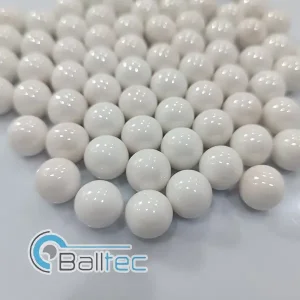
ZrO2 Zirconia Ceramic Ball

Wholesale Industrial Ceramic ZrO2 Zirconia Ceramic Ball & Zirconium Silicate Beads

View Technical Specs
Zirconia Grinding Ball Stable Performance

High-Quality Zirconia Grinding Ball High Purity Stable Performance Grinding Media

View Technical Specs
ZrO2 Zirconia Bearing

China High Temperature Resistant Zirconium Oxide White Full Ceramic ZrO2 Bearing

View Technical Specs
Industry Overview

Global Industrial Status & Market Dynamics of Zirconia Grinding Media

Understanding the transition from traditional milling media to advanced yttria-stabilized zirconia (Y-TZP) across high-tech manufacturing sectors.

In modern industrial powder processing, the requirement for narrow particle size distributions and nanometer-scale refining has fundamentally shifted the material demands on grinding media. As global industries transition towards advanced energy storage, ultra-fine electronic ceramics, pharmaceutical formulations, and high-performance automotive coatings, traditional grinding media such as forged steel balls, glass beads, and standard alumina media encounter physical limits regarding density, wear contamination, and kinetic kinetic energy transfer.

Zirconia grinding media—specifically Yttria-Stabilized Tetragonal Zirconia Polycrystal (Y-TZP), Magnesia-Stabilized Zirconia (MSZ), and Zirconium Silicate ($ZrSiO_4$)—represent the apex of wet milling technology. Operating at densities ranging from 4.0 $g/cm^3$ to over 6.0 $g/cm^3$, high-purity zirconia beads generate up to 10 to 15 times more kinetic impact energy inside high-energy agitated media mills (such as horizontal pin mills and ring mills) compared to traditional ceramic media.

Kinetic Efficiency Gains

With a density of ~6.0 g/cm³, Y-TZP zirconia balls maximize kinetic energy ($E_k = \frac{1}{2}mv^2$) during agitation, drastically shortening milling cycles by up to 50% compared to alumina.

Near-Zero Contamination

Exceptionally low wear rates (< 5 ppm/hour under standard bead mill operational benchmarks) preserve chemical purity in sensitive applications like battery cathode and MLCC dielectric slurries.

Nanometer Micro-Bead Miniaturization

Precision micro-spheroidization processes enable commercial mass production of Y-TZP beads as small as 0.05mm – 0.1mm for true nanometer dispersion below 50nm.

Material Science Data

Engineering Benchmarks & Crystal Phase Optimization

Phase Transformation Toughening (PTT) mechanisms and technical comparison of industrial grinding media.

The superior mechanical toughness of yttria-stabilized zirconia originates from its unique phase transformation toughening mechanism. At room temperature, pure zirconia ($ZrO_2$) crystallizes in a monoclinic structure, which lacks mechanical integrity for impact applications. By doping the crystal matrix with 3 mol% Yttrium Oxide ($Y_2O_3$), the tetragonal crystal phase is metastable at ambient temperatures.

When external mechanical stresses or micro-cracks propagate through a Y-TZP bead during high-speed milling, the stress field induces a phase transformation from the tetragonal ($t$) to the monoclinic ($m$) phase. This $t \to m$ transformation is accompanied by a localized volumetric expansion of ~3-5%, generating compressive stress fields that actively clamp micro-cracks shut and halt crack propagation.

Property Benchmark Y-TZP Zirconia (3mol% Y2O3) MSZ Zirconia (Magnesia Stabilized) Zirconium Silicate (ZrSiO4) 99.5% High Purity Alumina
Specific Density ($g/cm^3$) $\ge 6.00$ $\ge 5.50$ $4.00 - 4.20$ $3.68 - 3.80$
Bulk Density ($g/cm^3$) $3.70 - 3.80$ $3.30 - 3.40$ $2.50 - 2.60$ $2.20 - 2.40$
Vickers Hardness ($HV_{10}$) $\ge 1250$ $\ge 1100$ $\ge 900$ $\ge 1400$
Fracture Toughness ($MPa\cdot m^{1/2}$) $8.0 - 10.0$ $6.5 - 7.5$ $4.5 - 5.0$ $4.0 - 4.5$
Crushing Load ($\varnothing 1.0mm$) $> 350 N$ $> 280 N$ $> 150 N$ $> 120 N$
Self-Wear Rate (ppm/h) $< 2.0$ $< 8.0$ $< 25.0$ $< 40.0$

Technical Selection Insight for Process Engineers:

For applications where grinding efficiency, nano-particle targeting (<100nm), and wear-contamination avoidance are paramount—such as Lithium Iron Phosphate (LFP) cathode synthesis or MLCC barium titanate slurries—3mol% Y-TZP Zirconia Beads are mandatory. For larger volume wet-milling of non-metallic minerals, ceramic glazes, or paper coatings, Zirconium Silicate ($ZrSiO_4$) offers an optimal cost-to-performance equilibrium.

Manufacturing Dominance

China Factory Efficiency & Industrial Cluster Advantages

How integrated raw material chains, automated titrating forming, and high-capacity sintering kilns deliver superior ROI for global buyers.

100K+
m² Production Base
15,000
Tons Annual Output
0.05mm
Min Micro-Bead Precision
ISO9001
Traceable Quality System

The Pingxiang Ceramic Industrial Cluster Synergy

Located in Pingxiang, Jiangxi Province—China's historical and technological capital for advanced industrial ceramics—manufacturing facilities leverage an integrated industrial cluster. This supply ecosystem integrates chemical synthesis of high-purity sub-micron zirconium powders (via hydro-thermal precipitation or co-precipitation), automated forming lines, high-temperature Hot Isostatic Pressing (HIP), and automated spheroidization centrifuges.

Key manufacturing advantages of China's direct ceramic production infrastructure include:

  • Automated Drop-in-Oil / Titration Spheroidization: State-of-the-art dripping equipment transforms liquid chemical precursor slurries into perfectly spherical wet beads with sphericity indexes exceeding 0.98, eliminating inner air pockets and structural void flaws.
  • Continuous Sintering & Computerized Kiln Control: High-temperature tunnel kilns operating at 1450°C–1550°C ensure consistent dense microstructures ($>99.5\%$ theoretical density) and uniform crystal grain sizes ($<0.5\,\mu m$), avoiding batch-to-batch structural variance.
  • High Volume Price-to-Performance Ratio: By sourcing chemical-grade $ZrO_2$ and $Y_2O_3$ domestically and scaling automated continuous production, Chinese wholesale suppliers deliver tier-1 international quality at 30% to 50% lower total capital expenditures for international procurement directors.
End-Use Engineering

Targeted Industrial Application Scenarios

Customizing media density, hardness, and diameter parameters for diverse chemical and material engineering processes.

Lithium-Ion Battery Materials

In LFP (Lithium Iron Phosphate) and NCM (Nickel Cobalt Manganese) cathode and synthetic graphite anode production, Y-TZP micro-beads (0.2mm - 0.6mm) are critical to achieving D50 particle sizes below 300nm without introducing metallic iron (Fe) contamination that compromises cell safety.

MLCC & Electronic Ceramics

For Multi-Layer Ceramic Capacitors (MLCC) and piezoelectric sensors, ultra-pure low-impurity zirconia media process sub-micron Barium Titanate ($BaTiO_3$) powders, maintaining rigorous electrical insulation standards and dielectric stability.

Automotive Paints & Ink Pigments

In high-grade automotive refinish clearcoats, inkjet inks, and organic pigments, micro-bead dispersion reduces agglomerates to optical transparency levels while preventing media degradation that causes color shifting or haze.

Pharmaceuticals & Cosmetics

Biological cell disruption, active pharmaceutical ingredient (API) wet milling, and cosmetic titanium dioxide dispersions require certified non-toxic, chemically inert Y-TZP media resistant to acidic or alkaline CIP (Clean-in-Place) sterilization cycles.

Heavy Structural Ceramics & Mining

Large-diameter (2.0mm to 15.0mm) toughened zirconia and zirconium silicate beads are utilized in vertical stirred mills for processing heavy non-metallic minerals including calcium carbonate ($CaCO_3$), kaolin, and zircon sand.

Strategic Procurement

Global Enterprise Procurement Framework & TCO Analysis

Evaluating Total Cost of Ownership (TCO), loading ratio optimization, and wear-rate verification protocols for OEM buyers.

1. Total Cost of Ownership (TCO) vs. Initial Purchase Price

When procuring zirconia grinding balls at wholesale volumes, industrial enterprise buyers frequently fall into the trap of evaluating vendor bids based solely on initial cost per kilogram. However, an E-E-A-T validated procurement analysis proves that Total Cost of Ownership (TCO) is governed primarily by media longevity, mill throughput energy efficiency, and contamination scrap rates.

The TCO Formulation for Agitated Bead Milling:

Total Milling Cost = Media Purchase Cost + (Energy Consumption per Ton \times Rate) + (Product Loss from Contamination) + (Down-Time Maintenance for Screen Clogging)

Because high-density Y-TZP beads demonstrate a self-wear rate of $< 2$ ppm/hour compared to $> 40$ ppm/hour for standard alumina beads, the operational lifespan of Y-TZP is approximately 15 to 20 times longer. Concurrently, because the specific gravity of Y-TZP ($6.0\,g/cm^3$) is significantly higher than alumina ($3.68\,g/cm^3$), mills can operate at lower slurry viscosity thresholds and higher flow rates, reducing electrical kWh consumption per ton of processed material by up to 35%.

2. Technical Wear Rate Monitoring Protocols

To establish baseline quality metrics, prospective enterprise purchasers should enforce the following standardized verification protocols prior to signing long-term supply agreements:

  • Laboratory Bead Mill Wear Test: Run sample media in a sealed laboratory pin mill loaded at 80% volume with a standard silica or calcium carbonate slurry at 3000 RPM for 24 continuous hours. Measure weight loss before and after via precision micro-balance ($\pm 0.0001\,g$).
  • Optical Sphericity Analysis: Utilize digital image processing software to analyze a random sample of 500 beads. Sphericity ($S = \frac{4\pi A}{P^2}$) must exceed $0.98$ to guarantee smooth fluidization and prevent localized mill screen blinding.
  • Internal Porosity Inspection (SEM): Cross-section and polish sample beads, inspecting under Scanning Electron Microscopy (SEM) at $5000\times$ magnification. Microstructures must display zero closed internal gas pores and crystal grain sizes under $0.5\,\mu m$.
Technical Help Center

Frequently Asked Questions (FAQ) for Engineering & Procurement

Detailed answers to technical inquiries regarding media sizing, mill loading ratios, chemical compatibility, and supplier qualification.

What is the critical density difference between Y-TZP, MSZ, and Zirconium Silicate grinding media?
Yttria-Stabilized Tetragonal Zirconia Polycrystal (Y-TZP) offers the highest density (~6.0 g/cm³) and lowest wear rate (<2 ppm/h), making it ideal for nano-grinding and zero-contamination processes. Magnesia-Stabilized Zirconia (MSZ) has a density of ~5.5 g/cm³ and high resistance to thermal shock in large-scale industrial mills. Zirconium Silicate ($ZrSiO_4$) has a medium density of 4.0–4.2 g/cm³, providing a cost-effective bridge between alumina and pure zirconia for mid-grade fine milling.
How do I calculate the optimal bead diameter for my target particle size reduction?
As a standard rule of engineering thumb, the grinding bead diameter should be approximately 20 to 30 times larger than the initial feed particle size ($D_{90}$) and capable of reducing particles down to approximately 1/1000th of the bead diameter. For example, to achieve a target particle size of $D_{50} = 100\,nm$ (0.1 µm) from an initial feed of $2\,\mu m$, starting with 0.4–0.6mm beads for coarse reduction followed by 0.1mm micro-beads for nano-refining yields the fastest grinding kinetics.
What is the recommended volumetric loading ratio for horizontal agitator bead mills?
For standard horizontal pin or disc mills, the recommended media loading volume ranges between 80% and 85% of the net grinding chamber volume. Loading below 75% results in excessive bead-to-agitator impact leading to media cleavage and chamber liner wear. Loading above 85% risks motor over-torque, excessive heat buildup, and separator screen clogging.
How does Y-TZP prevent cross-contamination in battery cathode slurry processing?
Y-TZP contains zero metallic iron or heavy metals in its structural matrix, being synthesized strictly from chemical-grade $ZrO_2$ and $Y_2O_3$. Because its wear rate is exceptionally minimal, any minute trace quantity of zirconia that enters the slurry is chemically inert, non-conductive, and does not form metallic dendrites during battery charge/discharge cycles, maintaining thermal stability and preventing short circuits.
Can custom sizes and OEM packaging options be ordered directly from Pingxiang factories?
Yes. Direct factory manufacturing allows custom bead sizing down to $\pm 0.02\,mm$ tolerances, tailored crystal composition formulations, and international standard export packaging options—including 25kg vacuum-sealed steel drums, 500kg heavy-duty bulk bags, or customized private-label moisture-proof drums.
Full Product Catalog

Complementary Advanced Ceramic & Chemical Products

Explore our complete range of specialized grinding media, powder raw materials, bearing components, and chemical mass transfer packings.
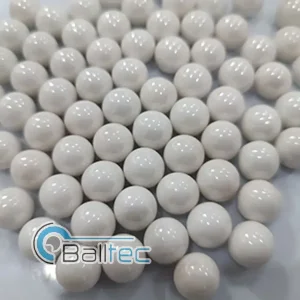
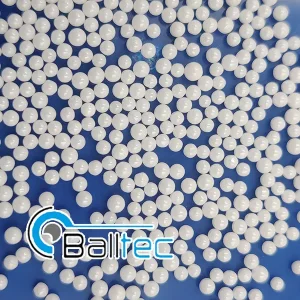
ZrO2 Grinding Bead Precision Milling

Wholesale ZrO2 Grinding Bead for Precision Ball Milling and Powder Processing

View Technical Specs
Zirconia Ball for Grinding Superior Quality

Wholesale Zirconia Ball for Grinding Superior Quality Grinding Media for Various Applications

View Technical Specs
Magnesia Stabilizer Zirconia Powder

Wholesale Magnesia Stabilizer Zirconia Powder Supplier, Suppliers

View Technical Specs
China 3A Molecular Sieve

China 3A Molecular Sieve High Quality Desiccant 3A Zeolite Price Molecular Sieve Adsorbents

View Technical Specs
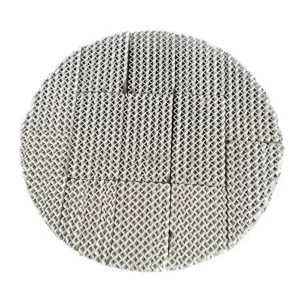
Ceramic Structured Packing

High-Quality Wear & Heat Resistant Ceramic Structured Packing Manufacturers, Supplier

View Technical Specs
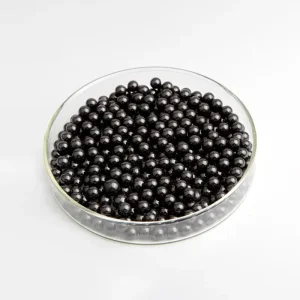
Silicon Nitride Ceramic Bearing Ball

High-Quality Silicon Nitride Ceramic Bearing Ball Manufacturers, Factory

View Technical Specs
ZrO2 Grinding Ball Long Service Life

High-Quality ZrO2 Grinding Ball for Long Service Life Grinding Media Applications

View Technical Specs
99.9% Al2O3 Grinding Bead

Wholesale 99.9% Al2O3 Grinding Bead Ceramic Grinding Media Supplier, Factory

View Technical Specs