Follow 


Engineered for high-temperature hydrocrackers, fixed-bed reactors, and continuous chemical grinding processes located along the Scheldt industrial corridor.
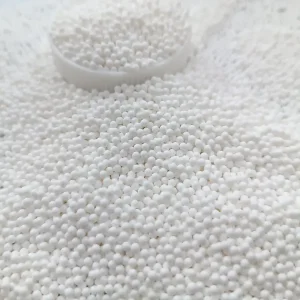
Al2O3 92%-99% purity, exceptional wear resistance for fine industrial slurries and pigments.
View Antwerp Product Specs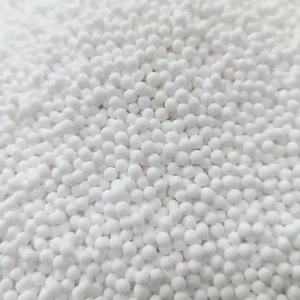
High adsorption capacity, low abrasion loss, specialized for olefin & compressed air purification.
View Antwerp Product Specs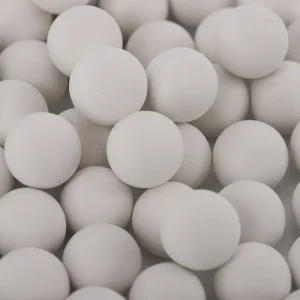
Optimized light density, high toughness, minimizes mill liner wear during nano-dispersion.
View Antwerp Product Specs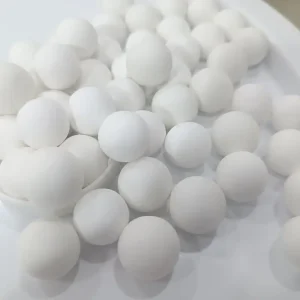
Ultra-low leachable silica (<0.1%), zero catalyst poisoning, high cold crushing load capacity.
View Antwerp Product SpecsA rigorous evaluation of catalytic bed dynamics, chemical stability, and process intensification across Western Europe’s primary integrated chemical platform.
The Port of Antwerp-Bruges hosts Europe’s largest integrated petrochemical cluster and the second largest globally after Houston, Texas. Spanning both banks of the River Scheldt, this critical industrial ecosystem integrates world-scale steam crackers, hydroprocessing facilities, ethylene oxide units, and specialty polymer manufacturing plants operated by multinational chemical majors including BASF, TotalEnergies, Ineos, and Covestro. Within these capital-intensive, continuous-flow operations, high-performance ceramic balls are not merely passive consumables—they are mission-critical mechanical components ensuring hydrodynamic stability, optimal mass transfer, and strict protection of precious-metal catalyst beds.
Direct economic throughput dependent on stable reactor turnaround schedules and zero-downtime packed column efficiencies across the ARA region.
Leachable SiO2 strictly constrained to <0.2% in downstream hydrodesulfurization (HDS) and reforming reactors to eliminate catalyst active site masking.
Reactor beds operating at up to 180 bar and 550°C demand uniform cold crushing strength (CCS) exceeding 25 kN/sphere for 50mm support grades.
In hydrocracking, catalytic reforming, and ammonia synthesis units operating in Antwerp, catalyst degradation and premature pressure drop spikes represent massive financial liabilities. Plant engineers require ceramic support media manufactured under strict crystalline-phase sintering regimes. When feedstock flows through fixed catalyst beds at high superficial velocities, uneven ball sphericity or low bulk density leads to severe bed channeling, localized hot spots, and fluidization attrition. Furthermore, in sulfur recovery units (Claus units) and steam methane reforming (SMR) plants, standard low-alumina refractory balls suffer thermal shock failure and silica leaching, which rapidly fouls downstream heat exchangers.
Our industrial ceramic spheres engineered for Antwerp delivery undergo hot isostatic pressing (HIP) and ultra-high-temperature sintering at 1,650°C to 1,750°C. This converts aluminum oxide entirely into the thermodynamically stable alpha-corundum phase (α-Al2O3), eliminating porous defects and guaranteeing complete chemical inertness across the entire pH 1 to 14 spectrum, impervious to hot hydrogen gas, hydrogen sulfide (H2S), ammonia, and organic acids.
Engineered to satisfy ASTM C510, DIN EN ISO 8486, and Western European Petrochemical Engineering standards.
| Property Parameter | Standard Inert Ball (17-23% Al2O3) | High Alumina Support (92% Al2O3) | Ultra-Pure Alpha Alumina (99.5% Al2O3) | Yttria-Stabilized Zirconia (YSZ) |
|---|---|---|---|---|
| Chemical Formula / Structure | Aluminosilicate Porous Ceramic | Corundum-Mullite Matrix | 100% Alpha-Corundum (α-Al2O3) | ZrO2 + 5.2% Y2O3 (Tetragonal) |
| Bulk Density (g/cm³) | 1.35 – 1.45 | 2.05 – 2.15 | 2.25 – 2.35 | 3.65 – 3.80 |
| Specific Density (g/cm³) | 2.30 – 2.45 | 3.60 – 3.70 | 3.90 – 3.96 | 6.00 – 6.05 |
| Cold Crush Strength (1/2" Ball) | > 5.5 kN | > 12.0 kN | > 22.0 kN | > 45.0 kN |
| Water Absorption Rate (%) | < 3.0% | < 1.0% | < 0.15% | < 0.01% (Hermetic) |
| Max Operating Temperature | 1,100 °C | 1,450 °C | 1,700 °C | 1,200 °C (Wear Duty) |
| Acid Resistance (20% H2SO4) | 99.2% | 99.8% | 99.95% | 100% Zero Attack |
| Primary Antwerp Application | General Fertilizer Beds, Water Scrubbers | Naphtha Hydrotreaters, Sulfur Recovery | Ammonia Converters, Ethylene Oxide | Nano-Battery Slurries, High-End Inks |
Combining primary high-volume manufacturing with rapid bonded delivery across the Antwerp-Rotterdam-Amsterdam (ARA) corridor.
Global procurement teams operating within Antwerp’s port complexes often face a difficult trade-off: paying exorbitant price premiums for locally stocked Western European ceramics with extended multi-month lead times, or risking batch inconsistency from non-accredited overseas traders. Pingxiang Baitian (Ball-tec) New Materials solves this dilemma through an integrated direct-to-port supply architecture.
Our 100,000 m² high-tech manufacturing campus in Pingxiang, Jiangxi—China’s historical industrial ceramic capital—is managed by ceramic metallurgists with decades of joint Japanese and American engineering experience. By centralizing raw bauxite purification, nano-powder calcination, isostatic shaping, and computer-controlled tunnel kiln sintering under one roof, we enforce rigorous traceability from batch chemistry to final palletization.
Port of Antwerp Unloading Terminals
Direct barge, rail, and heavy truck connectivity across Right & Left Banks (Zwijndrecht, Beveren, Lillo).
Quality Verification Protocol
Third-party SGS, TÜV, and Bureau Veritas batch inspection with ISO 9001/14001 testing certificates supplied prior to vessel discharge.
Full European REACH Dossier
Full European Chemical Agency (ECHA) compliance for Aluminum Oxide (EC 215-691-6) and Zirconium Dioxide (EC 215-227-2).
Adapting advanced technical ceramics to Antwerp’s aggressive carbon neutrality roadmap and electrification transition.
Antwerp is pioneering green ammonia import terminals. Our 99.5% high-purity alumina catalyst support spheres provide zero-nitrogen interference and extreme thermal stability for autothermal ammonia-to-hydrogen cracking reactors.
With massive electric vehicle supply chains emerging across Flanders, our 95% Yttria-Stabilized Zirconia beads deliver the low-wear, zero-iron contamination media needed for Lithium Iron Phosphate (LFP) and high-nickel cathode wet milling.
Advanced graded bed configurations featuring multi-size alumina spheres (1/8" to 2") optimize flow velocity profiles, prevent fluid-bed catalyst uplift, and extend expensive multi-million-euro catalyst cycle lives by over 28%.
Complete material selection engineered to satisfy rigorous European mechanical and environmental specifications.
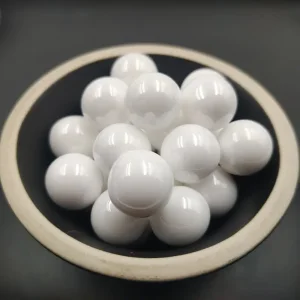
ISO 10993 compliant biostability, high density, mirror polished surface for medical & ultra-clean valves.
View Antwerp Product Specs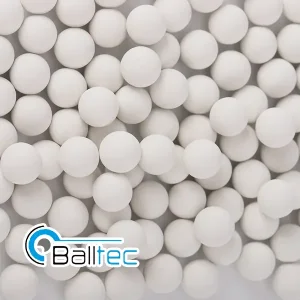
Excellent thermal stability, optimized fluid dynamics, protects catalyst beds from pressure shocks.
View Antwerp Product Specs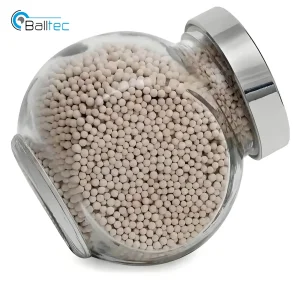
High adsorption selectivity, acts as reaction co-catalyst and moisture scavenger in advanced polymers.
View Antwerp Product Specs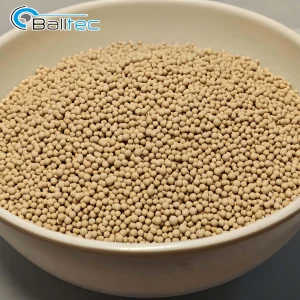
Pore diameter ~3Å, eliminates ethylene co-adsorption in LNG terminals and hydrocarbon gas streams.
View Antwerp Product Specs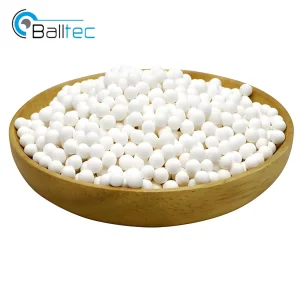
Tested up to 35 kN crush resistance per ball, formulated for severe hydrocracker reactor loads.
View Antwerp Product Specs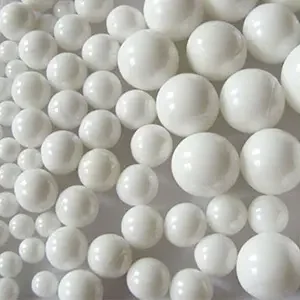
Ultra-high density 6.0 g/cm³, minimal contamination, ideal for horizontal bead mills and attritors.
View Antwerp Product Specs
High attrition index, low dew point depression (< -80°C) for refrigerated cracked gas separation.
View Antwerp Product Specs
Near-zero iron and silica migration, engineered for semiconductor slurry polishing and capacitor ceramics.
View Antwerp Product SpecsExpert answers addressing process engineering, quality control, and Antwerp maritime delivery logistics.
Whether you require scheduled multi-container shipments for capital projects or emergency stock replacement for scheduled maintenance, our technical sales engineers are ready to support your process optimization.