Follow 


Factory-direct technical ceramic components engineered for sub-micron particle refinement, ultra-low wear rates, and severe industrial operating environments.
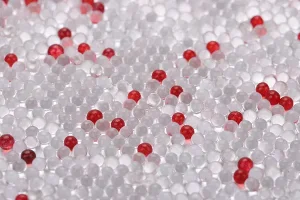
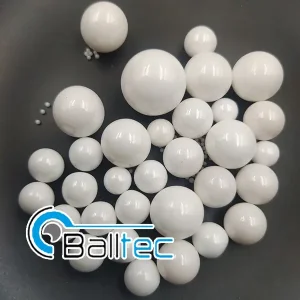
Understanding the strategic importance of advanced ceramic parts in modern electronic component fabrication, semiconductor processing, and energy storage supply chains.
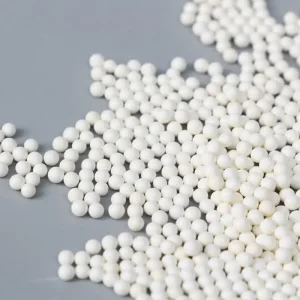
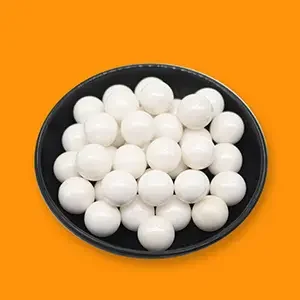
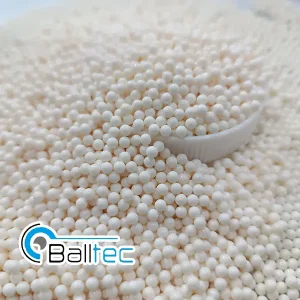
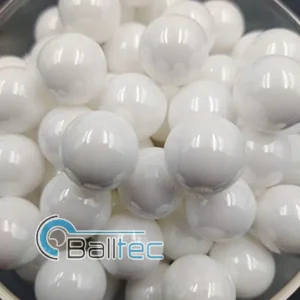
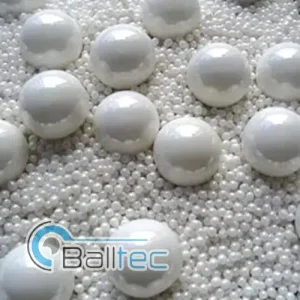
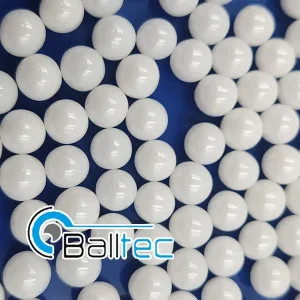
Modern Multi-Layer Ceramic Capacitors (MLCC), semiconductor CMP slurries, and Lithium Iron Phosphate (LFP) cathode formulations require ultrafine grinding down to the nanoscale. Yttria-Stabilized Zirconia (Y-TZP) beads prevent metallic ion contamination during high-energy attritor milling.
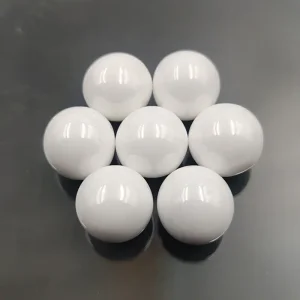
Electronic assembly robotics, vacuum deposition chambers, and high-speed CNC spindles demand bearings capable of resisting chemical corrosion and thermal expansion. Precision Silicon Nitride (Si3N4) and Zirconia (ZrO2) bearing balls eliminate magnetic interference and dielectric breakdown.
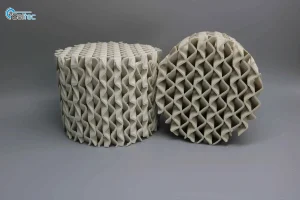
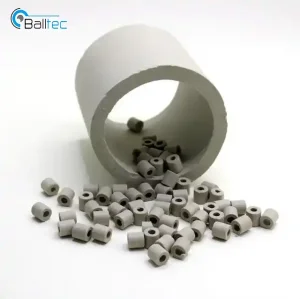
Ultra-pure chemical gas scrubbing and solvent distillation columns require structured acid-resistant ceramics. Ceramic 500Y corrugated packing and Raschig rings maintain dimensional structural stability under concentrated acid gas streams without leaching impurities.
How integrated regional clusters, advanced synthesis technologies, and rigorous process controls deliver global competitive advantages for industrial ceramic buyers.
Located within Pingxiang, Jiangxi—China's premier technical ceramics cluster—our manufacturing operations leverage complete localized supply chains. From raw synthetic powder refining to continuous gas kilns, localized sourcing reduces raw material transit lead times by up to 65% compared to isolated global operations.
Our production facilities utilize automated continuous spray drying towers coupled with high-pressure Cold Isostatic Pressing (CIP). This yields near-zero internal voids, ensuring homogenous crystal structure across both micro-beads and heavy industrial tower packing blocks.
Every batch of Yttria-stabilized zirconia and high-purity alumina undergoes X-ray Fluorescence (XRF) spectroscopy, Laser Particle Size Analysis (LPSA), and automated optical sphericity screening, ensuring strict $C_{pk} \ge 1.67$ statistical process capability.
Selecting the correct ceramic formulation depends on mechanical stress, operating temperature, and chemical exposure. Below is a validated material baseline comparison for industrial buyers.
| Material Category | Primary Composition | Bulk Density (g/cm³) | Hardness (Mohs / HV) | Primary Application Field |
|---|---|---|---|---|
| Y-TZP Zirconia | ZrO2 (95%) + Y2O3 (5%) | ≥ 6.00 | 9.0 / 1250 HV | Battery slurries, electronic inks, nano-grinding |
| Ce-TZP Zirconia | ZrO2 + CeO2 Stabilizer | ≥ 6.20 | 9.0 / 1150 HV | Heavy wet grinding, high-viscosity dispersions |
| 99.99% Alumina (4N) | Al2O3 ≥ 99.99% | ≥ 3.92 | 9.0 / 1600 HV | Semiconductor tools, high-purity catalyst beds |
| Silicon Nitride | Si3N4 | ≥ 3.25 | 9.5 / 1700 HV | High-speed bearing balls (G3/G5), aerospace spindles |
| Ceramic Packing | Al2O3 + SiO2 Silicate | 2.30 - 2.45 | 7.0 - 8.0 Mohs | Acid gas scrubbers, petrochemical distillation |
How advanced ceramic parts resolve specific mechanical, chemical, and thermal bottlenecks across core global industrial sectors.
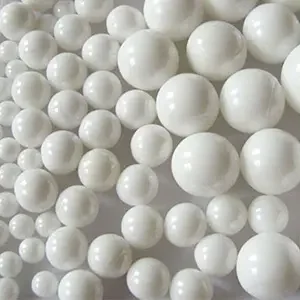
In modern LFP (Lithium Iron Phosphate) and NCM wet-grinding lines, metal particle contamination causes internal battery micro-shorts. Utilizing high-density Yttria-stabilized zirconia media (0.1mm - 0.6mm) ensures sub-micron particle distribution while reducing wear contamination to under 5 ppm/ton.
Automation robotics require ultra-low friction joints. Silicon Nitride (Si3N4) balls with G3 grade sphericity (sphericity tolerance < 0.08 µm) allow micro-bearings to operate at 100,000 RPM under zero lubrication conditions, preventing friction heating and dielectric arc discharge.
Wafer fabrication plants exhaust highly corrosive fluorine gas and acidic vapors. 500Y Ceramic Corrugated Structured Packing delivers a massive specific surface area ($500 \text{ m}^2/\text{m}^3$) with zero chemical degradation, outperforming metal alloys in stripping efficiency.
Heavy duty transport fleet tires suffer dynamic imbalance leading to premature tread wear. Precision engineered Zirconia/Silicate tire balancing beads continuously adjust inside tubeless tires using centrifugal force, dampening dynamic vibrations and extending tire service life by up to 30%.
Best practices for procurement directors sourcing technical ceramics and electronic parts from Chinese manufacturing hubs.
Procurement teams are moving away from initial price-per-kilogram metrics to total grinding energy and wear-loss ratios. High-density zirconia grinding beads reduce milling duration by 30-45%, yielding significant net electricity savings that offset premium media investment within months.
Modern Chinese ceramic factories are replacing traditional coal gas kilns with high-efficiency electric tunnel kilns powered by solar micro-grids. Sintering temperature precision ($\pm 1^\circ\text{C}$) ensures maximum lattice density while reducing carbon intensity per batch.
When evaluating a China Electronic Parts & Ceramic Supplier, verify: ISO 9001/14001 certification, batch chemical purity reports via ICP-OES, Crush Strength test logs, and customized export packaging (vacuum foil bags + UN-certified drums).
Direct answers to core engineering, material performance, and supply chain queries.
Browse our extended product lines designed for specialized milling, continuous food processing, and chemical column tower packing.