Follow 


High-precision ceramic spheres, ultra-fine polishing media, and structural bearing components designed for high-frequency PCB drilling, chemical slurry refinement, and semiconductor packaging.
Exploring the technological convergence of microelectronics, artificial intelligence hardware, high-frequency signals, and ultra-high thermal dissipation materials in global PCB manufacturing.
The rapid acceleration of 5G infrastructure, edge AI computing, and compact mobile hardware demands micro-via technology with line width/spacing (L/S below 30/30µm). Wholesale PCB manufacturers are deploying mSAP (modified Semi-Additive Process) and advanced laser direct imaging (LDI) to satisfy the extreme signal integrity required by next-gen processing units.
Traditional FR-4 laminates hit thermal bottlenecks under high-power automotive EV inverters, aerospace radars, and industrial LED modules. Advanced ceramic-core PCBs using high-purity Alumina ($Al_2O_3$) and Yttria-Stabilized Zirconia ($ZrO_2$) substrates deliver thermal conductivities up to 24 W/mK to 170 W/mK, dramatically outperforming organic polymers and preventing thermal expansion mismatches.
Modern medical implants, robotics, and aerospace telemetry rely on Rigid-Flex circuit board architectures. Combining flexible polyimide dielectric layers with rigid high-layer-count FR-4/PTFE boards reduces harness weight by up to 60%, eliminates interconnect points, and maximizes mechanical shock resilience in high-vibration applications.
Procurement directors and electronic hardware engineers require more than just competitive pricing. Supply resilience, raw material traceabilities, zero-defect quality control, and rapid prototyping define long-term contract success.
Prior to mass fabrication, leading PCB suppliers perform algorithmic DFM audits to analyze copper trace clearance, annular ring sizing, aspect ratios, signal reflection risks, and solder mask bridges. Detecting layout defects at the pre-production stage eliminates expensive iteration delays and guarantees yield optimization.
Selecting the optimal surface coating is vital for shelf life, signal loss, and wire bonding strength. Top-tier wholesale suppliers offer extensive choices tailored to application parameters:
Global supply chains require full compliance with RoHS, REACH, UL 94V-0 flammability ratings, and Conflict Minerals regulations. Advanced manufacturing hubs enforce closed-loop chemical recycling, zero-wastewater discharge protocols, and eco-friendly etching fluid recovery.
How China’s integrated electronics ecosystems combine fully automated Surface Mount Technology (SMT) lines with high-performance raw materials to deliver unmatched cost efficiency and technological innovation.
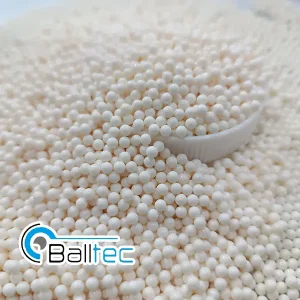
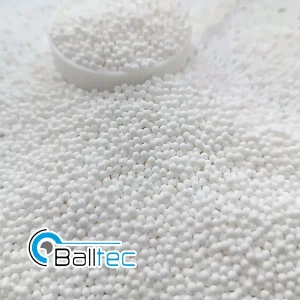
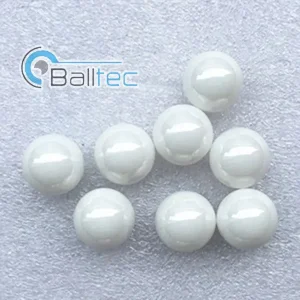
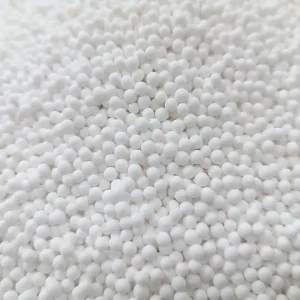
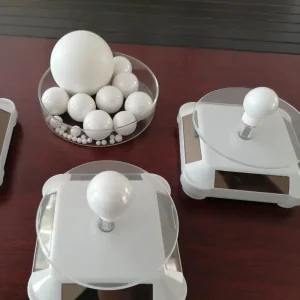
Behind every high-reliability printed circuit board lies a sophisticated supply chain of advanced processing materials. For instance, high-speed CNC drilling spindles for micro-vias depend on Precision Silicon Nitride & Zirconia Ceramic Bearing Balls to operate stably at speeds exceeding 160,000 RPM without mechanical degradation or thermal seizure.
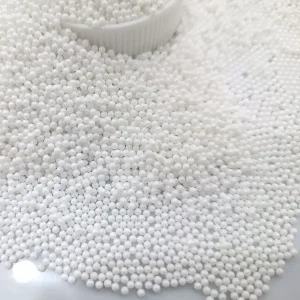
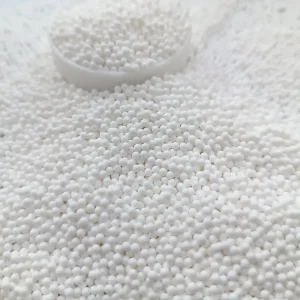
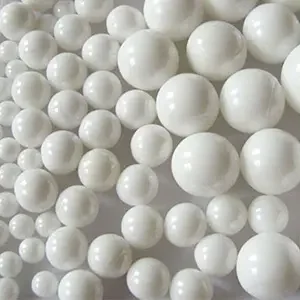
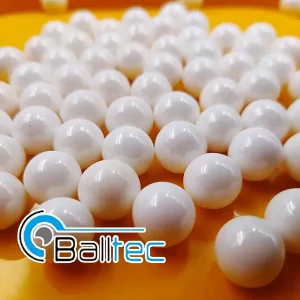
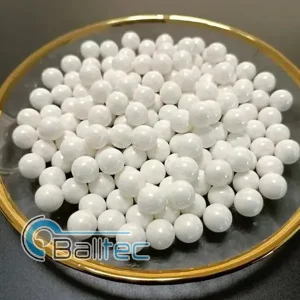
Furthermore, the ultra-fine dispersion of copper-clad laminate fillers, conductive pastes, and dielectric ceramic powders relies heavily on High-Purity Yttria-Stabilized Zirconia Beads ($95\% ZrO_2$) and 99.99% Alumina Grinding Media. These media ensure particle sizes down to the sub-micron level with zero metallic wear contamination, ensuring crystal-clear signal insulation and preventing dielectric breakdown in multi-layer HDI boards.
| PCB Specification Category | Standard Commercial Grade | Advanced Industrial / Automotive Grade | High-Precision Aerospace / Ceramic Core |
|---|---|---|---|
| Layer Count Range | 1 - 8 Layers | 8 - 24 Layers | Up to 32+ Layers / Rigid-Flex |
| Substrate Materials | Standard FR-4, CEM-1 | High Tg FR-4 (Tg170+), Rogers RF | Alumina ($Al_2O_3$), Aluminum Nitride ($AlN$), PTFE |
| Min. Line Width / Spacing | 3.5 mil / 3.5 mil (90µm) | 2.0 mil / 2.0 mil (50µm) | 1.2 mil / 1.2 mil (30µm - mSAP) |
| Aspect Ratio (Drill Depth:Dia) | 8:1 | 12:1 | 16:1 (Micro-via Laser Drilled) |
| Quality Certification Standard | IPC-A-600 Class 2 | IPC Class 3, IATF 16949 | MIL-PRF-31032, IPC Class 3DS |
Engineered PCB solutions crafted for demanding operating conditions across global manufacturing sectors.
Heavy copper PCBs (3oz to 10oz) and heavy-duty ceramic cores withstand high currents and intense vibrations in battery management systems (BMS), motor control units (MCU), and LiDAR sensors, ensuring long-term thermal safety.
Low-loss high-frequency Rogers/PTFE multi-layer boards maintain consistent dielectric constants ($D_k$) and dissipation factors ($D_f$) up to 77GHz, facilitating ultra-fast antenna arrays and satellite communication terminals.
Class 3 HDI Rigid-Flex configurations provide critical reliability for pacemakers, surgical imaging systems, and diagnostic equipment where component failure is not an option.
Expert technical insights to guide engineering and sourcing teams through purchasing decisions.
Standard FR-4 features a Glass Transition Temperature ($T_g$) around 130°C–140°C, making it suitable for general consumer electronics. High-$T_g$ FR-4 ($T_g > 170^\circ\text{C}$) provides significantly better resistance to thermal expansion, delamination, and mechanical stress during lead-free soldering processes. Ceramic-core PCBs (such as Alumina or Aluminum Nitride substrates) offer superior thermal conductivity ($24-170\text{ W/mK}$ versus FR-4’s $0.3\text{ W/mK}$), making them ideal for high-power automotive, LED, and high-frequency RF devices.
IPC Class 3 compliance requires continuous quality inspection throughout production. We utilize automated 3D Laser Direct Imaging (LDI), Automated Optical Inspection (AOI), micro-section analysis, thermal stress testing, ionic contamination testing, and 100% Flying Probe / Automated E-test verification to ensure zero voids in micro-vias, perfect layer alignment, and robust copper plating thickness.
For quick-turn prototyping, double-sided and multi-layer sample orders can be produced in as fast as 24 to 48 hours. Mass production standard lead time typically ranges from 7 to 12 working days depending on surface treatment, layer count, and special processes (e.g., blind/buried vias, heavy copper). Flexible MOQs allow order volumes ranging from single-unit engineering prototypes up to high-volume automotive production runs.
Advanced ceramics are fundamental to the microelectronics ecosystem. Ultra-pure zirconia and alumina grinding beads ($95\% ZrO_2$, $99.99\% Al_2O_3$) refine conductive copper pastes, solder resist inks, and dielectric laminates down to sub-micron particle sizes. Additionally, ceramic bearing balls engineered from silicon nitride or zirconia enable ultra-high-speed CNC drilling spindles to operate smoothly at speeds exceeding 160,000 RPM, producing micro-vias without burrs or drill drift.
We accept RS-274X (Extended Gerber format), Gerber X2, ODB++, as well as native CAD project files from Altium Designer, Cadence Allegro, KiCad, and Eagle. Please include a fabrication drawing specifying layer stackup, copper weight, solder mask color, surface finish, and compliance requirements for an immediate DFM audit and accurate quotation.
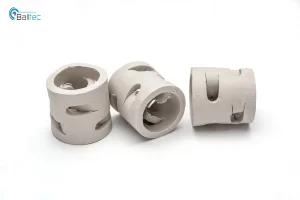
Explore high-performance chemical tower packings, specialized activated alumina spheres, and premium grinding media supporting the electronic chemical refining industry.