Follow 


Explore engineered zirconia spheres, high-density grinding media, and industrial ceramic solutions manufactured under strict ISO quality control protocols.
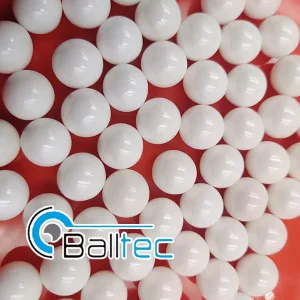
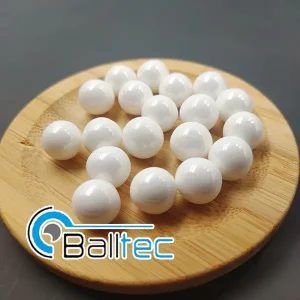
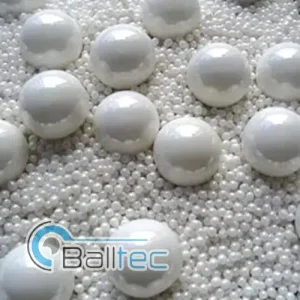
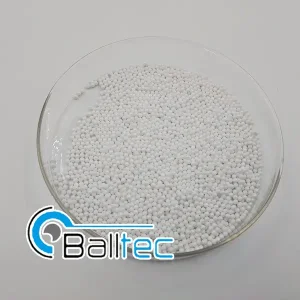
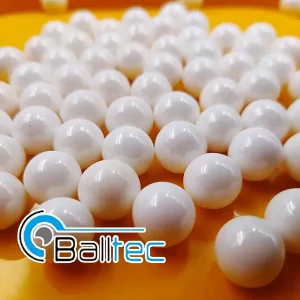
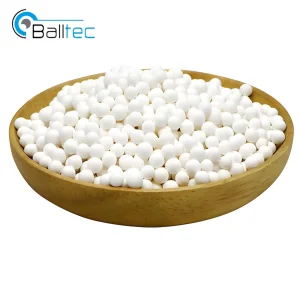
Analyzing the industrial shift from legacy steel and basic alumina media toward high-density Yttria-Stabilized Zirconia (YSZ) in global smart manufacturing.
The global transition toward electrification requires ultra-fine dispersion of Lithium Iron Phosphate (LFP) and Nickel-Manganese-Cobalt (NMC) precursors. Wholesale zirconia ceramic balls manufacturers supply 0.1mm–0.3mm YSZ beads capable of milling particles below 100 nanometers without metallic contamination, directly impacting energy density and charge rates.
In Chemical Mechanical Planarization (CMP) slurries for silicon wafer polishing, particle uniformity prevents surface micro-scratching. High-density zirconium oxide balls derived from titrating liquid-phase sintering yield zero-defect sphericity, meeting the stringent purity guidelines demanded by semiconductor fabricators in North America, East Asia, and Europe.
In aerospace guidance systems, robotics joints, and high-speed motor spindles, hybrid bearings utilize precision zirconia ($ZrO_2$) and silicon nitride ($Si_3N_4$) balls. Their non-magnetic property, immunity to electrical pitting, and exceptionally low friction coefficient ($<0.1$) offer operating lifespans up to five times greater than premium bearing steel.
Modern horizontal agitator bead mills operating at tip speeds above 14 m/s generate kinetic force proportional to the media density. By replacing standard alumina balls ($\rho \approx 3.6\,g/cm^3$) with Yttria-Stabilized Zirconia balls ($\rho \approx 6.0\,g/cm^3$), processing time is reduced by up to 62% while decreasing energy consumption per kilogram of sub-micron slurry produced.
Understanding Phase Transformation Toughening (PTT) in Tetragonal Zirconia Polycrystal (Y-TZP) vs. Alternative Industrial Ceramic Spheres.
Pure Zirconia ($ZrO_2$) undergoes a phase transition during cooling: monoclinic phase transforms to tetragonal at 1170°C, causing significant volume change and structural fracture. By doping pure zirconia with stabilizing oxides such as Yttrium Oxide ($Y_2O_3$) or Cerium Oxide ($CeO_2$), manufacturers freeze the meta-stable tetragonal phase at room temperature. Under mechanical impact, crack tips induce a phase transformation back to monoclinic, causing volume expansion that compresses the crack and prevents failure.
| Material Property / Parameter | Yttria-Stabilized Zirconia (YSZ) | Cerium-Stabilized Zirconia (CSZ) | Zirconia Toughened Alumina (ZTA) | High Purity Alumina ($Al_2O_3$) |
|---|---|---|---|---|
| Chemical Composition | $ZrO_2 \ge 95\%$, $Y_2O_3 \approx 5\%$ | $ZrO_2 \ge 80\%$, $CeO_2 \approx 20\%$ | $Al_2O_3 \, 80\%$, $ZrO_2 \, 20\%$ | $Al_2O_3 \ge 99.5\%$ |
| Specific Density ($g/cm^3$) | 6.00 – 6.05 | 6.20 – 6.25 | 4.10 – 4.30 | 3.65 – 3.90 |
| Vickers Hardness ($HV_{10}$) | 1250 – 1350 | 1150 – 1250 | 1400 – 1500 | 1500 – 1650 |
| Fracture Toughness ($MPa \cdot m^{1/2}$) | 8.0 – 10.0 | 11.0 – 13.0 | 5.0 – 6.5 | 3.5 – 4.5 |
| Self-Wear Rate ($g/kg \cdot h$) | < 0.005 ppm/h | < 0.008 ppm/h | < 0.02 ppm/h | < 0.05 ppm/h |
| Primary Industrial Intent | Nano-milling, Lithium Battery, Ink | High-viscosity paint, Heavy mining | Cost-sensitive fine grinding | Catalyst support, Glaze milling |
Quantitative benchmarks established through rigorous laboratory verification and ISO-certified manufacturing controls.
Deploying tailored zirconia bead compositions across diverse global manufacturing ecosystems.
Operational Challenge: In the production of LFP and high-nickel NMC batteries in North America and Western Europe, iron contamination above 5 ppm degrades thermal stability and reduces cell lifecycle.
Zirconia Solution: Factories deploy 0.4mm–0.6mm Yttria-stabilized zirconia grinding media. The ultra-high density enables gentle yet powerful stress distribution, reaching sub-micron powder specifications ($D_{50} < 0.5\,\mu m$) without shedding iron or heavy metal impurities.
Operational Challenge: Traditional steel balls in automotive EV drive units suffer from electrical fluting caused by stray shaft currents, alongside thermal degradation at speeds over 20,000 RPM.
Zirconia Solution: Precision ground $ZrO_2$ bearing balls function as electrical insulators. Possessing a thermal expansion coefficient ($10.5 \times 10^{-6}/K$) matching cast iron, they maintain internal bearing clearances under severe temperature fluctuations without requiring liquid lubrication.
Operational Challenge: Active Pharmaceutical Ingredients (APIs) require particle size reduction to improve bioavailability, but organic media extractables pose regulatory approval risks.
Zirconia Solution: Bio-inert sintered zirconia beads comply with USP Class VI and FDA guidelines. Their exceptionally low wear rate eliminates batch-to-batch chemical leaching, allowing clean micronization inside continuous recirculating bead mills.
Operational Challenge: Modern inkjet inks and high-gloss automotive metallic coats demand narrow particle size distribution ($D_{99} < 200\,nm$) to avoid nozzle clogging and light distortion.
Zirconia Solution: Utilizing 0.05mm–0.1mm micro-beads engineered via titration drip techniques. The perfectly smooth surface prevents media compaction within mill separators, maximizing color intensity and transparency.
From nanoscale chemical synthesis to automated laser inspection: how leading OEM manufacturers guarantee batch consistency.
High-performance zirconia spheres begin with sub-micron zirconium oxychloride ($ZrOCl_2$) purified via hydrothermal coprecipitation. This chemical route guarantees uniform yttria dispersion at the atomic scale, eliminating internal micro-voids prior to mechanical forming.
For beads under 1.0mm, liquid titration (drip casting) in gelation baths ensures absolute roundness. Larger structural balls utilize Cold Isostatic Pressing (CIP) at pressures exceeding 200 MPa to achieve maximum un-sintered green body density.
Green body spheres pass through computer-controlled continuous tunnel kilns held precisely at 1450°C–1550°C. Strict thermal profiling prevents grain over-growth, maintaining a fine crystalline grain size below 0.5 microns for optimal fracture toughness.
Direct factory sourcing guarantees full traceability. Every wholesale batch is supplied with Certificate of Analysis (CoA) documentation generated via Dynamic Light Scattering (DLS) particle sizing, X-Ray Diffraction (XRD) phase purity analysis, and Inductively Coupled Plasma Optical Emission Spectrometry (ICP-OES) elemental testing. Standardized packaging includes vacuum-sealed double plastic lining inside heavy-duty UN-rated steel drums, reinforced palletized wooden crates, or moisture-barrier IBC totes designed for intermodal international transport under ISO 9001:2015, REACH, and RoHS compliance frameworks.
Expert answers addressing milling calculations, media selection, and operational maintenance.
The standard media loading volume for horizontal chamber mills ranges between 70% and 85% of the net internal volume. To calculate: Media Weight (kg) = Chamber Net Volume (L) × Loading Percentage (%) × Bulk Density (approx. 3.7–3.8 kg/L for YSZ). Adjustments depend on slurry viscosity and flow rates.
As a rule of engineering thumb, the average media diameter should be 20 to 30 times larger than the initial feed particle size ($D_{95}$), and roughly 1000 times larger than the desired target particle size. For sub-micron target output, multi-stage milling transitioning from 1.0mm to 0.3mm media is recommended.
YSZ provides higher fracture toughness ($8-10\,MPa\cdot m^{1/2}$) and cleaner self-wear rates, making it ideal for ultra-fine nano grinding where product contamination cannot be tolerated (e.g., battery materials, inks). CSZ offers higher density ($6.2\,g/cm^3$) and cost advantages in heavy industrial applications like mineral paints and high-viscosity pastes.
Bead fragmentation typically stems from three operational factors: 1) Excessive agitator tip speeds exceeding recommended limits (>14 m/s for low-toughness media), 2) Running the mill under empty or low-viscosity dry conditions causing media-on-media impact, or 3) Mixing media of drastically different densities/sizes causing crushing action.
Precision ceramic bearing balls are governed by ISO 3290 and DIN 5401 standards. Grades range from G3 (highest precision: sphericity deviation $\le 0.08\,\mu m$, diameter variation $\le 0.08\,\mu m$) to G5, G10, and G25 for general industrial valves and pumps.
While stabilized zirconia possesses excellent thermal resistance up to 1000°C+, rapid quenching exceeding $200^\circ C/min$ can induce internal thermal stress. For rapid temperature change environments, optimized microstructure Y-TZP or Silicon Nitride ($Si_3N_4$) media are selected due to their lower coefficient of thermal expansion.
Complete your chemical processing, gas separation, and precision mechanical assemblies with our certified product lineup.