Follow 


Engineered to comply with ISO 9001 and European REACH standards, optimized for Marmara's heavy manufacturing sectors.
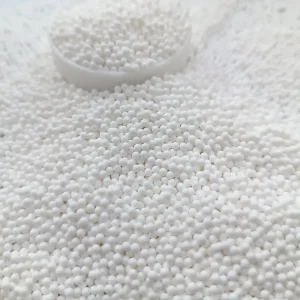
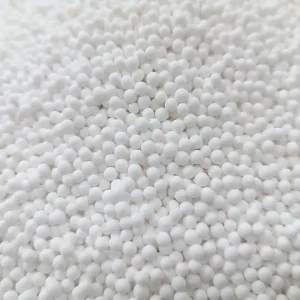
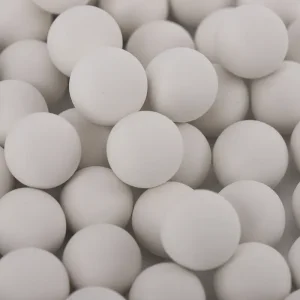
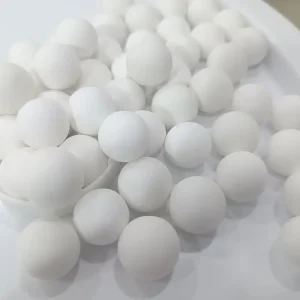
An authoritative analysis on how precision ceramic media optimizes energy consumption, mill throughput, and chemical bed stability across Turkey's industrial capital.
As Turkey’s economic powerhouse, Istanbul and the surrounding Marmara region—encompassing critical industrial zones such as Gebze, Dilovası, Tuzla, and Hadımköy—represent a multi-billion-dollar manufacturing ecosystem. Operating at the convergence of European quality directives and Asian logistics channels, local operators face intense pressure to maximize operational efficiency while minimizing downtime.
Industrial ceramics, specifically high-purity alumina ($Al_2O_3$) spheres, Yttria-Stabilized Zirconia ($YSZ$) beads, and inert bed supports, serve as invisible catalysts in this ecosystem. From continuous ball milling in the Bozüyük-Söğüt ceramic corridor to fixed-bed catalytic reactors at the İzmit Refinery complex, the technical performance of ceramic media directly dictates product purity, energy efficiency, and lifecycle costs.
The evolution of industrial ceramic media relies on precise control over grain boundary chemistry and ultra-dense sintering phase transformations. Modern automated plants serving the Istanbul import market leverage two distinct manufacturing routes:
| Ceramic Media Type | Chemical Formulation | Sintering Route & Temp | Bulk Density | Vickers Hardness ($HV_{10}$) | Primary Istanbul Sector |
|---|---|---|---|---|---|
| 92% / 95% High-Alumina | $\alpha-Al_2O_3 + SiO_2/MgO$ flux | Tunnel Kiln ($1580^\circ C - 1630^\circ C$) | $3.60 - 3.70 g/cm^3$ | $\ge 1150$ | Tile Glazes, Sanitaryware, Cement |
| 99.5% Ultra-Purity Alumina | Sub-micron $\alpha-Al_2O_3$ | High-Temp Shuttle Kiln ($1680^\circ C$) | $3.85 - 3.92 g/cm^3$ | $\ge 1450$ | Electronic Ceramics, Battery Cathodes |
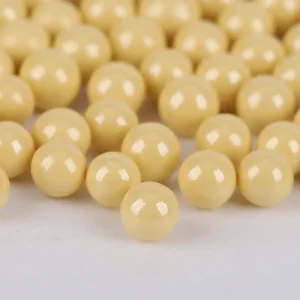
| Yttria-Stabilized Zirconia (YSZ) | $ZrO_2 + 3.0\text{ mol}\% Y_2O_3$ | Isostatic Pressing ($1450^\circ C$) | $\ge 6.00 g/cm^3$ | $\ge 1250$ | Automotive OEM Inks, Paint Finishes |
| Ceria-Stabilized Zirconia (CSZ) | $ZrO_2 + CeO_2$ composite | Sintering in Inert Atmosphere | $6.20 g/cm^3$ | $\ge 1180$ | Heavy Calcium Carbonate Grinding |
| Inert Alumina Support Media | $Al_2O_3 + SiO_2$ (<0.2% $Fe_2O_3$) | Isostatic Rolling ($1400^\circ C$) | $2.40 - 2.60 g/cm^3$ | Mohs 8 | Refinery Reformers, Desulfurization |
How integrated cluster production in Jiangxi/Shandong guarantees batch consistency, rapid ocean shipping to Ambarlı Port, and technical compliance.
State-of-the-art cold isostatic pressing (CIP) ensures internal stress-free density uniformity, preventing sphere fracturing inside high-intensity bead mills.
Regular containerized maritime freight from Ningbo/Shanghai directly to Istanbul's Ambarlı, Haydarpaşa, and Gebze ports within 18–22 transit days.
Full compliance documentation provided for Turkish Customs authorities, including CE, ISO 9001, COA batch analysis certificates, and REACH registration declarations.
From chemical refining in Kocaeli to ceramic tile production in Bilecik, discover optimized media configurations.
Catalytic cracking units and hydrotreaters require chemically inert, high-crush-strength bed supports to hold active catalysts while resisting thermal spalling. Our 99% inert ceramic balls ($Fe_2O_3 \le 0.05\%$) mitigate reactor fouling and ensure continuous gas flow under severe pressure differentials.
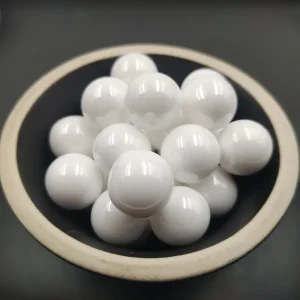
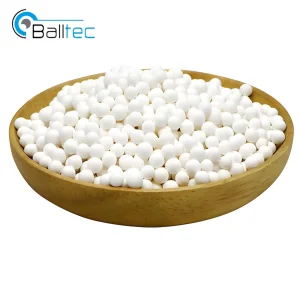
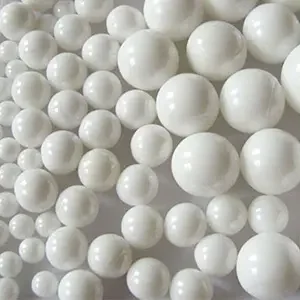
Continuous ball mills grinding body slips and glaze batches demand high packing density. Switching from natural pebbles to microcrystalline 92% alumina grinding balls increases grinding throughput by up to 30% while reducing electricity consumption per ton of prepared slip.
Nano-scale dispersion of pigments for automotive coatings requires narrow size distributions of Yttria-Stabilized Zirconia beads ($0.1\text{mm} - 1.2\text{mm}$). Our precision YSZ beads feature ultra-smooth mirror surfaces ($Ra \le 0.01\mu m$), eliminating media attrition and color contamination.
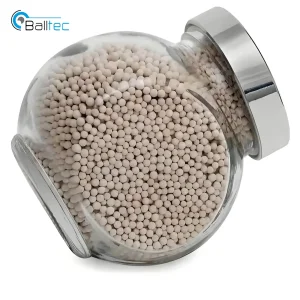
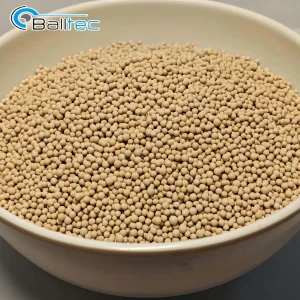
Natural gas treatment plants along the Marmara pipeline grid rely on 3A, 4A, and 13X zeolite molecular sieves and activated alumina for deep dehydration down to dew points below $-70^\circ C$. High static water adsorption capacities (>21% w/w) guarantee long cycle lives between regenerations.
Explore specialized bio-inert, catalyst support, and high-density zirconia formulations available for direct export to Turkey.
Detailed insights regarding material selection, wear rates, customs clearance, and delivery to Istanbul ports.
Selection depends primarily on slurry viscosity and density requirements. 92% Alumina media ($density \approx 3.60g/cm^3$) offers an ideal balance of cost and performance for standard ceramic slip and glaze milling. 95% Alumina media ($density \ge 3.68g/cm^3$) provides higher impact energy and approximately 25% lower wear rate, making it preferred for high-speed continuous ball mills or abrasive raw materials where batch contamination must be strictly controlled.
Imports arriving at Ambarlı, Gebze, or Haydarpaşa ports require compliance with Turkey’s TAREKS inspection system and customs classification (HS Code 6909.11 / 6909.19). We supply comprehensive export documentation packages including Mill Test Certificates (MTC), Certificate of Origin (Form A / EUR.1 compliant), ISO 9001/14001 certification, COA chemical assay reports, and MSDS sheets ensuring smooth customs release without demurrage delays.
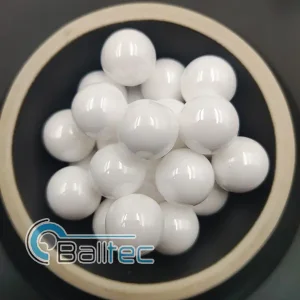
Yttria-Stabilized Zirconia ($YSZ$) features a density of $6.0g/cm^3$, nearly double that of alumina ($3.6g/cm^3$). The higher kinetic energy allows YSZ to break down paint pigments and ink agglomorates to nanometer scale in fraction of the time. Furthermore, YSZ’s superior fracture toughness ($K_{IC} \ge 9.0 MPa\cdot m^{1/2}$) results in virtually zero media wear, preserving high color brilliance without graying caused by media breakdown.
Our high-alumina inert ceramic balls are engineered to withstand rapid temperature swings from $800^\circ C$ to room temperature without cracking or spalling. They exhibit water absorption below $0.5\%$, acid resistance greater than $99.6\%$ (per ASTM C279), and cold crushing strengths exceeding $25\text{ kN/ball}$ for $50\text{mm}$ spheres, preventing catalyst bed collapse during reactor shutdown/startup cycles in refineries.
Standard export packaging includes heavy-duty 25kg double-walled woven PP bags stacked on fumigated wooden or plastic pallets, protected by moisture-proof shrink wrap and plastic strapping. For automated charging systems, we also provide 1,000kg or 1,200kg FIBC Jumbo Super Sacks with bottom discharge spouts, certified for ocean transit safety.