Follow 


Analyzing industrial transformation, catalyst support requirements, and grinding media performance benchmarks across Kangwon Province and Wonsan port industrial zone.
The industrial landscape of Wonsan—a strategic maritime hub, chemical processing node, and manufacturing powerhouse along the eastern coast of the Korean Peninsula—is experiencing a rapid modernization phase. As industrial complexes in Kangwon Province expand operations across ammonia chemical synthesis, synthetic fertilizer formulation, cement production, marine engineering, thermal power generation, and environmental flue gas treatment, the demand for high-performance ceramic media has reached an unprecedented peak.
Industrial operations in Wonsan encounter stringent operating conditions: thermal cycling in high-pressure synthesis reactors, highly corrosive saline coastal atmospheres, aggressive acid-alkali chemical exposure, and intensive wear during fine mineral milling. Standard ceramic spheres or metallic grinding media frequently suffer from premature spalling, structural degradation, and high wear rates, leading to unbudgeted downtime, bed compaction, pressure drops, and heavy metal contamination of final products.
As a leading advanced industrial ceramic manufacturer operating from China's primary ceramic manufacturing cluster (Pingxiang), Baitian (Ball-tec) New Materials Co., Ltd. delivers engineered ceramic ball solutions custom-tailored to Wonsan's demanding industrial specifications. Our zero-defect catalyst support spheres, high-density alpha-alumina beads, and yttria-stabilized zirconia (YSZ) media ensure uncompromised chemical inertness, extreme crush resistance, and extended operational longevity.
Direct supply line of precision-engineered alumina, zirconia, and activated ceramic media optimized for industrial operations across Wonsan.
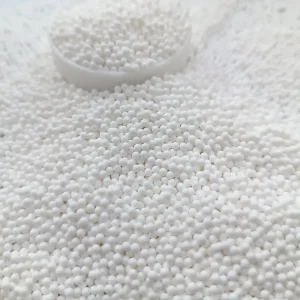
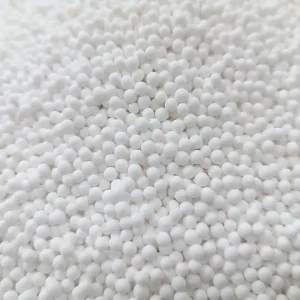
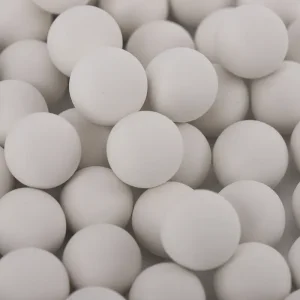
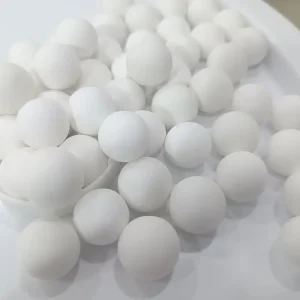
Comprehensive physical, thermal, and chemical comparative data across Baitian ceramic media grades designed for heavy-duty industrial integration.
| Material Classification | Al₂O₃ Content (%) | ZrO₂ Content (%) | Bulk Density (g/cm³) | Mohs Hardness | Crush Strength (25mm) | Max Operational Temp (°C) | Primary Industrial Use in Wonsan |
|---|---|---|---|---|---|---|---|
| Inert Alumina Support Ball (99%) | ≥ 99.0% | -- | 3.60 - 3.75 | 9.0 | > 22 kN/particle | 1650°C | Ammonia Synthesis, High-Temp Catalyst Beds |
| Standard Inert Alumina Ball (92%) | ≥ 92.0% | -- | 3.10 - 3.35 | 8.5 | > 18 kN/particle | 1450°C | Acid Scrubbers, Petrochemical Towers |
| Yttria-Stabilized Zirconia (YSZ) | -- | ≥ 94.8% (95 Zirconia) | 6.00 - 6.05 | 9.0 | > 35 kN/particle | 1250°C | Nano-Milling, Battery Slurry, Mineral Fine Grinding |
| Zirconium Silicate Spheres | 15 - 25% | ≥ 64.0% | 4.00 - 4.15 | 8.0 | > 15 kN/particle | 1000°C | Coatings, Calcium Carbonate Milling, Ceramics |
| Activated Alumina Desiccant | ≥ 93.0% | -- | 0.72 - 0.78 | 7.0 | > 120 N/particle (3-5mm) | 350°C (Regen) | Instrument Air Drying, Natural Gas Dehydration |
Formed under high-pressure Cold Isostatic Pressing (CIP) and sintered in computer-controlled 1750°C shuttle kilns to achieve ultra-low porosity (<0.01%) and uniform internal grain boundaries.
Impervious to attack by strong acids (hydrochloric, sulfuric, nitric) and alkali solutions. Leach-proof composition prevents downstream poisoning of expensive noble metal catalysts.
Engineered thermal expansion coefficients prevent cracking or thermal fatigue during rapid shutdown and startup cycles in high-temperature chemical synthesis units.
In-depth technical analysis of operational environments where Baitian ceramic balls drive operational reliability and process yield across Kangwon Province.
Fertilizer plants in the expanded Wonsan industrial area require catalyst bed support media capable of withstanding intense differential pressures and high-temperature hydrogen/ammonia gas streams. Baitian 99% Inert High-Alumina Spheres are deployed as bottom support and top hold-down layers in synthesis columns, preventing catalyst bed movement, minimizing gas channeling, and ensuring uniform fluid distribution across shift converters and primary reformers.
With ongoing regional infrastructure projects around Wonsan Port, local cement and mineral processing mills require grinding media with high wear resistance to control energy consumption. Replacing traditional forged steel balls with Baitian High-Alumina Microcrystalline Grinding Spheres reduces mill energy draw by up to 22%, eliminates metallic iron contamination in white cement/minerals, and extends liner service life.
Thermal power generation facilities serving the Wonsan coastal corridor utilize Baitian Activated Alumina beads and Acid-Resistant Ceramic Bed Packing in Flue Gas Desulfurization (FGD) absorbers. The media handles high-saline marine moisture and sulfur dioxide ($SO_2$) gas streams without chemical breakdown, maintaining low pressure drop across scrubbers.
Marine equipment and chemical transport systems operating out of Wonsan Port encounter harsh saltwater corrosion. Baitian Precision Bio-Inert Alumina and Zirconia Bearing Balls are integrated into high-pressure valve seats, slurry pumps, and check valves, replacing steel alloys to deliver zero-corrosion service and zero-maintenance reliability.
How advanced material science and automated manufacturing are revolutionizing grinding efficiency and process catalyst performance for modern plants.
Shift from traditional vertical ball milling to ultra-high-energy horizontal agitator bead mills using 0.1mm - 0.3mm Yttria-Stabilized Zirconia beads, enabling sub-100 nanometer particle size distribution in advanced battery slurries and electronics.
Implementation of toughened ceramic matrices (Zirconia-Toughened Alumina, ZTA) for catalyst beds operating under extreme static bed pressure (>300 bar), eliminating bed crushing under thermal shock conditions.
100% automated visual sorting and laser sphericity screening to guarantee roundness tolerances (<0.02mm deviation), ensuring optimum packing density and predictable hydraulic performance in gas/liquid towers.
Closed-loop green ceramic manufacturing, recycling raw material slurries, utilizing solar-assisted calcination, and meeting ISO 14001 carbon-reduction standards for sustainable international supply chains.
In chemical reactors and ball mills, a failure rate of even 0.5% in ceramic media can trigger downstream catastrophic equipment fouling or mill shutdown. Precision control during raw material synthesis guarantees peak physical integrity.
Leveraging direct access to world-leading ceramic production clusters, vertical integration, and streamlined regional logistics to deliver unbeatable lead times and cost efficiency.
Located in Pingxiang, Jiangxi—China's recognized industrial ceramics hub—Baitian maintains established, streamlined shipping channels directly connecting to Wonsan Port, reducing transit times to days rather than weeks.
From raw powder synthesis and spray drying to forming, sintering, and dynamic ball sizing, every stage occurs under one roof, eliminating sub-tier supplier delays and ensuring batch-to-batch consistency.
Our direct-from-factory business model cuts intermediary markups, providing plant procurement teams in Wonsan with premium ISO-certified ceramic media at substantial total cost of ownership (TCO) savings.
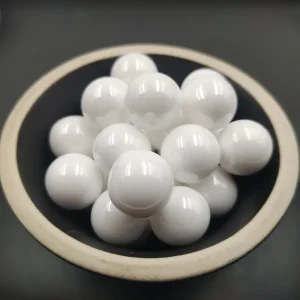
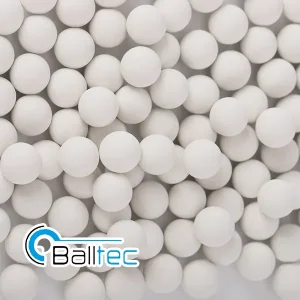
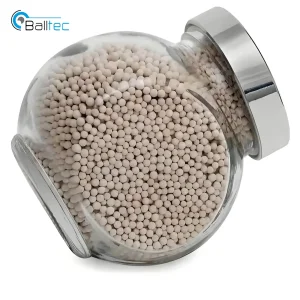
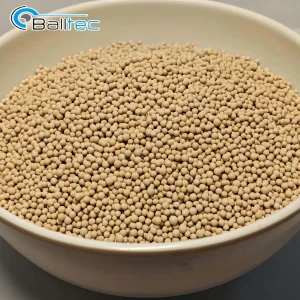
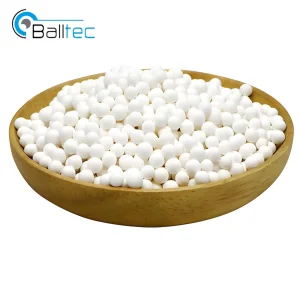
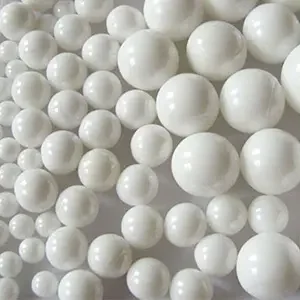
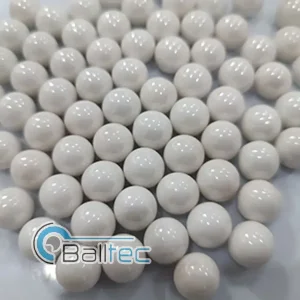
Explore our targeted product range spanning specialized medical components, catalyst beds, molecular sieves, and zirconia nano-media.
Ensuring compliance with international standards, comprehensive COA documentation, and reliable export packaging.
Every shipment bound for clients serving the Wonsan market undergoes rigorous batch quality testing in our state-of-the-art ceramic testing laboratory. We issue certified Certificate of Analysis (COA) reports detailing exact chemical composition, bulk density, water absorption, crush strength, and attrition wear rates.
Full traceability from raw bauxite/zircon sand sourcing to final palletization.
Heavy-duty double-layered woven super sacks (1000kg), steel drums (250kg), or 25kg plastic-lined bags on fumigated wooden pallets designed for sea transit.
Our application engineers calculate optimal gradient ball sizing distributions (e.g., 6mm to 50mm layers) to minimize pressure drop and prevent catalyst displacement.
Procurement officers and plant engineers serving the Wonsan industrial sector can request technical data sheets (TDS), safety data sheets (MSDS), and independent third-party test reports (SGS/TÜV).
Technical guidance from Baitian engineers regarding media selection, reactor bed loading, and logistical support.
Optimize reactor throughput, extend mill wear cycles, and secure cost-effective factory-direct ceramic media tailored for the Wonsan market.