Follow 


Engineered for high-pressure hydroprocessing, extreme wear environments, and gas dehydration applications in the United Arab Emirates.
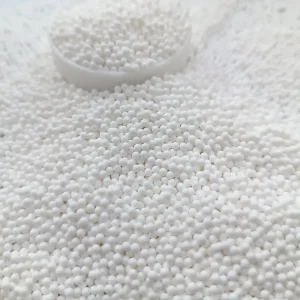
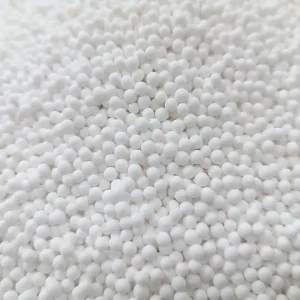
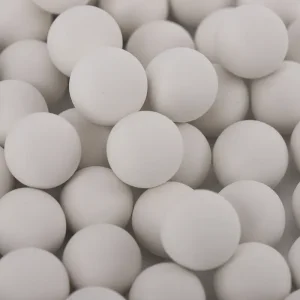
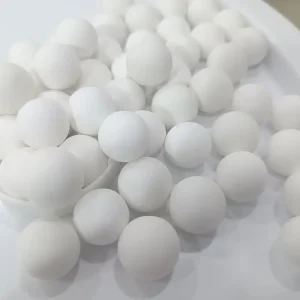
Understanding the operational realities of Ruwais, Jebel Ali, ICAD Abu Dhabi, and Ras Al Khaimah industrial clusters.
The United Arab Emirates is undergoing a profound industrial transformation driven by the national strategy "Operation 300bn", which aims to increase the industrial sector's contribution to GDP from AED 133 billion to AED 300 billion. Central to this aggressive growth framework is the expansion of advanced manufacturing, heavy chemical processing, oilfield refining, downstream plastics, and mineral processing across key hubs such as Abu Dhabi's Khalifa Industrial Zone (KIZAD), Dubai Industrial City, and Ras Al Khaimah's ceramic and mining corridors.
As state-owned enterprises like ADNOC (Abu Dhabi National Oil Company) execute multi-billion-dollar expansions in gas processing, petrochemical refining at Ruwais, and sour gas recovery at Shah and Habshan, the demand for high-reliability, inert, and functional ceramic media has reached unprecedented levels. Ceramic balls play a non-substitutable role as catalyst bed supports, heat storage media, thermal bed retainers, and high-intensity grinding media within vertical bead mills and ball mills operating under harsh environmental conditions.
Chemical processors and process engineering teams in the Arabian Peninsula face operational stresses rarely matched in temperate industrial zones:
Evaluating crystallographic structure, phase transformation, and wear rate mechanics of modern industrial oxide media.
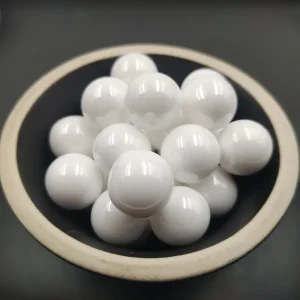
In high-purity ceramic balls ($92\%$, $99\%$, and $99.99\%$ formulations), crystal structure controls physical failure limits. By optimizing the sintering profile in continuous tunnel kilns at temperatures exceeding $1650^\circ\text{C}$, raw aluminum oxide converts fully into the hexagonal alpha-phase lattice. This dense, corundum-like phase yields a Mohs hardness of 9.0, zero open porosity ($<0.01\%$), and exceptional resistance to hot hydrofluoric, sulfuric, and organic acid streams encountered in downstream ethylene cracking and aromatics units.
For high-intensity nano-grinding applications, Yttria-Stabilized Tetragonal Zirconia Polycrystal (Y-TZP) beads offer unmatched performance. Stabilized with $3\text{ mol}\% Y_2O_3$, YSZ exhibits a unique dynamic stress-induced phase transformation: under mechanical impact inside ultra-high energy vertical or horizontal bead mills, the metastable tetragonal phase transforms into the monoclinic phase at crack tips. This transformation induces volumetric expansion, locking the crack and resulting in fracture toughness values exceeding $6.0\text{ MPa}\cdot\text{m}^{1/2}$.
The table below provides empirical technical baseline metrics comparing industrial ceramic ball classes deployed across Middle Eastern operations:
| Material Grade | Bulk Density (g/cm³) | Mohs Hardness | Water Absorption (%) | Cold Crush Strength (30mm) | Primary UAE Application |
|---|---|---|---|---|---|
| 99.5% High Alumina Ball | 3.68 - 3.75 | 9.0 | < 0.01% | > 22.0 kN/particle | Hydrocracking, Ethylene Towers, High-Temp Support |
| Standard Inert Ceramic Ball | 2.30 - 2.45 | 7.0 - 7.5 | < 1.0% | > 5.5 kN/particle | Gas Dryer Beds, Desiccant Top Packing, Water Treatment |
| Y-TZP Zirconia Bead | 6.00 - 6.05 | 9.0 | 0.00% | > 35.0 kN/particle | Ultra-Fine Ink/Paint Grinding, Battery Materials |
| Zirconia Toughened Alumina (ZTA) | 4.10 - 4.30 | 9.0 | < 0.005% | > 28.0 kN/particle | High-Stress Mineral Slurry Milling, Ceramic Glazes |
How concentrated ceramic production ecosystems deliver cost leadership, rapid batch delivery, and rigorous quality control for Gulf buyers.
For UAE procurement directors and engineering contractors sourcing thousands of metric tons of bed support packing or grinding spheres, supply chain reliability is paramount. China's industrial ceramic clusters—most notably centered in Pingxiang, Jiangxi Province—represent the world's highest spatial concentration of advanced ceramic R&D labs, raw material calcination plants, fully automated spray drying towers, and continuous high-temperature kilns.
This geographic concentration creates unmatched supply chain efficiencies. High-purity synthetic alumina powders ($Al(OH)_3$ and calcined $\alpha-Al_2O_3$) and raw zirconium silicate sands are sourced directly from integrated upstream suppliers within a 50-kilometer radius. The resulting operational savings translate to a 25% to 40% total cost of ownership (TCO) advantage for UAE importers compared to European or domestic North American distributors, without compromising technical compliance.
Modern Chinese direct-export manufacturing facilities utilize automated Cold Isostatic Pressing (CIP) for large-diameter inert ceramic spheres (1.5 inches to 2 inches and above). CIP applies uniform fluid pressure up to 200 MPa across the powder compact, ensuring complete structural uniformity, zero internal void spaces, and non-directional crushing resistance. For smaller grinding beads (0.1mm to 3.0mm), advanced rolling spheroidization and titrating liquid-phase gelation processes yield roundness tolerances exceeding 98% sphericity.
Direct-export suppliers operate under stringent ISO 9001:2015 Quality Management Systems, ISO 14001 Environmental Control, and ISO 45001 Occupational Health standards. Every shipment intended for UAE delivery undergoes pre-shipment laboratory analysis including X-Ray Fluorescence (XRF) chemical composition assay, X-Ray Diffraction (XRD) crystal phase determination, bulk density testing,Leaching tests in concentrated hot acids, and crushing strength certification compliant with ASTM C527 and HG/T 3683 standards.
Targeted engineering solutions designed for refinery bed support, gas drying towers, vertical milling, and environmental scrubbing.
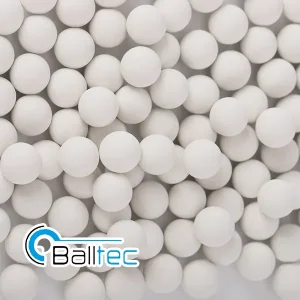
In heavy-duty hydrotreaters, hydrocrackers, sulfur recovery units (Claus Process), and catalytic reformers in Ruwais and Habshan, high-alumina inert ceramic balls ($99.5\%\text{ }Al_2O_3$) are placed at both the top and bottom of reactor beds. As top packing, they distribute incoming gas-liquid hydrocarbon streams uniformly while protecting expensive precious-metal catalysts from hydraulic shock and mechanical movement. As bottom support, they prevent catalyst fine migration into downstream piping manifolds while enduring operating temperatures above $1000^\circ\text{C}$ and hot hydrogen pressures.
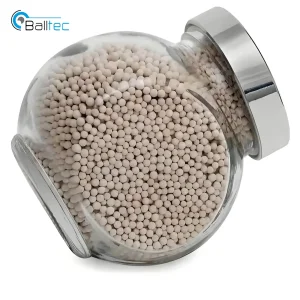
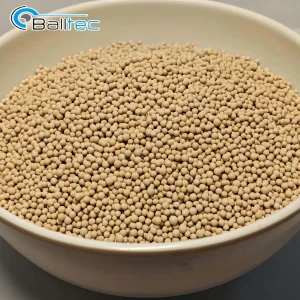
With the UAE expanding its offshore gas production (Dalma, Hail, and Ghasha projects), deep moisture removal from wet natural gas is critical prior to cryogenic liquefaction (LNG) or pipeline transmission. Synthetic zeolite molecular sieves (Types 3A, 4A, 5A, and 13X) formatted as robust ceramic spheres selectively adsorb water molecules down to $<0.1\text{ ppm}$ dew points. Combined with a protective layer of 1/2-inch inert ceramic balls at the vessel inlet, these beds resist high hydrodynamic drag and frequent thermal swing regeneration without dusting or crushing.
The thriving architectural paints, automotive refinish, and industrial mineral processing industries in Ras Al Khaimah and Dubai rely on micro-spherical Y-TZP zirconia and zirconia-toughened alumina (ZTA) beads. Utilized in high-speed agitator bead mills (Netzsch, Buhler systems), these dense media enable fine dispersion down to sub-micron particle distributions. High wear resistance prevents batch color shifting, while superior density cuts milling times by up to 35% compared to conventional glass or low-grade silicate beads.
How green hydrogen, CCUS (Carbon Capture), and advanced nano-materials are reshaping GCC ceramic demands.
As the UAE advances its National Hydrogen Strategy to become a leading exporter of low-carbon hydrogen and green ammonia by 2030, demand is surging for specialized, low-silica porous ceramic spheres. These modified alumina and titania-doped ceramic supports provide high surface area, optimized pore volume distribution, and extreme thermal stability required for high-temperature steam methane reforming (SMR) with CCUS and green ammonia synthesis reactors.
ADNOC’s ambitious carbon management projects require specialized structured ceramic packings and high-surface ceramic support spheres within massive amine absorption columns. Designed to withstand corrosive solvent environments, these ceramic materials optimize gas-liquid mass transfer coefficients while minimizing total pressure drop across high-volume flue gas treatment columns.
Key physical parameters, test protocols, and logistics considerations for Middle East containerized freight.
When drafting procurement specifications for GCC refinery shutdowns or new capital projects, engineers should verify four key technical criteria:
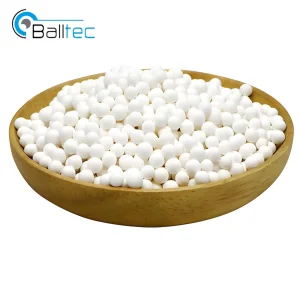
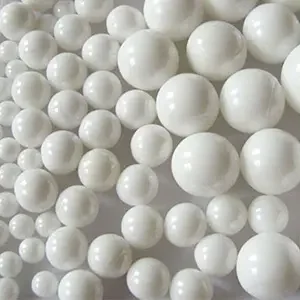
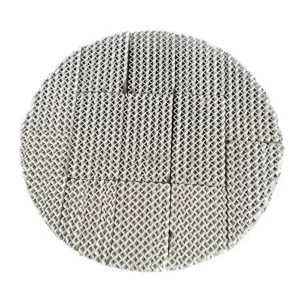
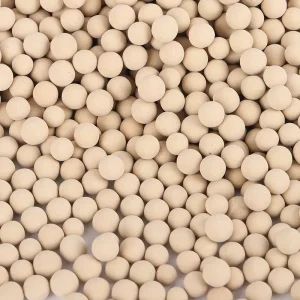
Explore our complete inventory of specialty media, molecular sieves, structured tower packings, and biomedical ceramics.
Clarifying technical compliance, international shipping parameters, and application specifics for Gulf project managers.
Request technical datasheets, chemical analysis reports, and competitive FOB/CIF Jebel Ali price quotations for your upcoming UAE facility turnarounds or project bids.
Send Inquiry Now