Follow 


Tailored for high-energy bead mills, horizontal stirred mills, and sub-micron wet grinding systems operating across Silesia, Lower Silesia, and Mazovia.
Over the past decade, Poland has solidified its position as Central and Eastern Europe’s undisputed leader in advanced chemical synthesis, automotive paint manufacturing, technical ceramics, and electric vehicle (EV) battery component production. Regions such as Lower Silesia (Wrocław area), home to Europe’s largest EV battery gigafactories, and the industrial corridors around Katowice, Poznań, and Łódź, demand unprecedented particle size reduction capabilities.
Transitioning from micro-meter comminution to nanometer-scale wet grinding requires grinding media that exhibit extremely high density, exceptional mechanical toughness, and near-zero wear rates. Standard metallic or low-grade silica media are no longer viable due to catastrophic wear, heavy metallic contamination, and process thermal instability.
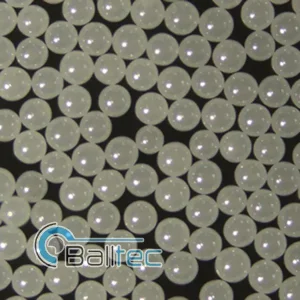
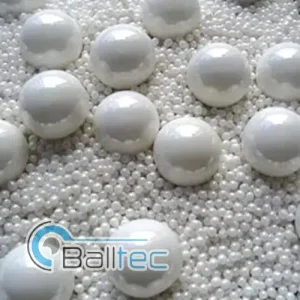
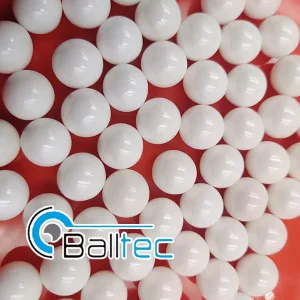
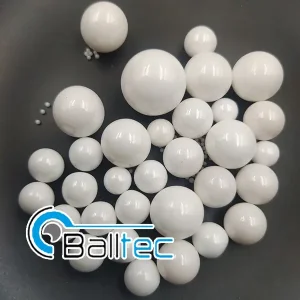
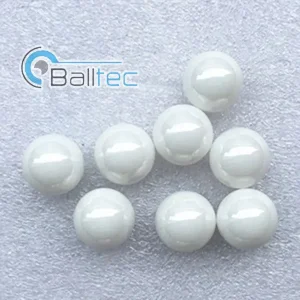
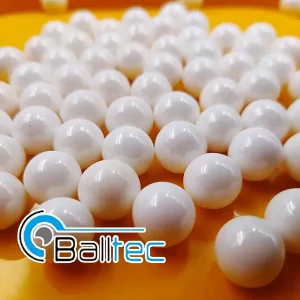
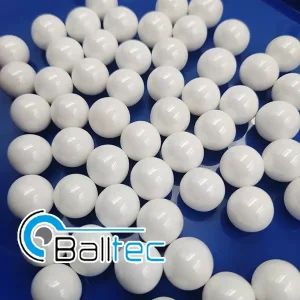
Yttria-Stabilized Tetragonal Zirconia Polycrystal (Y-TZP) grinding beads deliver a specific density of ~6.0 g/cm³. When deployed in high-power intensity pin mills (such as Netzsch, Bühler, or Hosokawa Alpine systems common in Polish plants), YSZ beads impart immense kinetic energy to slurry particles, accelerating grinding efficiency by up to 300% compared to conventional alumina media.
Understanding transformation toughening mechanisms and batch-to-batch microstructural consistency.
The performance of modern grinding media rests upon the phenomenon of Transformation Toughening. Pure zirconium oxide ($ZrO_2$) undergoes a phase change from monoclinic to tetragonal and cubic states at elevated temperatures. By doping pure zirconia with approximately 3.0 mol% (or ~5.2 wt%) Yttrium Oxide ($Y_2O_3$), the high-temperature tetragonal phase is metastably retained at room temperature.
When a propagating micro-crack experiences high kinetic shear stresses inside a horizontal bead mill, the stress field around the crack tip triggers the metastable tetragonal grains to transform into the stable monoclinic phase. This stress-induced transformation is accompanied by a localized volume expansion of ~3–5%, which exerts compressive stresses on the crack tip, effectively clamping it shut and preventing mechanical breakdown.
| Property Parameter | Y-TZP Zirconia Beads (Baitian YSZ) | Cerium-Stabilized Zirconia (Ce-TZP) | Zirconium Silicate Beads ($ZrSiO_4$) | High Purity Alumina ($Al_2O_3$) |
|---|---|---|---|---|
| ZrO₂ Concentration | ≥ 94.6% | 80% – 85% | 60% – 65% | N/A (<0.5%) |
| Stabilizing Agent | 5.2 wt% Y₂O₃ | CeO₂ | SiO₂ Matrix Integration | MgO / SiO₂ Traces |
| Specific Density (g/cm³) | ≥ 6.00 | 6.10 - 6.20 | 4.00 - 4.20 | 3.60 - 3.95 |
| Bulk Density (g/cm³) | 3.60 - 3.80 | 3.70 - 3.85 | 2.50 - 2.65 | 2.20 - 2.40 |
| Vickers Hardness (Hv10) | 1250 - 1350 kg/mm² | 1150 - 1200 kg/mm² | 900 - 1000 kg/mm² | 1100 - 1400 kg/mm² |
| Crush Strength (Ø 1.0mm) | ≥ 2100 N | ≥ 1800 N | ≥ 1100 N | ≥ 1200 N |
| Wear Rate (Self-Wear) | < 0.01 g/kg·h | < 0.03 g/kg·h | < 0.15 g/kg·h | < 0.20 g/kg·h |
| Primary Target Applications | EV Batteries, Coatings, Ink, Dental | Heavy Minerals, Agrochemicals | Paints, Paper Coating, Minerals | Ceramic Glazes, White Cement |
Addressing key operational hurdles faced by processing engineers in Polish factories.
Location Hubs: Wrocław, Kobierzyce, Upper Silesia.
Operational Challenge: Production of Lithium Nickel Manganese Cobalt Oxide (NMC) and Lithium Iron Phosphate (LFP) materials demands sub-micron particles ($D_{90} < 300\text{ nm}$) with zero iron (Fe) or heavy metal seeding that causes thermal runaway.
Baitian Solution: Our high-purity YSZ micro-beads ($0.1\text{mm} - 0.4\text{mm}$) provide pristine chemical inertness, high kinetic impact to reduce milling duration by 35%, and ensure ultra-clean slurry outputs meeting strict EU battery compliance specs.
Location Hubs: Gliwice, Poznań, Warsaw Chemical Belt.
Operational Challenge: Premium automotive finish formulations require exact color strength, ultra-high gloss, transparency, and narrow particle size distribution without bead fragmentation.
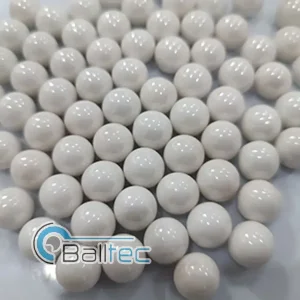
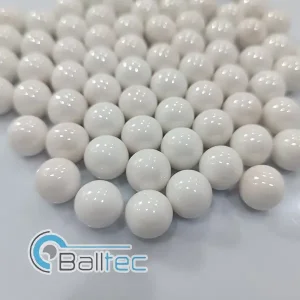
Baitian Solution: Micro-crystalline sphericity (>95%) prevents bead packing and screen blinding in modern high-flow recirculation mills, maximizing throughput while offering wear resistance that keeps batch purity consistent.
Location Hubs: Tarnów, Płock, Brzeg Dolny.
Operational Challenge: Pesticides, herbicides (SC, FS formulations), and titanium dioxide suspensions require fine grinding under aggressive chemical environments without chemical degradation.
Baitian Solution: Acid and alkali-resistant YSZ and Zirconium Silicate media withstand aggressive solvents while offering long wear life, reducing frequent mill re-charging costs.
Location Hubs: Kraków Technology Park, Podkarpacie Aviation Valley.
Operational Challenge: Barium titanate dielectric materials for MLCC capacitors and nano-zirconia powders for CAD/CAM dental blocks require sub-micron milling free from contamination.
Baitian Solution: Sintered 99.9% pure YSZ media eliminate foreign phase impurities, protecting dielectric values and ensuring maximum translucency for medical dental blocks.
How Pingxiang Baitian (Ball-tec) New Materials Co., Ltd. Delivers World-Class Ceramic Engineering at Unbeatable Total Cost of Ownership.
Situated within the premier industrial ceramics hub of Pingxiang, Jiangxi Province, Baitian operates a massive 100,000 m² state-of-the-art production campus. Our manufacturing capabilities unify the complete value chain under one roof: from sub-micron hydrothermal powder preparation and titrating/isostatic forming to high-temperature tunnel kiln sintering and precision polishing.
Every production batch undergoes strict quality control protocol:
We provide complete freight options directly to Polish industrial destinations:
Engineered media ranges covering specialized dental, electronic, chemical, and general ceramic milling applications across Poland.
Direct technical guidance on bead selection, sizing rules, and mill operating metrics.
Contact our application engineers for a free mill loading audit, technical consultation, or factory-direct pricing for your Polish plant.