Follow 


Optimized for horizontal agitator bead mills, basket mills, and high-energy attrition systems deployed across Washington state’s tech clusters.
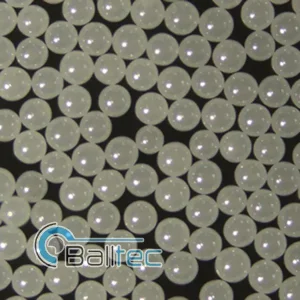
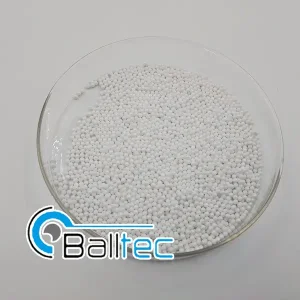
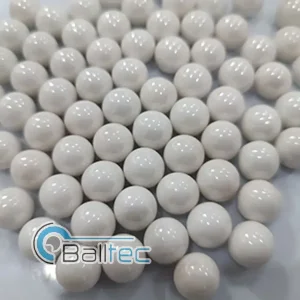
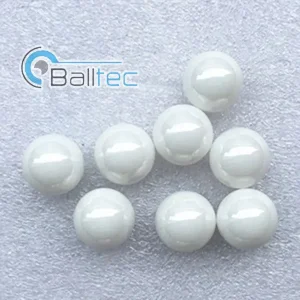
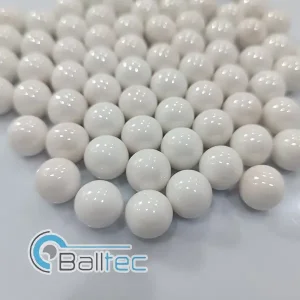
Seattle High Strength Yttria Stabilized Zirconia Ceramic Zirconium Oxide Ball Grinding Beads
Request Specs & Specs
Wholesale Yttria-Stabilized Zirconia Grinding Media for Seattle Battery Material Processing
Request Specs & SpecsIn the rapidly evolving industrial landscape of Seattle, Washington, and the broader Pacific Northwest (PNW) region, the demand for sub-micron and nano-scale ultra-fine particle dispersion has reached an unprecedented peak. Advanced industries spanning clean energy battery materials (such as silicon-anode and solid-state battery slurries), aerospace structural coatings, semiconductor CMP (Chemical-Mechanical Planarization) slurries, and specialized marine protective polymers require grinding media capable of withstanding massive shear stresses while introducing near-zero contamination.
As a leading global Wholesale Zirconia Grinding Media Manufacturer & Exporter catering directly to Seattle, our facility leverages state-of-the-art ceramic powder synthesis, cold isostatic pressing (CIP), micro-spheroidization titrating technologies, and high-temperature phase-controlled sintering. By supplying Seattle enterprises with yttria-stabilized zirconia (Y-TZP), ceria-stabilized zirconia (Ce-TZP), and zirconium silicate media, we enable local engineers to maximize kinetic energy density inside high-flow recirculating horizontal bead mills while cutting operational wear costs by up to 45%.
Seattle is far more than a software and aerospace hub; it has rapidly solidified its position as a powerhouse for advanced materials innovation, clean technology, and biomedical engineering. The ultra-fine grinding challenges faced by local facilities in King, Snohomish, and Pierce counties require bespoke ceramic media solutions tailored to specific stress intensities and chemical environments:
Puget Sound's booming CleanTech sector requires sub-100nm grinding of lithium iron phosphate (LFP), nickel-manganese-cobalt (NMC), and solid-state electrolyte powders. Our Y-TZP beads deliver zero iron contamination, critical for battery safety and energy density.
Seattle’s aerospace supply chain demands ultra-durable Ceramic Matrix Composites (CMCs) and thermal barrier coatings (TBCs). High-density zirconia grinding media ensure dynamic dispersion of sub-micron rare-earth ceramic powders.
Chemical-Mechanical Planarization (CMP) slurries for wafer polishing demand absolute freedom from oversized agglomerates. Our micro-beads (down to 0.05mm) provide precise particle size distribution (PSD) without scratching delicate silica/alumina structures.
The exceptional wear resistance and impact strength of our yttria-stabilized tetragonal zirconia polycrystal (Y-TZP) media are rooted in stress-induced phase transformation toughening. When micro-cracks attempt to propagate through the bead during high-energy kinetic impact inside an agitator mill, the metastable tetragonal crystal phase transforms into a monoclinic phase. This transformation involves a 3% to 5% volume expansion, which puts the crack tip under immense compressive stress, effectively arresting crack propagation.
| Physical & Chemical Property | Y-TZP (Yttria-Stabilized) | Ce-TZP (Ceria-Stabilized) | ZrSiO4 (Zirconium Silicate) |
|---|---|---|---|
| ZrO₂ Chemical Purity | ≥ 95% (with ~5% Y₂O₃) | ≥ 80% (with ~18% CeO₂) | ≥ 65% (SiO₂ ~30%) |
| Bulk Density (g/cm³) | ≥ 6.00 – 6.05 | ≥ 6.20 | ≥ 4.00 – 4.15 |
| Vickers Hardness (HV10) | 1250 – 1300 GPa | 1150 – 1200 GPa | 900 – 1000 GPa |
| Fracture Toughness (MPa·m¹/²) | 9.0 – 10.0 | 12.0 – 13.0 | 4.5 – 5.0 |
| Wear Rate (Self-Wear Test) | < 0.01 g/kg·h | < 0.015 g/kg·h | < 0.08 g/kg·h |
| Recommended Sizing | 0.05mm – 3.0mm | 0.4mm – 5.0mm | 0.6mm – 12.0mm |
| Primary Seattle Target Industry | Battery Cathodes, Inkjet, CMP | Heavy Minerals, Paints, Mining | Paper Coating, Calcium Carbonate |
In micro-bead milling, the energy transmitted to the slurry particles is directly proportional to the mass of the grinding bead and the square of the tip speed of the mill agitator rotor ($E_k = \frac{1}{2} m v^2$). By upgrading from conventional glass beads or alumina media (density ~2.5 to 3.6 g/cm³) to our high-purity Y-TZP beads (density 6.05 g/cm³), process engineers in Seattle achieve:
Navigating international procurement requires robust supply-chain resilience and strict adherence to U.S. industrial standards. As an established manufacturer exporting directly to the Pacific Northwest region, we provide end-to-end support engineered to eliminate inventory risks for Seattle plant managers:
Direct oceanic shipping channels linking our automated manufacturing plants to the Port of Seattle and Port of Tacoma. Expedited ocean shipping and bonded warehousing ensure seamless delivery schedules.
Every shipment is backed by batch-specific Certificates of Analysis (CoA), verifying density via helium pycnometry, Vickers hardness, chemical purity via XRF/ICP-MS, and particle size distribution via laser diffraction.
Our tribology specialists assist Seattle engineers with bead sizing calculations, optimum filling ratios (65%–85%), rotor speed recommendations, and mill chamber material compatibility audits.
As sub-nanometer processing advances toward 10nm particle targets for next-generation quantum dots and solid-state battery electrolytes, conventional grinding media encounter physical limits. Our ongoing R&D roadmap focuses on three crucial breakthroughs tailored for Seattle's high-tech manufacturers:
Clear, authoritative technical answers to streamline your supplier evaluation process.
Explore our full line of specialized ceramic media grades manufactured for global export and Seattle regional supply chains.
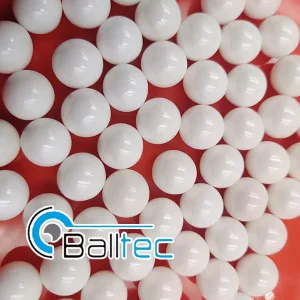
China Low-Impurity Zirconia Grinding Media for Electronic Ceramic Production Manufacturers, Exporter
Request Specs & Specs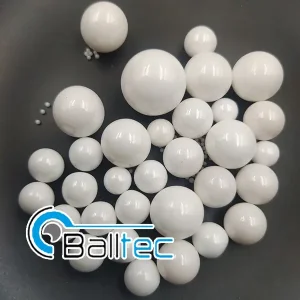
High-Quality High-Density Zirconia Grinding Media for Ceramic Glaze Milling Factory, Factories
Request Specs & SpecsRequest technical data sheets, sample media batches, or a custom wholesale quote engineered for your exact milling equipment.