Follow 


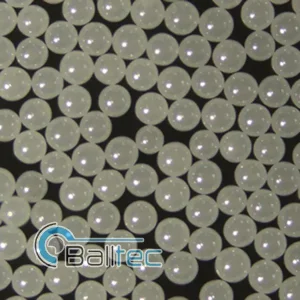
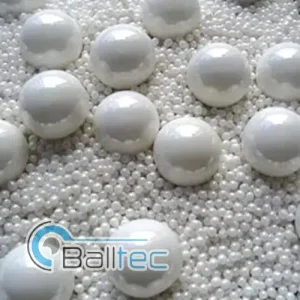
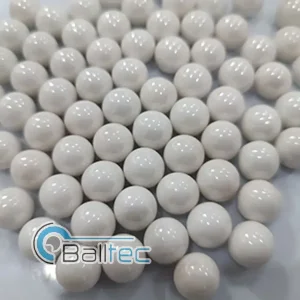
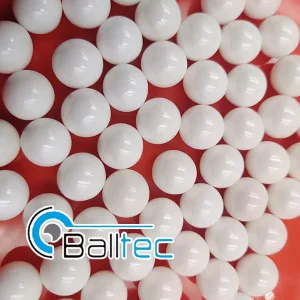
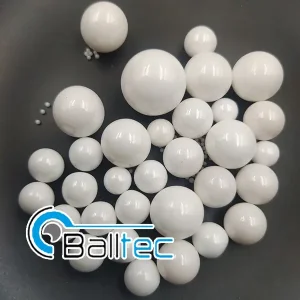
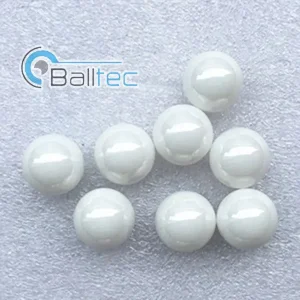
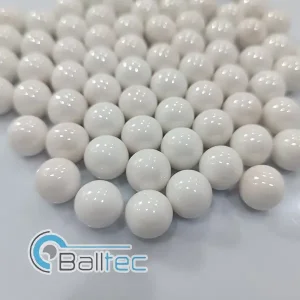
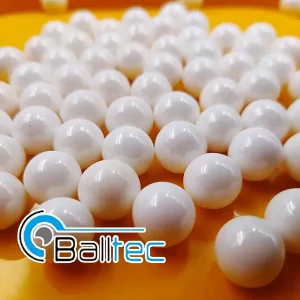
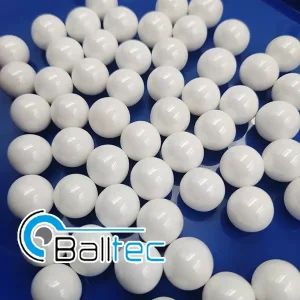
High-performance ceramic beads engineered to withstand rigorous stress intensity in high-energy agitator bead mills (compatible with Buhler, Netzsch, and Drais systems).
France is currently undergoing a massive industrial modernization driven by the France 2030 Investment Plan, which allocates over €54 billion to re-industrialize the nation through green technology, technological sovereignty, and advanced manufacturing. As industrial processes shift toward sub-micron and nanometer-scale wet grinding, selecting the optimal Zirconia Grinding Media has become a mission-critical factor for process engineers and procurement specialists across key French industrial clusters.
From the emerging "Battery Valley" (La Vallée des Batteries) in the Hauts-de-France region (Dunkirk, Douai, Douvrin) to the world-renowned Cosmetic Valley in Centre-Val de Loire, and the historical chemical corridors along the Rhône Valley, industrial operations are upgrading from traditional metallic or glass grinding beads to advanced ceramic solutions. Yttria-Stabilized Tetragonal Zirconia Polycrystal (Y-TZP) beads offer unmatched density (6.0 g/cm³), exceptional fracture toughness (8.0 MPa·m1/2), and near-zero wear kinetics.
Transitioning from low-density media to premium Y-TZP zirconia grinding beads reduces bead consumption by up to 65%, decreases specific energy consumption (kWh/ton) in agitated pin mills by 28%, and completely eliminates metallic ion contamination in battery active materials and cosmetic emulsions.
To achieve high grinding efficiency without media breakage under extreme shear stress, the microstructural integrity of zirconia ceramics must be tightly controlled. Our factory utilizes high-purity nanometer-scale ZrO₂ powder co-precipitated with 3mol% Y₂O₃ (Yttria). During high-temperature sintering in automated tunnel kilns, the material forms a uniform tetragonal crystal structure.
When a micro-crack begins under impact stress inside an agitator mill, the tetragonal phase around the crack tip transforms into a monoclinic phase. This transformation increases local volume by 3-5%, creating micro-compressive stress that clamps the crack shut and prevents catastrophic media shatter.
Unlike conventional roll-forming methods that create internal voids and uneven sphericity, our precision beads are produced via liquid-phase electrolyte titration forming. This guarantees a sphericity coefficient exceeding 98% and uniform density from the core to the outer shell.
Our grinding beads undergo a proprietary multi-stage chemical-mechanical polishing (CMP) process, yielding a surface roughness (Ra) under 0.02 µm. This micro-smooth finish dramatically reduces friction against mill liners and seals, prolonging equipment lifespan.
| Property Parameter | Y-TZP Zirconia (3mol% Y2O3) | Ce-TZP Zirconia (Ceria) | Zirconium Silicate (ZrSiO4) | Forged Steel / Chrome Ball |
|---|---|---|---|---|
| Specific Density (g/cm³) | 6.00 ± 0.05 | 6.20 ± 0.05 | 4.00 ± 0.10 | 7.80 |
| Bulk Density (g/cm³) | 3.60 – 3.85 | 3.75 – 3.95 | 2.50 – 2.60 | 4.60 |
| Vickers Hardness (HV10) | > 1,250 kg/mm² | 1,150 kg/mm² | 1,000 kg/mm² | 600 – 750 kg/mm² |
| Fracture Toughness (MPa·m¹/²) | 8.0 – 9.0 | 9.5 – 10.5 | 4.5 | 15.0 – 20.0 |
| Self-Wear Rate (ppm/hr) | < 5 ppm | < 8 ppm | < 25 ppm | > 150 ppm |
| Contamination Impact | Non-reactive, Zero metallic ions | Slight Ceria trace | Silica ion leaching | Severe Fe/Cr heavy ion loss |
French industrial buyers require tailored solutions that match strict European chemical directives (REACH, CLP) and rigorous process parameters. Below is how our zirconia grinding media addresses the top industrial segments in France:
Application: Ultrafine wet grinding of Lithium Iron Phosphate (LFP), Nickel Manganese Cobalt (NMC) precursors, and silicon-carbon anodes.
Solution: 0.1mm - 0.3mm ultra-fine Y-TZP micro-beads. Their high density maximizes impact energy inside high-throughput horizontal bead mills, achieving a narrow particle size distribution (D90 < 200 nm) necessary to increase battery energy density and charge-discharge rates.
Application: Nano-dispersion of Titanium Dioxide (TiO₂), Zinc Oxide (ZnO) sunscreens, natural mineral makeup, and organic luxury pigments.
Solution: Highly polished 0.4mm - 0.8mm Y-TZP beads with zero heavy metal content. Compliant with European Cosmetics Regulation (EC) No 1223/2009, ensuring pure color expression and crystal-clear UV filters without abrasive grey color shifts.
Application: Automotive OEM clearcoats, marine anti-fouling paints, inkjet inks, and agrochemical suspensions.
Solution: Ceria-Stabilized Zirconia (Ce-TZP) and Y-TZP beads (1.0mm - 2.5mm). Superior resistance to aggressive acidic and alkaline formulations, preventing bead swelling, chipping, or viscosity degradation during continuous batch milling.
For French procurement managers and supply chain directors, evaluating grinding media purely based on initial price per kilogram leads to sub-optimal economic decisions. A complete Total Cost of Ownership (TCO) evaluation must consider media wear rate, milling cycle times, energy consumption per ton of product, and downtime for mill maintenance.
TCO (€/Ton Produced) = (Media Consumption Rate × Media Unit Cost) + (Mill Energy Power Draw × Electricity Tariff) + (Maintenance Downtime Cost)
Because our Y-TZP Zirconia media maintains a wear rate below 0.01 g/kg, the media refill frequency drops dramatically. Furthermore, because of its high density (6.0 g/cm³), the media imparts higher kinetic energy ($E_k = \frac{1}{2} m v^2$) at the same tip speed, allowing mills to achieve target D50 particle sizes in up to 30% less time.
Operating within France and the European Union requires strict compliance with environmental regulations and health standards. Our company maintains a dedicated compliance framework to support seamless import and operational safety for French enterprise buyers.
All raw zirconia materials and stabilizing agents are fully registered under EU REACH regulations. Our products are certified free of heavy metals (Lead, Cadmium, Mercury, Hexavalent Chromium) and Substances of Very High Concern (SVHC).
Our manufacturing campus operates under rigorous ISO 9001:2015 (Quality Management), ISO 14001:2015 (Environmental Management), and ISO 45001:2018 (Occupational Health & Safety) certified standards.
To support our French partners' Corporate Social Responsibility (CSR) goals, our sintering furnaces utilize clean natural gas and energy-recovery systems, reducing the carbon footprint per ton of ceramics by 22% compared to industry benchmarks.
As particle size requirements push into the deep sub-100 nanometer range for applications such as solid-state battery electrolytes and quantum dot displays, traditional grinding media faces physical limits. Our R&D center is actively pioneering next-generation ceramic media solutions:
Explore our comprehensive range of high-density ceramic grinding beads, micro-spheres, and specialized polishing media available for direct factory shipment to France.