Follow 


Engineered specifically for high-energy bead mills, vertical attritors, and continuous dispersion systems operated across Bangladesh's industrial hubs.
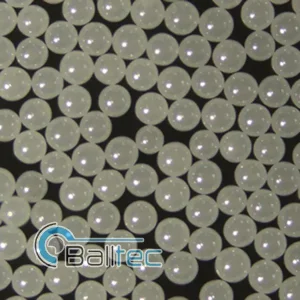
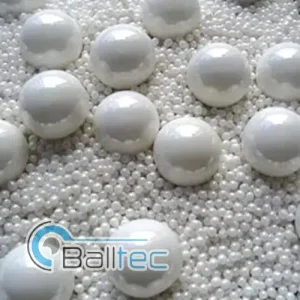
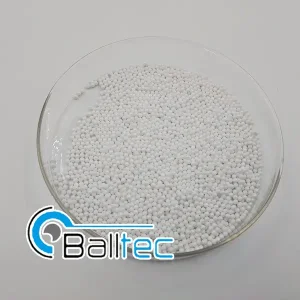
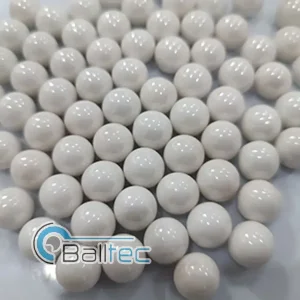
Bangladesh has emerged as one of South Asia’s most dynamic manufacturing powerhouses. Driven by rapid expansion across the ready-made garment (RMG) wet-processing sector, domestic ceramic tile production, architectural & industrial paint formulations, and active pharmaceutical ingredient (API) manufacturing, the demand for high-efficiency wet-milling technologies has grown exponentially.
Traditional milling media—such as natural silica pebbles, forged steel balls, and standard alumina beads—are increasingly failing to meet modern production KPIs. In high-shear nano-grinding and micro-dispersion, conventional media suffer from high wear rates, heavy metal contamination, low density, and high specific energy consumption. As Bangladeshi manufacturers transition toward export-grade quality standards (ISO, REACH, GMP), Yttria-Stabilized Tetragonal Zirconia Polycrystal (Y-TZP) grinding media has become the industry benchmark.
Zirconia ($ZrO_2$) exhibits polymorphism: monoclinic at ambient temperatures, tetragonal above 1170°C, and cubic above 2370°C. By doping the crystal lattice with 3 mol% Yttrium Oxide ($Y_2O_3$), the tetragonal phase is metastable at room temperature. This triggers a unique phenomenon known as Stress-Induced Phase Transformation Toughening.
When an internal micro-crack attempts to propagate under impact within a bead mill, the stress field around the crack tip induces the tetragonal grains to transform into the monoclinic phase. This transformation involves a volume expansion of approximately 3–5%, creating localized compressive stress that effectively clamps the crack tip shut, preventing catastrophic media breakage.
Phase-change mechanics absorb impact stress, completely eliminating spherical fracture and bead fragmentation even under peripheral agitation speeds exceeding 16 m/s.
With a bulk density of $\ge 6.0\text{ g/cm}^3$, kinetic energy delivered ($E_k = \frac{1}{2}mv^2$) is 70% higher than alumina media, drastically reducing residence time per pass.
Formed via advanced titration gelation and isothermal sintering, achieving $>98\%$ roundness and polished glass-like surface finishes ($Ra < 0.02\,\mu m$).
Comparing performance metrics between standard grinding media types used across South Asian manufacturing plants:
| Media Parameter | Y-TZP Zirconia Beads | Zirconium Silicate ($ZrSiO_4$) | 95% High Purity Alumina | Forged Steel Media |
|---|---|---|---|---|
| Specific Density (g/cm³) | 6.00 - 6.05 | 4.00 - 4.20 | 3.65 - 3.75 | 7.80 |
| Bulk Density (g/cm³) | 3.60 - 3.85 | 2.50 - 2.65 | 2.20 - 2.35 | 4.60 |
| Mohs Hardness | 9.0 | 8.0 | 9.0 | 6.5 - 7.0 |
| Crush Strength (0.1mm / 1.0mm) | >250 N / >2100 N | >120 N / >1100 N | >100 N / >900 N | N/A (Deforms) |
| Wear Rate (ppm/hr) | < 0.005 | < 0.05 | < 0.08 | > 2.50 (Corrosive) |
| Chemical Inertness | Acid & Alkali Resistant | Moderate Acid Resistance | High Acid Resistance | Poor (Oxidizes) |
The paints and coatings sector in Bangladesh (including decorative, marine, automotive refinish, and industrial anti-corrosion coatings) requires sub-micron dispersion of Titanium Dioxide ($TiO_2$), carbon black, and organic pigments. Using low-density media results in pigment agglomeration, color strength loss, and poor gloss values. Baitian's Y-TZP beads enable high-speed horizontal pin mills to achieve narrow particle size distributions ($D_{90} < 1.0\,\mu m$) in minutes, enhancing hiding power and gloss retention while eliminating mill-shell abrasion.
Bangladesh’s world-class ceramic tile and sanitaryware producers in Gazipur require ultrafine milling of frit, zircon opacifiers, feldspar, and kaolin slurry. Contamination by heavy iron or silica media causes glaze discoloration, pinholes, and structural weakening. Micro-crystallized Zirconium Silicate and High-Density Zirconia media ensure pure white glaze slip formulations, reducing viscosity and improving thermal shock stability.
As a global leader in textile manufacturing, Bangladesh demands flawless disperse dyes, vat dyes, and screen-printing pigment pastes. Micronizing dye crystals down to 200–500 nanometers is critical for color fastness, fiber penetration, and nozzle anti-clogging in digital textile printing. Baitian's high-purity micro-beads ($0.1\text{mm} - 0.4\text{mm}$) provide rapid dispersion without chemical reactivity.
With the expansion of Bangladesh's API Industrial Park, domestic pharmaceutical companies are manufacturing complex suspension drugs, inhalable powders, and nano-formulations. Baitian supplies medical-grade, low-impurity Yttria-stabilized zirconia media backed by full non-cytotoxicity documentation, ultra-low extractables, and full CIP/SIP sterilization compatibility.
When Bangladeshi procurement executives evaluate grinding media suppliers, unit purchase price ($/kg) is often misleading. Total Cost of Ownership (TCO) is dictated by three primary factors: Media Consumption Rate, Energy Efficiency per Mass Unit, and Downstream Product Yield Quality.
Because Y-TZP wear rates are less than 0.005% per 100 milling hours, replacement frequency drops by up to 80%, reducing factory downtime and labor overhead.
Consistent sphericity and tight sieve tolerance ensure screen separation systems in Netzsch, Buhler, and Hosokawa mills remain unblocked, keeping back-pressure low.
Higher kinetic transfer accelerates grinding speed. Factories achieve target $D_{50}$ in fewer passes, saving up to 35-45% in electrical power (kWh/ton).
Baitian (Ball-tec) enforces rigorous quality assurance across every export batch dispatched to Chattogram Port:
Navigating international import operations requires dependable logistics partners. Pingxiang Baitian (Ball-tec) New Materials Co., Ltd. provides end-to-end export support tailored to Bangladeshi commercial regulations:
Explore our full line of specialized zirconia, zirconium silicate, and dental-grade ceramic grinding media available for immediate export to Bangladesh.

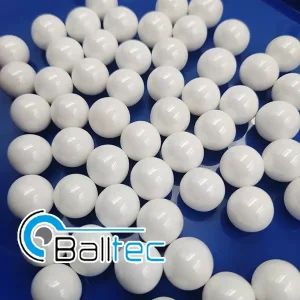
Technical and procurement insights for process engineers and purchasing directors in Bangladesh.
Partner with a trusted factory-direct exporter of advanced zirconia ceramic grinding media. Reduce milling cycles, eliminate product contamination, and lower your factory's operational costs.
Send Inquiry Now