Follow 


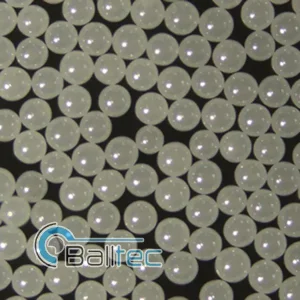
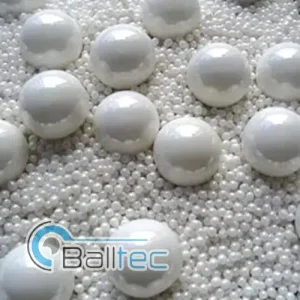
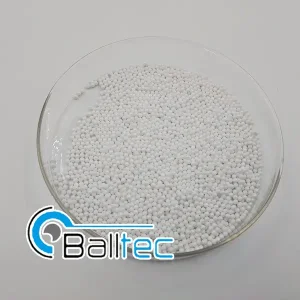
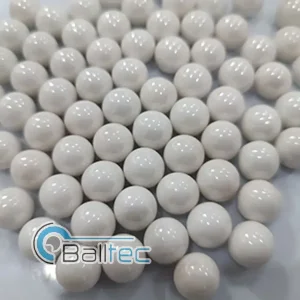
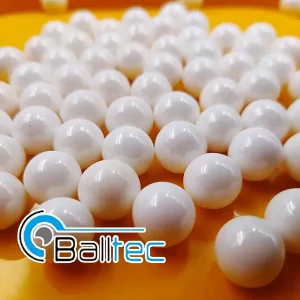
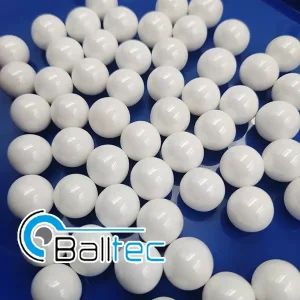
Direct factory supply of premium grade Y-TZP zirconia beads, optimized for high-energy bead mills, vertical attritors, and horizontal fine grinding systems across Malaysian manufacturing hubs.
An in-depth perspective on how Malaysia’s New Industrial Master Plan 2030 (NIMP 2030) is driving the adoption of high-purity zirconia grinding media across high-tech sectors.
Malaysia is experiencing a profound structural transformation in its industrial economy. Supported by national policy frameworks such as the New Industrial Master Plan 2030 (NIMP 2030) and the National Energy Transition Roadmap (NETR), the country is transitioning rapidly from traditional raw material extraction and low-end processing into high-value advanced manufacturing. Key economic corridors—spanning from the Northern Corridor Economic Region (NCER) encompassing Penang and Kulim Hi-Tech Park (KHTP) to the East Coast Economic Region (ECER) around Kuantan and Gebeng, as well as the bustling chemical clusters in Selangor and Johor—are scaling up operations in sub-micron wet grinding, chemical mechanical planarization (CMP) slurries, electronic ceramics, and battery precursor refining.
In ultra-fine grinding processes, the choice of milling media directly dictates product purity, energy efficiency, particle size distribution (PSD), and operational cost structure. Traditional grinding media such as natural flint pebbles, forged steel balls, and standard alumina ($Al_2O_3$) beads present significant physical limitations when exposed to high-shear, high-speed bead mills (e.g., agitator bead mills operating at tip speeds $>14\text{ m/s}$). Steel media causes severe iron contamination ($Fe$), rendering it unusable for electronic components, cathode materials, and white pigments. Standard alumina media, while chemically inert, exhibits insufficient theoretical density ($\sim 3.6\text{ g/cm}^3$), resulting in lower kinetic impact energy, prolonged grinding cycles, and elevated wear rates.
Malaysia packages approximately 13% of the world’s semiconductor backend output. As wafer fabrication, MLCC (Multi-Layer Ceramic Capacitors), advanced package substrates, and dielectric materials expand in Penang and Kulim, manufacturers require zero-contamination sub-micron grinding of barium titanate ($BaTiO_3$), silica ($SiO_2$), and alumina slurries. Micro-zirconia beads as small as $0.05\text{ mm}$ to $0.1\text{ mm}$ are critical for achieving target particle sizes down to the nano-scale without introducing structural micro-flaws.
With major foreign direct investments pouring into EV battery material plants, local processing of Lithium Iron Phosphate ($LiFePO_4$ or LFP), Nickel-Manganese-Cobalt (NMC) precursors, and synthetic graphite anodes requires maximum fracture toughness ($>9\text{ MPa}\cdot\text{m}^{1/2}$) and wear resistance. Baitian’s Y-TZP beads deliver zero iron shedding, preventing micro-short circuits in lithium-ion battery cells.
Understanding why Baitian's Yttria-Stabilized Tetragonal Zirconia Poly-crystals outperform conventional ceramic media in high-stress industrial environments.
The outstanding performance of Baitian zirconia grinding media is rooted in the phenomenon of Transformation Toughening. Pure zirconium oxide ($ZrO_2$) undergoes a phase transition upon cooling: from cubic ($c$) to tetragonal ($t$) at $2370^\circ\text{C}$, and from tetragonal ($t$) to monoclinic ($m$) at $1170^\circ\text{C}$. This $t \to m$ transition is accompanied by a volumetric expansion of approximately $3\%$ to $5\%$, which causes catastrophic cracking in un-stabilized ceramics.
By doping pure zirconia with precise quantities of Yttrium Oxide ($Y_2O_3$, typically $3\text{ mol}\%$) or Cerium Oxide ($CeO_2$), our engineers lock the metastable tetragonal crystal phase at room temperature. When a micro-crack propagates through a Baitian Y-TZP bead under intense kinetic impact inside a mill, the concentrated stress field surrounding the crack tip triggers the local transformation of tetragonal grains into the larger monoclinic phase. This volumetric expansion exerts a compressive stress field on the crack, literally clamping the crack shut and stopping its growth in its tracks.
Formulated via wet-chemical co-precipitation and high-pressure sintering, resulting in an exceptionally uniform microstructure with dense grain boundaries that resist abrasive surface pulling.
Our proprietary drop-forming in liquid medium technology ensures sphericity tolerances $>98\%$ and a mirror-polished finish ($Ra < 0.01\mu m$), minimizing internal mill component wear.
With a specific gravity of $6.0\text{ g/cm}^3$, these beads transmit unmatched impact forces to break down agglomerates in ultra-viscous formulations up to $2000\text{ mPa}\cdot\text{s}$.
Comprehensive physical properties, chemical composition, and wear-rate metrics benchmarked for high-energy milling operations.
| Property Parameter | 3mol% Yttria-Stabilized (Y-TZP) | Cerium-Stabilized Zirconia (Ce-TZP) | Zirconium Silicate ($ZrSiO_4$) |
|---|---|---|---|
| $ZrO_2$ Content (%) | $\ge 94.8\%$ | $\ge 80.0\%$ | $\ge 64.0\%$ |
| Stabilizer ($Y_2O_3$ / $CeO_2$) | $5.2 \pm 0.3\% \text{ } Y_2O_3$ | $\approx 18.0\% \text{ } CeO_2$ | N/A ($SiO_2 \approx 33\%$) |
| Specific Density ($g/cm^3$) | $\ge 6.00$ | $\ge 6.20$ | $\ge 4.10$ |
| Bulk Density ($g/cm^3$) | $\ge 3.65$ | $\ge 3.75$ | $\ge 2.60$ |
| Vickers Hardness ($HV_{10}$) | $\ge 1250 \text{ kg/mm}^2$ (12.5 GPa) | $\ge 1150 \text{ kg/mm}^2$ (11.5 GPa) | $\ge 1000 \text{ kg/mm}^2$ (10.0 GPa) |
| Crush Strength ($\varnothing 2.0mm$) | $> 2200 \text{ N}$ | $> 2000 \text{ N}$ | $> 1100 \text{ N}$ |
| Self-Wear Rate ($ppm/h$) | $< 5 \text{ ppm/h}$ | $< 8 \text{ ppm/h}$ | $< 25 \text{ ppm/h}$ |
| Available Sizes ($\varnothing mm$) | $0.05\text{mm} - 30\text{mm}$ | $0.4\text{mm} - 5.0\text{mm}$ | $0.6\text{mm} - 12.0\text{mm}$ |
Tailored ceramic grinding solutions addressing specific operational requirements in Malaysia’s primary industrial sectors.
As a key supplier to Malaysian industrial facilities through direct sea-freight routes into Port Klang, Penang Port, and Pasir Gudang (Johor), Baitian has engineered specialized bead sizing and composition profiles for local operating conditions:
Malaysian coating manufacturers supplying automotive OEMs, architectural finishes, and flexographic packaging inks demand narrow particle size distributions ($d_{90} < 1.0\mu m$) to maximize color strength, gloss, and UV weatherability. Baitian 0.6mm–1.2mm Y-TZP beads operate seamlessly in high-throughput horizontal mills, eliminating paint floatation and color seeding without causing wear on internal pin/disc separators.
Ipoh is world-renowned for high-purity limestone reserves. To process Ground Calcium Carbonate ($GCC$) down to $d_{50} < 2\mu m$ for paper coating, plastics, and rubber filler industries, plant operators rely on Baitian Zirconium Silicate ($ZrSiO_4$) and Ce-TZP beads. These beads offer high economic efficiency, high crush resistance, and minimal color shift ($L^* > 98.5$).
Formulating active ingredients for crop protection in oil palm plantations requires suspension concentrates ($SC$) with stable micro-particles ($1-3\mu m$) to prevent crystallization and settling. Baitian wear-resistant zirconia beads provide smooth dispersion without chemically reacting with organic solvents or surfactants.
For medical device manufacturers and dental lab suppliers in Malaysia, Baitian exports ultra-pure dental zirconia beads designed for precision milling of zirconia blocks, ensuring zero heavy metal impurities ($Th, U < 100 \text{ ppm}$) in full-contour prosthetic restorations.
Why switching to Baitian factory-direct ceramic media lowers total operating expenses for Malaysian manufacturing plants.
When evaluating ceramic grinding media, procurement directors often focus exclusively on the initial price per kilogram ($USD/kg$). However, experienced process engineers calculate the Total Cost of Ownership (TCO) per Ton of Finished Output. The true cost equation accounts for media wear rate, energy consumption ($kWh/ton$), mill maintenance downtime, and slurry filtration loss.
Due to isotropic cold isostatic pressing (CIP) and controlled grain growth, Baitian Y-TZP beads exhibit ultra-low wear ($<5\text{ ppm/h}$). Standard beads wear down 3 to 5 times faster, requiring frequent media replenishment and causing mill downtime.
High-density media converts electrical energy into shearing kinetic energy more efficiently. Malaysian plants report an average 30% to 42% reduction in kilowatt-hours per batch after switching to our 6.0 g/cm³ Y-TZP media.
By eliminating intermediary trading markups, Baitian provides direct export pricing from our 100,000 m² manufacturing plant. Orders are custom-packaged in 25kg drums or 1000kg bulk bags and shipped directly to Port Klang or Penang Port with minimal transit lead times.
Traceable batch testing and compliance documentation aligned with Malaysian and international standards.
Baitian (Ball-tec) operates under an integrated management framework certified to ISO 9001:2015 (Quality Management System), ISO 14001:2015 (Environmental Management), and ISO 45001:2018 (Occupational Health and Safety). Every production lot of zirconia media undergoes stringent testing before dispatch:
Pioneering ultra-fine bead technology to power the next generation of semiconductor materials, solid-state batteries, and bio-ceramics.
As advanced materials transition into the sub-micron and true nano-meter realms ($<50\text{ nm}$), conventional bead sizing ($0.3\text{mm} - 0.5\text{mm}$) encounters physical limits. Smaller beads are required to dramatically increase the number of bead-to-particle collision points per second while maintaining low individual impact energy to avoid crystalline structure degradation.
Baitian’s R&D team—comprising senior ceramic engineers formerly associated with leading Japanese and US research institutes—is advancing two key technological frontiers:
Developing ultra-small Y-TZP micro-beads with uniform grain size $<0.1\mu m$. These micro-beads enable continuous sub-50nm wet grinding for CMP slurries, Quantum Dot ($QD$) displays, and pharmaceutical active ingredients ($API$).
Implementing low-emission electric tunnel kilns and establishing a circular reclamation framework for spent ceramic media in Southeast Asia, assisting Malaysian clients in meeting strict ESG (Environmental, Social, and Governance) targets.
Explore our full range of industrial ceramic grinding media tailored for specific mill configurations and material chemistries.
Expert guidance addressing technical and procurement questions for industrial mill operators in Malaysia.
As a rule of thumb, the grinding bead diameter should be approximately 10 to 20 times larger than the initial feed particle size ($d_{90}$), and the target final particle size should be roughly 1/1000th of the bead size. For example, to grind a feed material of $10\mu m$ down to $0.5\mu m$, a bead size between $0.4\text{mm}$ and $0.6\text{mm}$ is recommended. Additionally, bead size must be larger than the mill's separator gap (typically 2.5 to 3 times the gap width) to prevent bead jamming.
Y-TZP beads ($6.0\text{ g/cm}^3$) offer higher Vickers hardness ($1250\text{ HV}_{10}$) and superior wear resistance, making them ideal for high-purity applications like battery materials, electronic ceramics, white coatings, and pharmaceuticals. Ce-TZP beads ($6.2\text{ g/cm}^3$) are denser but slightly softer ($1150\text{ HV}_{10}$), providing exceptional performance in heavy industrial mineral grinding (e.g., Calcium Carbonate $GCC$) where high crushing force is needed in large-volume vertical mills.
Baitian maintains standard stock sizes ($0.1\text{mm} - 3.0\text{mm}$) for immediate container loading. Sea freight from our primary factory shipping hub to Port Klang or Penang Port takes approximately 7 to 10 days. We provide complete export documentation including Certificate of Origin (Form E for ASEAN-China Free Trade Area preference, offering zero tariff import), Mill Test Reports (MTR), MSDS, and ISO certificates.
Yes. Our technical service team provides mill loading calibration based on mill chamber volume, shaft rotation speed (RPM), slurry viscosity, and target cooling throughput. Standard volumetric loading for horizontal pin/disc bead mills typically ranges from 70% to 85% of chamber volume.
Whether you are upgrading an existing production line in Penang, building an EV battery material plant in Kuantan, or optimizing coating production in Klang, our technical team is ready to recommend the ideal media grade and size.
Send Inquiry Now - Get Technical Quote & Free Sample Batch