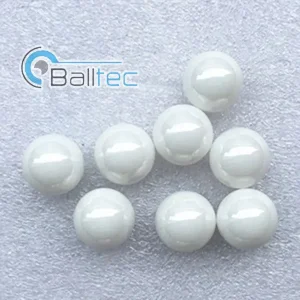
High-Precision Microcrystalline Ceramics

Zirconia Grinding Media Suppliers & Exporters for Berlin

Engineered Yttria-Stabilized & Cerium-Doped Zirconia Beads for Berlin-Brandenburg’s Advanced Chemical, Battery Material & Nano-Formulation Industries

Send Inquiry Now
Precision Grinding Solutions

Featured Zirconia Media for Berlin Industrial Applications

Specially calibrated density, toughness, and low wear rates designed for high-energy agitator mills and nanometer dispersion processes in Germany.
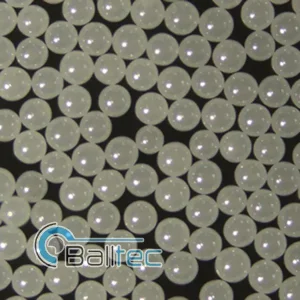
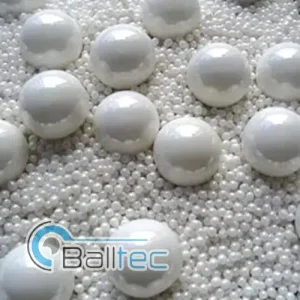
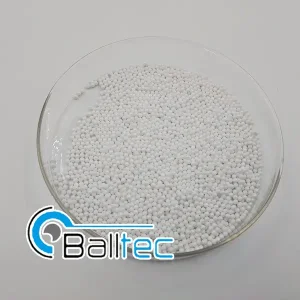
High Strength Yttria Stabilized Zirconia Beads for Berlin Milling Plants
High Strength Yttria Stabilized Zirconia Ceramic Zirconium Oxide Ball Grinding Beads for Berlin Laboratories & Plants
View Technical Specs
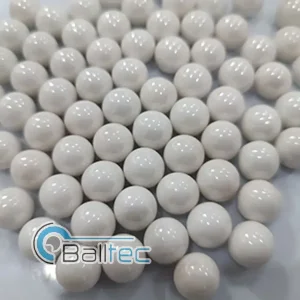
Yttria-Stabilized Zirconia Media for Berlin Battery Materials
Yttria-Stabilized Zirconia Grinding Media for Berlin-Brandenburg Battery Material Processing
View Technical Specs
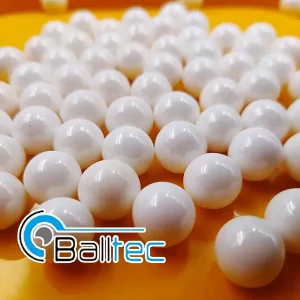
High-Purity Zirconia Grinding Media for Berlin Fine Chemicals
High-Purity Zirconia Grinding Media for Berlin Fine Chemicals & Specialty Coatings Processing
View Technical Specs
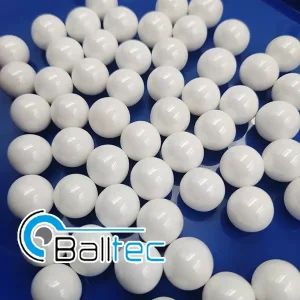
Wear-Resistant Zirconia Grinding Media for Berlin Pigment Mills
Wear-Resistant Zirconia Grinding Media for Berlin Industrial Pigment & Automotive Paint Dispersion
View Technical Specs
Regional Industrial Analysis

The Industrial Landscape of Berlin-Brandenburg & Demand for Nanometer Micro-Milling

From Adlershof Science Park to the burgeoning EV Battery Valley in Brandenburg, Berlin's industrial ecosystem demands unmatched purity, thermal stability, and mechanical strength in ceramic wet-milling media.

EV & Battery Gigafactories

The Berlin-Brandenburg region has evolved into a European hub for energy storage. Grinding battery cathode active materials (NMC, LFP) and solid-state electrolytes to sub-micron particle sizes ($\le 100\text{ nm}$) without iron contamination requires high-density Y-TZP zirconia media with near-zero wear rates.

Automotive OEM Coatings

Berlin's advanced automotive supply chains demand flawless finish coat dispersions. Micro-milling transparent clearcoats and metallic effect pigments requires ultra-smooth, spherical Yttrium-Stabilized Zirconia beads that prevent agglomeration and deliver uniform color hue strength.

Electronic Ceramics & MLCCs

With high-tech electronics R&D centers located around Berlin, the production of multi-layer ceramic capacitors (MLCC), barium titanate, and piezo-ceramics requires chemical inertness and low dielectric impact media during wet ball milling.

6.0+ g/cm³
Sintered Bead Density
≥ 1250 HV10
Vickers Hardness
< 0.01%
Self-Wear Rate Ratio
0.05 - 50 mm
Full Size Spectrum
Ceramic Material Science

Microstructural Engineering: Y-TZP vs. Ce-TZP vs. Zirconium Silicate

Choosing the precise crystallographic stabilization phase determines kinetic energy transfer, equipment component wear, and milling efficiency in high-speed agitator bead mills.

Yttria-Stabilized Tetragonal Zirconia Polycrystal (Y-TZP)

Stabilized with 3 mol% $Y_2O_3$, Y-TZP micro-beads feature an ultra-fine grain size ($< 0.3\mu m$) achieved via hot-isostatic pressing or pressureless sintering at $1500^\circ\text{C}$. The stress-induced phase transformation (tetragonal to monoclinic) absorbs kinetic shock, granting exceptional fracture toughness ($> 9\text{ MPa}\cdot\text{m}^{1/2}$).

  • Density: $\approx 6.0 \text{ g/cm}^3$
  • Best for: Nano-grinding to $< 100\text{ nm}$
  • Low heat generation in high-energy mills

Cerium-Doped Zirconia Media (Ce-TZP)

Doped with Cerium Oxide ($CeO_2$), these beads offer a higher specific gravity ($\approx 6.2 \text{ g/cm}^3$), making them ideal for heavy viscous slurries, mineral coatings, and high-solid suspension milling where maximum impact energy is mandatory to break up resistant agglomerates.

  • Density: $\approx 6.2 \text{ g/cm}^3$
  • High resistance to hydrolytic degradation
  • Ideal for heavy vertical & horizontal mills

Zirconium Silicate Media ($ZrSiO_4$)

Formed via electro-melting or high-temperature sintering of zircon sand, $ZrSiO_4$ provides an economical middle ground between alumina and pure zirconia. With a density around $4.0-4.6 \text{ g/cm}^3$, it is tailored for medium-energy milling applications.

  • Density: $4.0 - 4.6 \text{ g/cm}^3$
  • Cost-effective large-scale volume processing
  • Excellent for calcium carbonate & paints

Technical Performance Comparison Matrix for Engineering Procurement

Media Classification ZrO₂ Purity (%) Density (g/cm³) Vickers Hardness (HV10) Wear Rate (ppm/h) Primary Berlin Industry Use
Yttria-Stabilized (Y-TZP) ≥ 95% ≥ 6.00 1250 - 1350 < 5 ppm Battery Slurries & MLCCs
Cerium-Stabilized (Ce-TZP) 80 - 85% ≥ 6.15 1150 - 1250 < 10 ppm High-Viscosity Coatings
Zirconium Silicate (ZrSiO₄) 65 - 68% 4.00 - 4.20 900 - 1000 < 25 ppm Agrochemicals & Fillers
Toughened Zirconia Alumina (ZTA) 10 - 30% 3.70 - 4.50 1300 - 1450 < 15 ppm Coarse Mineral Milling
Direct Factory Advantage

Why German Enterprises Source Zirconia Media from Pingxiang, China

Pingxiang Baitian (Ball-tec) New Materials Co., Ltd. combines Japanese-American technical heritage with Pingxiang's world-renowned ceramic industrial cluster to deliver unmatched batch consistency and competitive pricing.

100,000 m² Integrated Production Campus

From chemical powder atomization and titrating wet-forming to high-temperature tunnel kiln sintering, our entire production cycle occurs under one roof, eliminating cross-contamination risk and ensuring strict microstructural purity.

ISO 9001 & TUV Batch Traceability

Every shipment bound for Germany undergoes rigorous QA testing: laser diffraction particle size verification, density measurement via Archimedes principle, ICP-OES elemental analysis, and accelerated mill wear tests.

30%–50% Total Cost of Ownership Reduction

By optimizing energy consumption in our automated continuous kilns and sourcing premium rare-earth precursors directly, we provide German manufacturing plants with significant operational savings without compromising quality.

Industry Trends & Solutions

Macro Trends Shaping Ultra-Fine Wet Milling in Europe

Navigating strict European environmental directives, energy optimization requirements, and the transition toward sub-50 nanometer processing.

Decarbonization & Mill Energy Savings

High-density Y-TZP beads ($6.0\text{ g/cm}^3$) allow mill operators in Germany to achieve target particle sizes in shorter dwell times, reducing total energy consumption (kWh/ton) of high-power agitator mills by up to 28%.

Zero Contamination Policy

In pharmaceutical micro-formulations and electronic ceramic slurry preparation, color discoloration or metallic contamination caused by media spalling is prohibited. Baitian zirconia media offers an ultra-polished surface ($Ra < 0.02\mu m$) to prevent abrasive mill wear.

Seamless Logistics to Berlin

We provide full customs clearance documentation, DDP delivery options directly to industrial zones in Berlin, Spandau, Neukölln, and Brandenburg via sea freight to Hamburg/Bremerhaven followed by direct rail integration.

Global Procurement Protocol

Quality Assurance Protocols for German Engineering Buyers

Our standardized quality verification procedures adhere to European industrial standards (DIN / ISO), ensuring plug-and-play compatibility with equipment from Netzschi, Bühler, FrymaKoruma, and VMA-Getzmann.

Strict Bead Sizing & Roundness Control

Particle size distribution (PSD) is held to tight tolerances. Micro-beads (e.g., $0.1-0.2\text{ mm}$, $0.3-0.4\text{ mm}$) undergo multi-stage optical sorting to guarantee a sphericity ratio $> 96\%$, preventing mill screen clogging during ultra-fine operation.

Internal Defect & Porosity Elimination

Utilizing high-pressure cold isostatic pressing (CIP) and controlled sintering profiles, our zirconia beads exhibit zero internal air pockets or hollow cores, eliminating media breakage under high centrifugal stress.

Comprehensive Product Line

Full Spectrum Zirconia Grinding Media Portfolio

Explore specialized formulations, sizes, and compositions engineered for every industrial milling challenge across Germany.
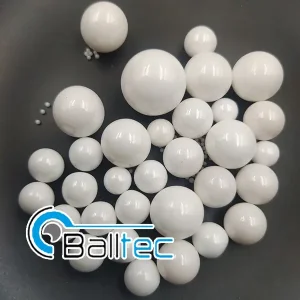
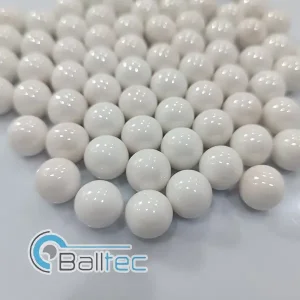
Low-Impurity Zirconia Grinding Media for Berlin Electronics
Low-Impurity Zirconia Grinding Media for Berlin Electronic Ceramic Production
View Technical Specs
High-Density Zirconia Media for Ceramic Glaze
High-Quality High-Density Zirconia Grinding Media for Berlin Ceramic Glaze Milling
View Technical Specs
Polishing Yttria Zirconium Oxide Beads for Berlin Export
Polishing Yttria Zirconium Oxide Zirconia Ceramic Mill Grinding Media Ball Beads
View Technical Specs
Yttrium Stabilized Ceramic Ball Mill Media for Berlin Suppliers
Yttrium Stabilized Zirconia Ceramic Ball Mill Grinding Media & Polishing Beads
View Technical Specs
Industrial ZrO2 Ball & Zirconium Silicate Beads for Berlin Buyers
Industrial Ceramic ZrO2 Zirconia Ceramic Ball & Zirconium Silicate Beads Grinding Media
View Technical Specs
High Strength Zirconium Silicate Ceramic Balls for Berlin Mills
High Strength Zirconium Silicate Beads Zirconia Ceramic Balls For Mill Grinding Media
View Technical Specs
Dental Zirconia Ceramic Beads for Berlin Laboratories
Dental Zirconia Ceramic Beads Zirconia Grinding Balls Sintered Beads for Berlin Labs
View Technical Specs
0.05-50mm Zirconium Silicate Ceramic Balls for Berlin Industry
High Strength Zirconium Silicate Beads 0.05-50mm Zirconia Ceramic Balls for Mill Media
View Technical Specs
Technical FAQ

Frequently Asked Questions by German Engineers & Buyers

Expert insights on media selection, wear-rate calculations, and logistics to Berlin and greater Germany.

Why choose Yttria-Stabilized Zirconia (Y-TZP) over High-Purity Alumina for nano-grinding in Berlin?
Yttria-Stabilized Zirconia (Y-TZP) has a density of approximately 6.0 g/cm³, compared to ~3.6-3.9 g/cm³ for alumina media. This higher mass delivers significantly greater kinetic impact energy ($E_k = \frac{1}{2}mv^2$) inside high-speed agitator mills. Y-TZP also features superior fracture toughness ($> 9 \text{ MPa}\cdot\text{m}^{1/2}$), resulting in a self-wear rate up to 10 to 20 times lower than alumina. For applications requiring sub-micron particle sizes ($\le 100\text{ nm}$) or zero color contamination (e.g., lithium battery slurries, pharmaceutical actives, premium automotive paints), Y-TZP is the definitive industrial choice.
How do I determine the correct bead size for my agitator mill model?
A general rule of thumb for wet milling is that the grinding bead diameter should be approximately 10 to 30 times larger than the initial feed particle size ($d_{90}$), and the target final particle size should be roughly 1/1000th to 1/2000th of the bead diameter. For example, to achieve a target $d_{50}$ of $100\text{ nm}$, micro-beads of size $0.1\text{ mm} - 0.3\text{ mm}$ are recommended. Additionally, the bead diameter must be larger than the mill screen gap (typically 2 to 3 times the gap width) to prevent bead jamming or escape.
What export documentation and certifications are provided for German customs clearance?
All shipments exported to Berlin and Germany include full Certificate of Analysis (CoA), Material Safety Data Sheets (MSDS), Packing Lists, Commercial Invoices, Certificate of Origin (Form A or RCEP where applicable), and ISO 9001 / ISO 14001 factory compliance documents. We also provide batch-specific laser particle size analysis and ICP impurity test reports upon request.
What is the expected wear rate of Baitian Y-TZP beads in continuous milling operations?
In standard wet horizontal pin mills operating under recommended cooling and viscosity conditions (100–500 mPa·s), Baitian Y-TZP beads exhibit an ultra-low wear rate of less than 5 ppm per hour of operation. This ensures that slurry chemical purity remains uncompromised and significantly extends the operational interval between bead top-ups.
What shipping routes and transit times apply for deliveries to Berlin-Brandenburg?
Sea freight shipments travel from major ports (Ningbo/Shanghai) to Hamburg or Bremerhaven with an ocean transit time of roughly 28 to 35 days. Inland transport via DB Cargo rail or truck directly to your warehouse in Berlin takes an additional 2 to 4 days. Express air freight and LCL (Less than Container Load) options are also available for urgent sample trials or emergency maintenance orders.
Can Baitian supply custom compositions or customized micro-bead sizes?
Yes. As a direct manufacturer with an integrated R&D facility in Pingxiang, China, we support custom bead diameters (from sub-0.05 mm micro-beads up to 50 mm grinding balls), tailored surface polishing levels, and customized doping levels (e.g., specialized Yttria/Cerium blends) to suit proprietary mill designs and specific slurry chemistries.

Optimize Your Milling Efficiency in Berlin Today

Request a technical consultation, custom price quote, or complimentary sample pack for your laboratory and plant trials in Germany. Our ceramic application engineers are ready to assist you.

Send Inquiry Now