Follow 


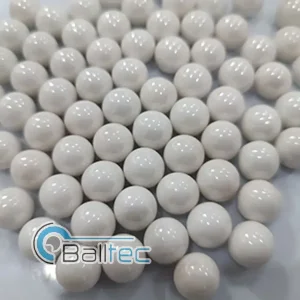
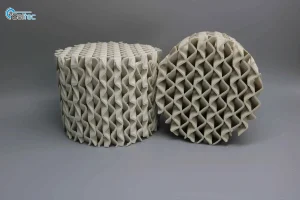
Direct factory integration: High-performance ceramic media and microstructural components for demanding industrial and RF environments.
In modern microwave architectures, RF terminating resistors (also known as dummy loads or RF loads) absorb unwanted radio frequency energy, preventing signal reflections, standing waves, and destructive thermal hotspots in high-power transmitters.
A terminating resistor is designed to equal the characteristic impedance ($Z_0$) of a transmission line—most commonly 50 Ohms or 75 Ohms. When radio frequency power flows through a transmission system, any impedance discontinuity creates a reflected wave returning to the source (such as a Solid-State Power Amplifier or Magnetron). This reflection is measured via Voltage Standing Wave Ratio (VSWR) and Return Loss ($S_{11}$).
China's top-tier terminating resistor manufacturers leverage advanced thin-film sputtering and thick-film screen-printing technologies onto highly thermally conductive ceramic substrates like Aluminum Nitride (AlN), Beryllium Oxide (BeO), and Alumina ($Al_2O_3$). By precisely controlling the resistive film's sheet resistance and parasitic capacitance, Chinese factories produce terminating resistors that maintain exact 50-ohm characteristics from DC up to millimeter-wave frequencies (60+ GHz).
While legacy RF systems relied heavily on Beryllium Oxide (BeO) due to its exceptional thermal conductivity (~260 W/mK), strict environmental and toxicity regulations (RoHS/REACH) have driven a worldwide transition to Aluminum Nitride (AlN) substrates (~180–200 W/mK) and engineered CVD Diamond substrates (~1000+ W/mK). Chinese manufacturing facilities lead the global supply chain in high-density sinter-processed AlN ceramics, enabling ultra-compact RF loads with minimal stray inductance and superior pulse handling capacity.
Combining complete vertical substrate integration with automated laser trimming and rigorous MIL-STD testing protocols.
Leading Chinese factories control the entire supply chain—from high-purity ceramic raw powders (Alumina, Zirconia, AlN) and tape casting to thin-film vacuum deposition and active brazing. This eliminates multi-tier supplier markups and reduces raw material lead times by up to 60%.
Utilizing high-precision flying-probe automated laser trimming systems, Chinese manufacturers achieve resistance tolerance tight as ±0.5% or ±1%. Resistance values are trimmed dynamically under active high-frequency test conditions to ensure flat frequency response and consistent low VSWR across production lots.
Certified under ISO 9001, ISO 14001, and AS9100D, top China facilities subject 100% of RF terminating components to thermal shock testing (-55°C to +150°C), pulse endurance tests, power burn-in, and S-parameter vector network analyzer (VNA) characterization up to 50 GHz.
A comprehensive engineering breakdown comparing core construction methodologies for broadcast, defense, 5G, and industrial RF applications.
| Resistor Form Factor | Typical Power Handling | Frequency Range | Primary Substrate Material | Key Performance Features |
|---|---|---|---|---|
| Flange Mount Terminations | 10W – 1500W+ | DC – 18 GHz | AlN / BeO on Copper Flange | Direct heat dissipation to heatsink, low thermal resistance ($R_{th}$), heavy duty power handling. |
| Surface Mount (SMD / Chip) | 1W – 250W | DC – 50 GHz | Alumina ($Al_2O_3$) / AlN | Ultra-compact footprint, tape and reel packaging for high-speed SMT assembly, low parasitic capacitance. |
| Rod & Disc Resistors | 5W – 500W | DC – 26.5 GHz | Alumina Ceramic Tubes | Ideal for coaxial terminations, dummy loads, directional couplers, and high-voltage RF attenuation networks. |
| High-Power Coaxial Dummy Loads | 100W – 10kW+ | DC – 6 GHz | Liquid/Air-Cooled Resistor Arrays | Integrated cooling fins, low VSWR connectors (N-Type, 7/16 DIN, EIA), designed for transmitter testing. |
High-power terminating resistors utilize Direct Bonded Copper (DBC) or nickel/gold plated copper flanges. Chinese factories utilize specialized silver-copper eutectic brazing techniques to eliminate vacuum micro-voids between the ceramic chip and metal base, guaranteeing thermal impedance values lower than 0.2°C/W.
At frequencies above 10 GHz, even standard resistor geometry creates inductive reactance or capacitive shunting. Chinese RF engineers utilize proprietary resistor film geometry (T-attenuators, geometry-tapered film, and ground-wrap configurations) to cancel out stray inductance, maintaining a flat 50Ω input impedance.
For radar, medical LINAC (Linear Accelerator), and high-energy physics, resistors must absorb peak pulse powers thousands of times higher than their average rated continuous power. Chinese manufacturers employ thick-film cermet matrix formulas with high heat capacity to absorb megawatt-level microsecond pulses without drift.
Engineered to withstand extreme environmental stress, high thermal gradients, and intense RF radiation across diverse sectors.
In Massive MIMO base station transceivers, directional couplers and Wilkinson power dividers require high-reliability surface mount terminating resistors to absorb isolated port power. Chinese suppliers provide low-PIM (Passive Intermodulation), high-density chip load components operating up to 40 GHz.
Phased-array radar systems use high-power flange-mounted terminating resistors as protective dummy loads for Solid-State Power Amplifiers (SSPA). Custom Chinese components offer hermetic sealing, military-grade vibration immunity, and operational readiness from -55°C to +175°C.
Magnetic Resonance Imaging (MRI) RF transmission coils require non-magnetic RF load resistors to terminate unused signal channels without distorting powerful magnetic fields. Chinese factories produce 100% non-magnetic lead-free resistors utilizing specialized beryllium-free substrates and non-ferrous metallization.
Industrial RF generators (13.56 MHz, 27.12 MHz, 60 MHz) powering semiconductor etching and chemical vapor deposition (CVD) equipment generate heavy reflected energy during plasma ignition. High-power China dummy loads absorb full reverse power up to 5000 Watts continuously.
UHF/VHF digital TV and FM radio stations rely on liquid-cooled or forced-air coaxial load resistors for calibration and emergency transmitter shunting. Chinese manufacturers engineer high-power coaxial dummy loads capable of dissipating up to 50 kW continuous power with VSWR < 1.05.
Precision calibration standards (CAL kits) for vector network analyzers demand reference-grade terminating loads with flat frequency spectrum response. Chinese OEM factories manufacture high-precision terminal loads featuring gold-plated beryllium copper contacts and sub-1.02 VSWR performance.
A structured checklist for procurement directors, component engineers, and OEM buyers evaluating China terminating resistor vendors.
Top-tier China suppliers provide complete DFM consultation during the initial design phase. They help engineers select optimal substrate thicknesses (0.25mm to 1.0mm), evaluate solder tab thermal stress relief, and simulate return loss via Ansys HFSS before tooling.
Ensure your supplier complies with international directives. Leading Chinese factories provide certified third-party testing documentation for RoHS 3 (EU 2015/863), REACH SVHC compliance, Halogen-Free certifications, and Conflict Mineral Reporting (CMRT).
By leveraging automated batch manufacturing, Chinese component factories reduce unit cost by 30-50% compared to Western counterparts without compromising performance, offering buffer stock stocking programs (VMI) to cushion global logistics shocks.
When issuing a Request for Quotation (RFQ) to a Chinese RF component factory, always request full S-parameter Touchstone files (.s1p/.s2p), thermal imaging under 100% rated continuous power, solderability test reports according to J-STD-002, and pulse power handling limits. Experienced manufacturers will supply these validation packages within 48 hours.
How wide-bandgap semiconductors, satellite constellations, and green manufacturing drive next-generation passive component R&D.
As Gallium Nitride (GaN) amplifiers push system power densities higher, terminating resistors must operate at elevated heatsink temperatures (>150°C). Chinese R&D centers are developing ultra-high-temperature film matrices stable up to 225°C.
With massive deployments of Low Earth Orbit (LEO) satellite constellations (Ku-band and Ka-band), demands for ultra-lightweight space-qualified surface mount termination chips are exploding. China factories are pioneering ultra-thin AlN substrate processing.
Sub-6GHz frequencies are shifting into mmWave territory (28GHz to 60GHz+). Manufacturing zero-inductance terminations requires sub-micron thin-film etching and laser micro-machining, where Chinese precision technology excels.
Transitioning from manual flange attachment to fully automated surface mount technology (SMT) tape and reel packaging allows high-volume production lines to assemble complex RF front-ends with zero defect rates.
In-depth technical answers addressing common design, selection, and purchasing inquiries.
Direct factory integration: Precision engineered materials serving fine chemical processing, catalyst beds, and electronic manufacturing globally.
Empowering global telecommunications, defense, medical, and broadcast OEMs with scalable, ultra-reliable RF passive component solutions.
As global high-frequency architectures evolve toward higher power densities and smaller footprints, China’s terminating resistor manufacturers continue to invest heavily in advanced substrate metallurgy, precise laser trimming, and automated RF testing. By combining vertical integration with world-class E-E-A-T quality standards, Chinese factories offer an unbeatable foundation for global technology leaders.