Industry Whitepaper & Technical Procurement Guide

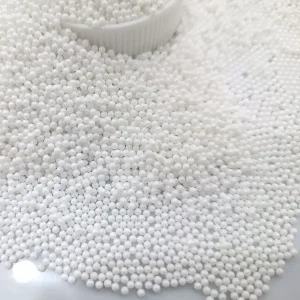
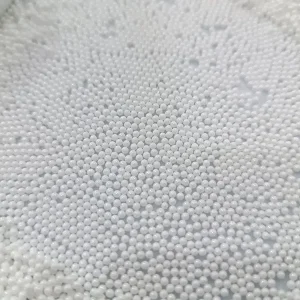
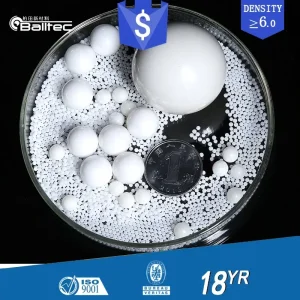
High-Quality Zirconia Grinding Bead Supplier & Exporters

Next-Generation Yttria-Stabilized Ceramic Media (Y-TZP) Engineered for Sub-Micron & Nano-Scale Wet Milling in New Energy, Advanced Ceramics, and Fine Chemical Industries.

Featured Product Portfolio

Precision Engineered Zirconia & Advanced Ceramic Media

Explore our flagship high-density grinding beads, micro-spheres, and industrial ceramic packings manufactured under ISO 9001:2015 strict quality control standards.
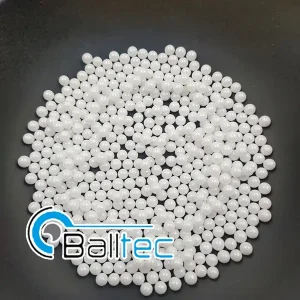
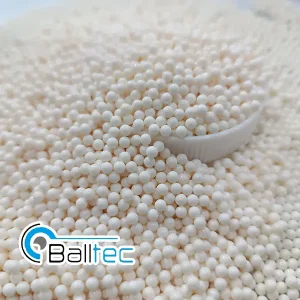
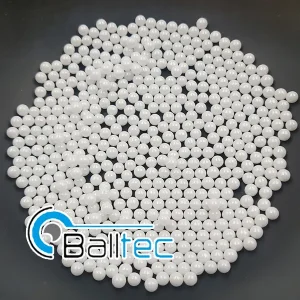
High-Quality ZrO2 Grinding Bead for High Speed Grinding
High-Quality ZrO2 Grinding Bead for High Speed Grinding and Wear Resistant Use Factories, Exporter
View Details
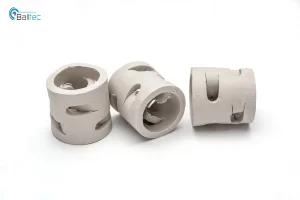
Ceramic Pall Ring Tower Packing
High-Quality Factory Price Scrubber Random Tower Packing Ceramic Pall Ring for Drying and Dehydration in Chemical Industry Factory, Factories
View Details
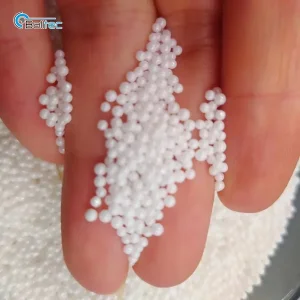
High Alumina Al2O3 Micro Beads
High-Quality High Alumina Al2o3 Alumina Micro Beads / Ceramic Grinding Balls Factory, Exporter
View Details
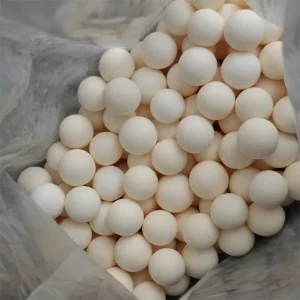
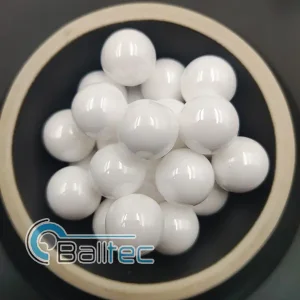
High Hardness Zirconium Oxide Balls
High-Quality Zirconium Oxide Balls - High Hardness Wear Resistant Zirconia Grinding Media Supplier, Factory
View Details
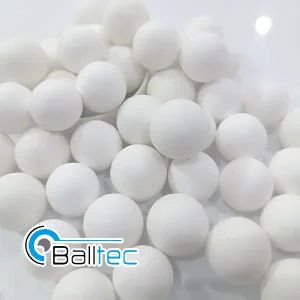
Alumina Media Beads Ceramic Balls
Wholesale Wear Resistant Low Wear Rate High Purity Al2O3 Alumina Media Beads Aluminium Oxide Ceramic Grinding Balls Ceramic Balls Manufacturer, Exporter
View Details
95 Yttria Zirconia Beads
China High Purity 95% Yttria Zirconia Beads Manufacturers, Suppliers
View Details
High Purity Alumina Grinding Beads
High-Quality High Purity Alumina Grinding Beads/99%、99.9%、99.99% Alumina Beads Manufacturers, Factory
View Details
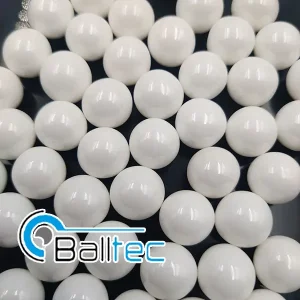
ZrO2 Bead for Grinding
China ZrO2 Bead for Grinding Professional Polishing and Grinding Operations Suppliers, Exporter
View Details
Executive Overview

The Evolution of Ultra-Fine Milling & Zirconia Grinding Media

How Material Science Advancement in Yttria-Stabilized Tetragonal Zirconia Polycrystal (Y-TZP) is Overhauling Global Nanotechnology & Powder Processing.

In modern industrial ultra-fine wet grinding, the market has rapidly transitioned away from traditional silica sand, glass beads, and low-grade natural silicate media toward high-density ceramic grinding beads. Among these advanced ceramic solutions, Yttria-Stabilized Zirconia Beads (Y-TZP) stand as the gold standard for high-speed agitator bead mills, pin-type nano mills, and high-energy horizontal disc mills.

The demand for particle sizes in the sub-micron ($< 1\,\mu\text{m}$) and nano-scale ($< 100\text{ nm}$) regimes has skyrocketed across global supply chains. Key industries—such as lithium-ion battery cathode/anode production (Lithium Iron Phosphate - LFP, NCM), multilayer ceramic capacitors (MLCC), automotive OEM coatings, active pharmaceutical ingredients (APIs), and chemical catalysts—require precise particle size distributions (PSD) with absolute minimum cross-contamination. As a premier Zirconia Grinding Bead Supplier & Exporter, Pingxiang Baitian (Ball-tec) New Materials Co., Ltd. delivers engineered ceramic media optimized for maximum kinetic energy transfer, exceptional wear resistance, and uncompromised chemical purity.

>6.0 g/cm³
Specific Density
>12.5 GPa
Vickers Hardness (HV10)
<2 ppm/h
Ultra-Low Wear Rate
0.05-3.0mm
Precision Size Range
Material Science & Engineering

Stress-Induced Phase Transformation Dynamics in Y-TZP Media

Understanding the microstructural mechanics that grant Yttria-Stabilized Zirconia its extraordinary toughness and wear resistance.

Transformation Toughening

Pure zirconium dioxide ($\text{ZrO}_2$) undergoes structural phase transitions during thermal cycles: monoclinic at ambient temperature, tetragonal above 1170°C, and cubic above 2370°C. By doping the crystal matrix with 3 mol% Yttrium Oxide ($\text{Y}_2\text{O}_3$), the high-strength tetragonal phase is metastably retained at room temperature. When an propagating crack micro-stress impacts the bead, the local strain triggers a phase transformation from tetragonal to monoclinic ($t \rightarrow m$). This phase transformation causes a localized volume expansion of 3% to 5%, generating compressive stress fields that squeeze the crack tip shut and stop crack propagation in its tracks.

Kinetic Energy Dynamics

The crushing efficiency of wet milling is governed by the kinetic energy equation $E_k = \frac{1}{2} m v^2$. Because Y-TZP beads possess a true density of $\ge 6.0\text{ g/cm}^3$ (compared to $3.6\text{ g/cm}^3$ for high-alumina media and $2.5\text{ g/cm}^3$ for glass beads), zirconia beads deliver significantly higher impact energy per collision at identical rotor tip speeds. This allows mill operators to grind tough, ultra-hard slurries down to nano-scale dimensions while reducing total power consumption and processing time.

Sphericity & Surface Integrity

Manufactured using advanced automated sol-gel titrating and low-temperature sintering protocols, Baitian Zirconia Grinding Beads feature internal crystal grain sizes below $0.5\,\mu\text{m}$. The near-perfect sphericity ($\ge 98\%$) and mirror-finish, pore-free surface suppress internal attrition, eliminate bead fragmentation, and protect internal mill components ( agitator pins, separation screens, vessel liners) from mechanical abrasion.

Comprehensive Ceramic Grinding Media Performance Matrix

Selecting the optimal grinding media requires comparing physical, mechanical, and tribological properties across various ceramic compositions:

Property Parameter 3mol% Y-TZP (Zirconia) Cerium Stabilized (Ce-TZP) Zirconia Toughened Alumina (ZTA) 95% High Alumina ($\text{Al}_2\text{O}_3$) Silicate Glass Beads
Specific Density ($\text{g/cm}^3$) $\ge 6.00$ $6.20$ $4.10 - 4.50$ $3.65 - 3.75$ $2.50$
Bulk Density ($\text{kg/L}$) $3.70 - 3.85$ $3.80$ $2.60$ $2.20$ $1.50$
Vickers Hardness ($\text{HV}_{10}$) $1250 - 1350$ $1150$ $1300$ $1100$ $550$
Fracture Toughness ($\text{MPa}\cdot\text{m}^{1/2}$) $9.0 - 10.0$ $12.0$ $5.5$ $4.5$ $1.0$
Relative Wear Rate (Self-Wear) Ultra Low (<5 ppm/h) Low Medium Moderate Very High
Crushing Strength ($\varnothing 1.0\text{mm}$) $> 250\text{ N}$ $> 200\text{ N}$ $> 150\text{ N}$ $> 100\text{ N}$ $< 20\text{ N}$
Primary Application Target Nano Wet Milling / LFP / Ink Heavy Minerals / Calcium Carbonate Cost-Effective Fine Chemicals Coarse Mineral Milling / Glazes Dispersing / Low-Viscosity Inks
Factory 4.0 & Supply Chain Resilience

China's Advanced Manufacturing Advantage in Pingxiang

Integrating raw material purification, automated sphere shaping, precision sintering, and global logistics under one roof.

Pingxiang, Jiangxi Province, stands as one of the world's premier industrial ceramic clusters. At Pingxiang Baitian (Ball-tec) New Materials Co., Ltd., our 100,000 m² state-of-the-art production campus harnesses China's Industry 4.0 manufacturing initiatives to guarantee batch-to-batch consistency, total supply chain transparency, and unmatched cost-efficiency for international buyers.

Automated Titration & Spheroidization

For micro-beads ranging from $0.05\text{ mm}$ to $0.3\text{ mm}$, we deploy liquid phase automated dripping technology (sol-gel route). Powdered yttria-stabilized zirconia slurry is dripped through high-precision micro-nozzles into a chemical hardening bath. This technique guarantees 100% solid interior beads free of air voids, hollow centers, or internal micro-cracks.

Computer-Controlled Thermal Profile Kilns

Sintering represents the single most critical phase governing grain structure growth. Our ultra-high temperature computer-controlled roller hearth kilns maintain thermal variations strictly within $\pm 1^\circ\text{C}$. This controlled thermal ramp prevents grain coarsening, preserving a tight crystal microstructure ($< 0.3\,\mu\text{m}$) that directly yields superior fracture toughness.

Zero-Defect Optical Sizing & Sorting

Every single batch undergoes multi-stage high-speed optical vision sorting to filter out oval beads, fused pairs, or surface-blemished media. Combined with roundness measuring devices, roundness tolerances are held to strictly $\le 0.02\text{ mm}$, eliminating screen clogging during high-flow bead mill operations.

Procurement & ROI Analysis

Total Cost of Ownership (TCO) Modeling for Global Buyers

Why Upfront Media Price is Only 15% of the True Operational Wet Milling Cost equation.

When procurement managers evaluate raw grinding media supplier quotations, evaluating purely on price-per-kilogram often leads to higher overall manufacturing costs. Professional SEO growth directors and industrial engineers look at the holistic Total Cost of Ownership (TCO) formula:

Total Wet Milling Cost = Media Wear Expense + Energy Consumption + Downstream Contamination Losses + Equipment Maintenance Downtime

Economic Analysis Case Study: High-Alumina vs. Baitian Y-TZP Zirconia Beads

Consider a 50-Liter high-energy agitator bead mill processing Lithium Iron Phosphate (LFP) cathode slurry operating 6,000 hours annually:

  • Scenario A (Low-Cost Media): Utilizing standard $95\%$ Alumina beads ($3.65\text{ g/cm}^3$). Due to lower density, the mill requires higher RPM to achieve target particle size ($D_{90} < 0.5\,\mu\text{m}$), increasing power consumption by 28%. The wear rate of alumina media in high-stress LFP milling reaches $45\text{ ppm/hour}$, requiring frequent media top-offs, filter cleaning, and frequent replacement of worn agitator pins. Furthermore, trace aluminum contamination degrades battery energy density.
  • Scenario B (Baitian Y-TZP Zirconia Beads): Utilizing Baitian Y-TZP ($6.0\text{ g/cm}^3$). High specific impact energy allows reducing rotor tip speeds while accelerating grinding velocity by $3.5\times$. Self-wear drops to an imperceptible $< 1.8\text{ ppm/hour}$. Annual media consumption drops by $82\%$, energy costs fall by $22\%$, and contamination parameters remain safely within strict battery-grade purity tolerances.
Application Engineering

Localized Applications & Industry-Specific Wet Milling Solutions

Tailored grinding media specifications optimized for unique rheological and purity requirements.

Li-Ion Battery Materials (LFP, NCM, Anodes)

Challenge: Ultrafine dispersion without iron or heavy metal contamination; target particle size $D_{50} \le 300\text{ nm}$.
Solution: Baitian $0.1\text{mm} - 0.6\text{mm}$ Yttria-Stabilized Zirconia Micro-Beads. Ultra-high toughness prevents bead shatter under extreme centrifugal forces, maintaining absolute purity in battery slurries.

Pharmaceutical APIs & Cosmetics

Challenge: Nano-sizing active pharmaceutical ingredients for improved bioavailability; strict cGMP compliance.
Solution: Mirror-polished Y-TZP beads with zero open porosity. Resistant to CIP/SIP (Clean-In-Place / Steam-In-Place) sanitation cycles, non-toxic, and biocompatible.

Automotive Paints, Inks & Pigments

Challenge: Achieving maximum color transparency, jetness, gloss, and sub-micron pigment particle distribution.
Solution: $0.3\text{mm} - 0.8\text{mm}$ zirconia beads. Accelerates breakdown of agglomerates in organic solvent-based or water-borne ink systems.

MLCC & Electronic Ceramics

Challenge: De-agglomerating Barium Titanate ($\text{BaTiO}_3$) and PZT powders to ultra-fine dimensions without crystalline deformation.
Solution: High-purity 95% Yttria Zirconia Media. Uniform kinetic energy distribution preserves electrical dielectric properties of electronic slurries.

Quality Assurance Standard

Stringent Quality Testing & Verification Protocol

Every shipment of Baitian Zirconia Grinding Media is backed by full batch traceability and certified analytical laboratory reports.

Our dedicated Quality Control (QC) laboratory conducts rigorous testing on every production batch before release:

  • Chemical Composition Analysis: X-Ray Fluorescence (XRF) and ICP-OES spectroscopy verify $\text{ZrO}_2 + \text{HfO}_2 \ge 94.8\%$ and $\text{Y}_2\text{O}_3 \approx 5.2 \pm 0.3\%$, keeping impurites ($\text{Fe}_2\text{O}_3, \text{SiO}_2, \text{Na}_2\text{O}$) strictly under $0.05\%$.
  • Density Measurement: Archimedes immersion principles guarantee true density $\ge 6.00\text{ g/cm}^3$.
  • Crush Strength Testing: Single-bead compressive load testing measures the exact force (in Newtons) required to break beads of various diameters, establishing strict statistical thresholds.
  • Planetary Laboratory Wear Rate Test: Accelerated wet milling trials in high-speed planetary mills measure weight loss after 72 hours of continuous high-energy impact, verifying wear rates under $< 5\text{ ppm/hour}$.
FAQ & Knowledge Base

Technical Q&A: Zirconia Grinding Media Procurement & Usage

Expert answers to common engineering, purchasing, and operational questions.

What is the standard formula for selecting grinding bead diameter?
As a general rule of thumb in wet mill engineering, the average diameter of the selected grinding bead should be approximately 20 to 30 times larger than the initial feed particle size ($D_{90}$) of the raw material slurry, and target a bead diameter roughly 1000 times larger than the desired final product size ($D_{50}$). For example, if your feed material is $10\,\mu\text{m}$ and your goal is sub-micron $0.5\,\mu\text{m}$, a bead diameter of $0.3\text{mm} - 0.4\text{mm}$ yields optimal grinding efficiency.
How does Yttria-Stabilized Zirconia (Y-TZP) differ from Cerium-Stabilized Zirconia (Ce-TZP)?
Yttria-stabilized beads (3mol% $\text{Y}_2\text{O}_3$) feature higher hardness ($\text{HV}_{10} 1250-1350$), superior fracture toughness, lower wear rates, and a density of $6.0\text{ g/cm}^3$. They are ideal for high-speed agitator pin mills ($> 12\text{ m/s}$ tip speeds) and ultrafine nano milling. Cerium-stabilized beads have a higher density ($6.2\text{ g/cm}^3$) but lower hardness ($\text{HV}_{10} 1150$) and are more prone to mechanical wear in high-energy mills; they are primarily used in low-speed vertical mills for heavy mineral grinding like calcium carbonate ($\text{CaCO}_3$).
What is the recommended bead filling ratio for horizontal agitator bead mills?
For standard horizontal bead mills, the recommended bead loading charge ranges between 75% and 85% of the mill chamber’s total net volume. High-viscosity systems may require a slightly lower filling ratio (70-75%) to prevent over-pressurization and excessive temperature rise, whereas ultra-fine nano milling of low-viscosity battery slurries often operates at 80-85% loading for maximum collision frequency.
How can mill operators prevent grinding bead breakage during operation?
Bead breakage is almost always caused by mechanical mismatch rather than defective media. Key factors to check include: (1) Rotor tip speed—ensure tip speeds do not exceed recommended limits for the bead diameter; (2) Slurry flow rate and viscosity—insufficient fluid flow leads to direct bead-on-bead dry friction; (3) Separation gap settings—the screen gap must be sized to 1/2 or 1/3 of the smallest bead diameter; (4) Mixing media types—never mix worn old beads with new beads of vastly different densities or compositions.
What packaging options are available for international export shipments?
Baitian provides robust export packaging designed to withstand long ocean transits: Standard options include 25 kg heavy-duty double-sealed plastic pails or drums packed on ISPM-15 compliant fumigated wooden or plastic pallets (1,000 kg per pallet), as well as 500 kg or 1,000 kg heavy-duty ton bags with moisture-proof inner liners. Custom OEM branding and labeling are available upon request.
Product Catalog Continued

High-Density Grinding Media & Advanced Ceramic Solutions

Explore our specialized range of high-purity yttria zirconia powders, nano-milling spheres, and wear-resistant industrial solutions.
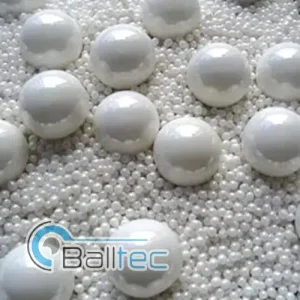
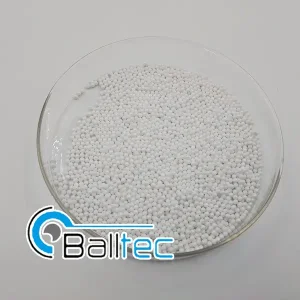
ZrO2 Ball for Grinding High Density
High-Quality ZrO2 Ball for Grinding High Density Stable Grinding Media Use Manufacturers, Suppliers
View Details
High Purity Zirconia Grinding Media
China High-Purity Zirconia Grinding Media for Fine Chemicals Processing Supplier, Factories
View Details
ZrO2 Bead for Grinding Wear Resistant
High-Quality ZrO2 Bead for Grinding Wear Resistant High Performance Applications Suppliers, Exporters
View Details
ZrO2 Ball for Industrial Ball Milling
Wholesale ZrO2 Ball for Grinding Efficient Industrial Ball Milling Solutions Manufacturer, Exporters
View Details
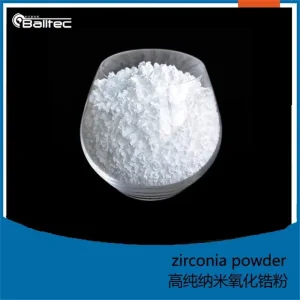
Yttria Stabilizer Zirconia Powder
High-Quality 3mol%-8mol% Yttria Stabilizer Zirconia Powder/Zirconium Oxide Powder/Y-TZP Supplier, Suppliers
View Details
Zirconium Oxide Ball for Nano Milling
High-Quality Zirconium Oxide Ball for Nano Milling Grinding Manufacturer, Supplier
View Details
Media for Battery Material Processing
Wholesale Yttria-Stabilized Zirconia Grinding Media for Battery Material Processing Factory, Exporter
View Details
Zirconia Ball for Bead Mill
High-Quality Zirconia Ball for Bead Mill Grinding Media Ball Suppliers, Exporters
View Details