Follow 


Direct factory export solutions optimized for micro-milling, nano-dispersion, and severe chemical process environments.
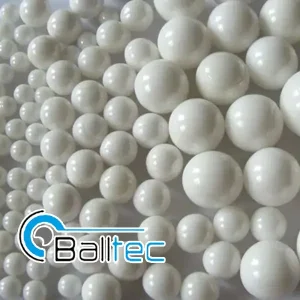
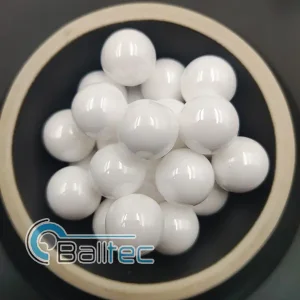
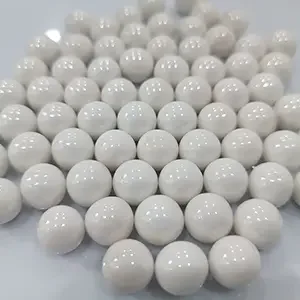
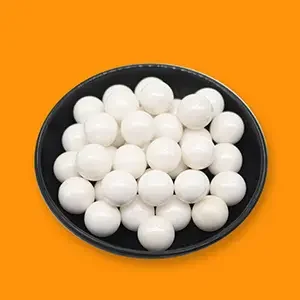
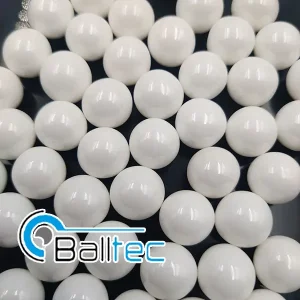
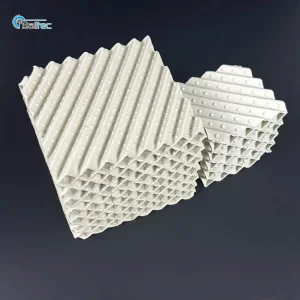
In the contemporary advanced manufacturing ecosystem, the demand for sub-micron and nanometer-scale particle size distribution has shifted from an emerging specialty requirement to a fundamental standard across energy storage, electronic materials, specialty chemical, and pharmaceutical processing sectors. Industrial ball milling, vertical sand milling, and high-energy agitator media milling rely heavily on the kinetic transfer efficiency and structural durability of ceramic grinding media.
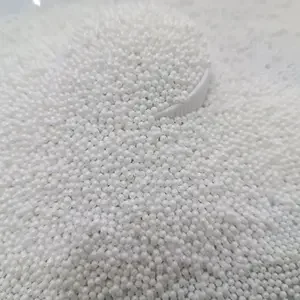
As premier China zirconia grinding media factories and exporters, integrated manufacturing facilities such as Pingxiang Baitian (Ball-tec) New Materials Co., Ltd. have redefined the benchmark for wear resistance, phase stability, and total cost of ownership (TCO) in comminution processes. Traditional grinding media like forged steel balls, natural flint, and standard low-density silica suffer from severe drawbacks, including heavy metal contamination, rapid mass attrition, chemical reactivity in corrosive slurry matrices, and excessive mill liner wear. Modern processing lines require engineered advanced ceramics—specifically Yttria-Stabilized Tetragonal Zirconia Polycrystal (3Y-TZP), Ceria-Stabilized Zirconia (Ce-TZP), and Zirconium Silicate (ZrSiO₄)—to achieve uniform energy transmission without compromising slurry chemical purity.
Choosing the correct ceramic media type requires balancing kinetic energy requirements, slurry viscosity, chemical environment, and downstream contamination tolerances. Below is an authoritative technical comparison across primary ceramic media families produced in China:
| Media Classification | Composition | Bulk / True Density | Mohs / Vickers Hardness | Fracture Toughness (K₁C) | Primary Application Domain |
|---|---|---|---|---|---|
| 95 Yttria Zirconia (3Y-TZP) | 95% ZrO₂ / 5% Y₂O₃ | 6.00 g/cm³ | 9.0 Mohs / 1250 HV10 | 8.0 - 10.0 MPa·m½ | Lithium Battery LFP/NCM, MLCC, Nanopipes, Inkjet Inks |
| Ceria-Stabilized Zirconia | 80% ZrO₂ / 20% CeO₂ | 6.20 g/cm³ | 8.5 Mohs / 1150 HV10 | 11.0 - 13.0 MPa·m½ | High-viscosity Paints, Agrochemicals, Calcium Carbonate |
| Zirconium Silicate | 65% ZrO₂ / 35% SiO₂ | 4.00 g/cm³ | 7.5 Mohs / 1000 HV10 | 4.5 - 5.5 MPa·m½ | Coatings, Paper Bleaching, GCC Fine Grinding, Glazes |
| 99.9% High Purity Alumina | >99.9% Al₂O₃ | 3.68 - 3.80 g/cm³ | 9.0 Mohs / 1450 HV10 | 4.0 - 4.5 MPa·m½ | Electronic Substrates, Chemical Catalysts, Ceramic Raw Materials |
How Pingxiang's advanced industrial ceramic cluster delivers unparalleled quality control, cost efficiency, and supply chain resiliency.
Leading Chinese exporters maintain strict vertical integration from chemical zirconium sand breakdown to high-purity chemical coprecipitation. By controlling Y₂O₃ dopant dispersion at sub-micron levels, microstructural homogeneity is guaranteed prior to green body forming.
Transitioning from traditional roll-forming to automated electrolyte titration dropping allows the creation of perfectly spherical green beads from 0.05 mm to 3.0 mm. Sintering in computer-controlled gas-fired roller kilns creates dense grain boundaries free from micro-voids.
By leveraging the stress-induced phase transformation from metastable tetragonal to monoclinic phase, Baitian zirconia beads arrest crack propagation dynamically under high shear stress inside sand mills, delivering long structural lifespan.
In high-speed agitator bead mills (pin-type or disc-type), grinding kinetic energy ($E_k$) imparted to slurry particles directly obeys classic Newtonian physics:
$E_k = \frac{1}{2} m v^2 = \frac{1}{2} \left( \frac{1}{6} \pi d^3 \rho_m \right) v^2$
Where $d$ represents the bead diameter, $\rho_m$ represents the density of the ceramic media, and $v$ is the rotor peripheral velocity. Because kinetic energy scales linearly with density ($\rho_m$), substituting standard alumina media ($\rho \approx 3.68 \text{ g/cm}^3$) with Yttria-Stabilized Zirconia beads ($\rho \approx 6.00 \text{ g/cm}^3$) yields a 63% increase in kinetic impact energy per collision without increasing motor RPM or mill chamber pressure.
Global procurement teams select specialized zirconia grinding media tailored for distinct high-tech application verticals:
When evaluating Chinese zirconia exporters, international purchasing departments must verify critical manufacturing parameters to safeguard production stability:
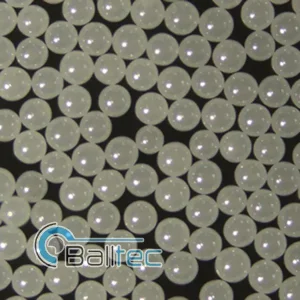
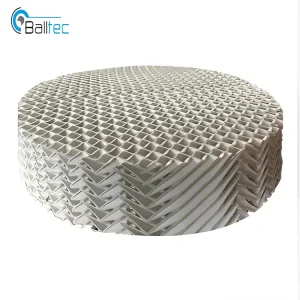
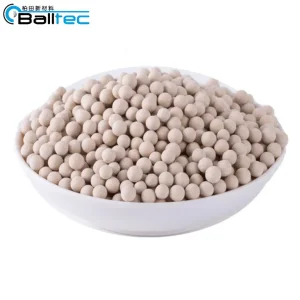
Explore our complete factory catalog including high-purity ceramic balls, structured packing, and adsorbents.
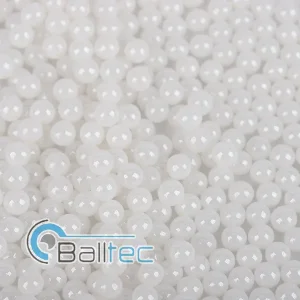
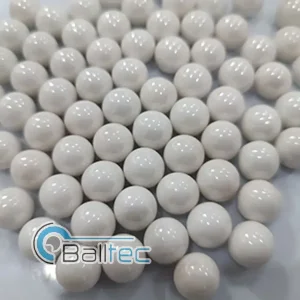
As advanced materials engineering transitions toward quantum dot synthesis, solid-state battery electrolytes, and high-purity pharmaceutical delivery carriers, the demands placed upon zirconia grinding media suppliers are changing rapidly:
In-depth engineering answers covering media sizing, loading ratios, wear rate calculations, and factory export standards.