Follow 


Direct factory solutions engineered for ultra-low wear and maximum process stability.
In the era of rapid technological advancement—spanning modern lithium-ion energy storage systems, sub-nanometer semiconductor Chemical Mechanical Planarization (CMP), and extreme thermal barrier aerospace coatings—traditional engineering metals and standard refractory polymers frequently reach their mechanical and thermal breakdown limits. Modern industrial manufacturing demands materials that possess an extraordinary convergence of extreme fracture toughness, zero chemical reactivity, superior flexural strength, and exceptional wear resistance.
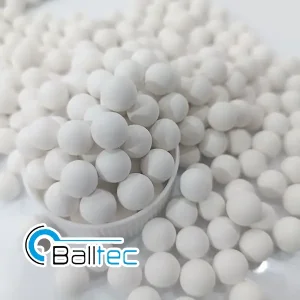
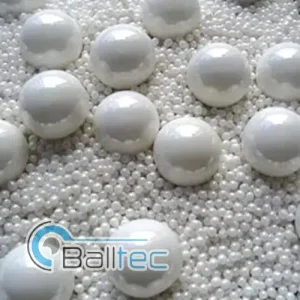
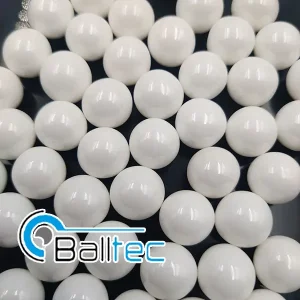
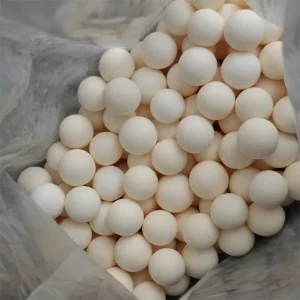
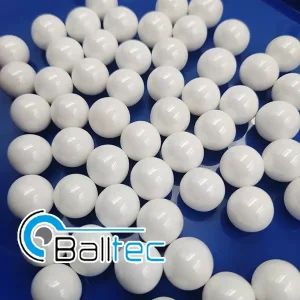
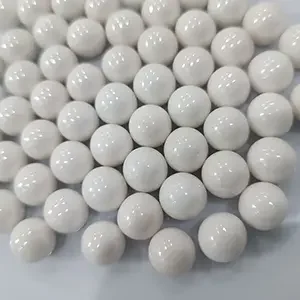
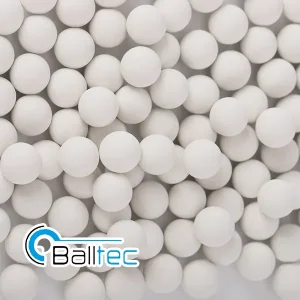
Zirconium Dioxide ($\text{ZrO}_2$), commonly known as zirconia ceramic, has emerged as the premier material solution across global heavy industries and ultra-precision manufacturing facilities. As direct factory manufacturers based in China's prime industrial ceramics production zone, Pingxiang Baitian (Ball-tec) New Materials Co., Ltd. leads the global supply chain by engineering specialized zirconia formulations tailored to eliminate operational downtime and minimize batch contamination.
The commercial trajectory for wholesale zirconia ceramics is currently driven by four critical macro-industrial imperatives:
In Lithium Iron Phosphate ($\text{LiFePO}_4$) and High-Nickel NCM production, metal contamination even at parts-per-billion (ppb) levels leads to internal battery shorts. Yttria-Stabilized Zirconia (YSZ) grinding media guarantees zero metallic iron contamination during ultra-fine sub-micron wet milling.
Process fluid pumps, check valves, and mass transfer towers operating in concentrated inorganic acids and hot alkalis utilize zirconia components due to their immunity to oxidation, acid degradation, and extreme chemical etching.
Next-generation Electric Vehicles (EVs), robotics actuators, and vacuum semiconductor handling equipment rely on G3/G5 precision zirconia bearing balls ($\text{ZrO}_2$) to prevent electrical arcing, withstand non-lubricated high RPM environments, and cut friction losses by over 40%.
Pure zirconium oxide ($\text{ZrO}_2$) undergoes structural phase transitions upon heating and cooling: Monoclinic ($m$) at room temperature converts to Tetragonal ($t$) at 1170°C, and Cubic ($c$) at 2370°C. The transition from Tetragonal to Monoclinic during cooling involves a destructive 3% to 5% volumetric expansion, causing macro-cracking in pure un-stabilized ceramics.
When a micro-crack propagates under mechanical stress through Baitian’s Yttria-Stabilized Tetragonal Zirconia Polycrystal (Y-TZP), the concentrated stress field surrounding the crack tip triggers the localized conversion of metastable tetragonal grains into monoclinic grains. The resulting volumetric expansion exerts compressive stress directly onto the crack tip, pinching the crack shut and absorbing kinetic fracture energy.
| Material Property | 3Y-TZP (Yttria-Stabilized) | Mg-PSZ (Magnesia-Stabilized) | ZTA (Zirconia Toughened Alumina) | 99.5% High Purity Alumina |
|---|---|---|---|---|
| Primary Stabilizer / Composition | 3 mol% $\text{Y}_2\text{O}_3$ | 8-10 mol% $\text{MgO}$ | 15-20% $\text{ZrO}_2$ + $\text{Al}_2\text{O}_3$ | 99.5% $\text{Al}_2\text{O}_3$ |
| Density (g/cm³) | 6.0 - 6.05 | 5.7 - 5.8 | 4.3 - 4.5 | 3.8 - 3.9 |
| Flexural Strength (MPa) | 1100 - 1400 | 600 - 800 | 700 - 900 | 350 - 450 |
| Fracture Toughness ($K_{IC}$) | 9.0 - 13.0 MPa·m¹/² | 10.0 - 15.0 MPa·m¹/² | 5.5 - 7.0 MPa·m¹/² | 3.5 - 4.5 MPa·m¹/² |
| Thermal Expansion ($10^{-6}/\text{K}$) | 10.5 (Matches Steel) | 10.0 | 8.2 | 8.0 |
| Thermal Hydrothermal Stability | Requires Low-LTD Control | Excellent Thermal Shock | High Thermal Stability | Immune to LTD Degradation |
Our manufacturing facility utilizes state-of-the-art Cold Isostatic Pressing (CIP) operating at ultra-high pressures (>200 MPa) combined with nano-powder spray drying to ensure sub-micron pore elimination. Microstructural sintering kinetics are precisely executed within computer-controlled tunnel kilns at temperatures ranging from 1450°C to 1550°C, establishing uniform grain growth with grain boundary control below 0.5 µm.
Different regions and specialized plant configurations require precise ceramic grade selections. Factory engineers and procurement specialists rely on targeted physical properties optimized for specific fluid dynamics, impact energy levels, and atmospheric temperatures:
Scenario: Wet-milling automotive metallic paints, inkjet pigment dispersions, and pharmaceutical active ingredients to particle sizes below 100 nanometers ($D_{90} < 100\text{nm}$).
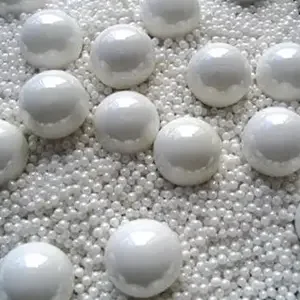
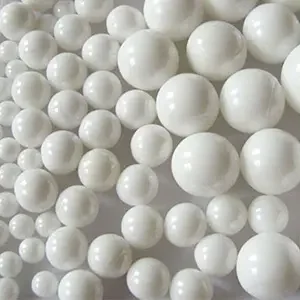
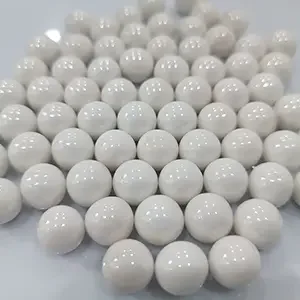
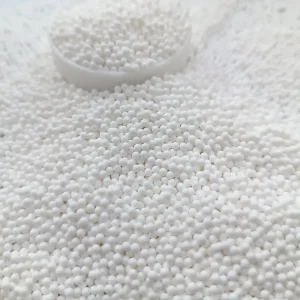
Material Selection: Micro-diameter (0.05mm – 0.3mm) 3Y-TZP Zirconia Grinding Beads.
Performance Advantage: High mass density (6.0g/cm³) delivers maximum kinetic impact energy while maintaining an ultra-low sphericity deviation, resulting in 5x longer bead life compared to glass or toughened alumina beads.
Scenario: Packed columns handling aggressive acid gas scrubbing, sulfuric acid absorption towers, and volatile organic compound (VOC) recovery units.
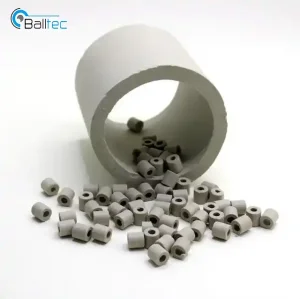
Material Selection: Acid-Resistant Ceramic Raschig Rings & Ceramic Pall Rings.
Performance Advantage: Zero structural breakdown when exposed to concentrated $\text{H}_2\text{SO}_4$, $\text{HCl}$, and $\text{HNO}_3$ at elevated operating temperatures, providing maximum void space and low column pressure drops.
Scenario: Subsea oil/gas flowmeter valves, cryogenic liquid pumps, and aerospace guidance joint assemblies.
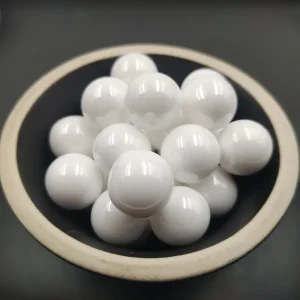
Material Selection: Precision Polished G3 / G5 Precision Zirconia Ceramic Bearing Balls.
Performance Advantage: Exceptional dimensional sphericity, extremely low coefficient of thermal expansion variance, and complete resistance to galling or welding under dry run conditions.
As industrial processes scale toward zero-emission targets, higher pressure differentials, and continuous non-stop processing cycles, standard material performance limits are continuously challenged. Baitian’s R&D technology roadmap focuses on three crucial breakthrough frontiers:
Standard Y-TZP ceramics can experience aging or hydrothermal degradation when exposed to steam or water environments in the temperature window of 60°C to 300°C over extended periods. Our next-generation Ce-TZP/Alumina nanocomposites eliminate hydrothermal aging entirely, guaranteeing decade-long reliability in hot aqueous processing environments.
Transitioning beyond standard spherical media and cylindrical rings, our modern ceramic 3D stereolithography (SLA) processes enable the rapid prototyping of complex internal flow channels, bio-mimetic turbulators, and custom structural impellers without expensive diamond tooling expenses.
In alignment with global ESG metrics, Baitian is pioneering closed-loop recovery pathways for spent ceramic milling media. Process spent media is purified, re-milled into secondary structural grade powders, and repurposed for wear linings—cutting total carbon lifecycle emissions by up to 38%.
Securing a reliable wholesale supplier requires strict verification of material purity, density consistency, batch-to-batch repeatability, and international compliance documentation. Operating out of a 100,000 m² integrated production campus, Baitian executes stringent quality protocols at every step of raw material calcination, slurry atomization, pressing, and high-temperature sintering.
Every production batch undergoes X-Ray Fluorescence (XRF) chemical composition verification, Laser Particle Size Analysis, Archimedes density verification, and Indentation Fracture Toughness testing. Certificates of Analysis (COA) are provided with every wholesale shipment.
We engineer customized zirconia compositions (including custom dopant levels of Yttria, Magnesia, or Cerium) as well as non-standard bead sizes (from 0.05mm micro-beads up to 60mm heavy grinding spheres) tailored specifically to your mill designs and processing viscosities.
Export shipments are secured in heavy-duty moisture-proof steel drums, reinforced poly-bags, or ocean-certified heat-treated wooden pallets. We support flexible Incoterms including FOB, CIF, DDP, and DAP with full customs documentation compliance.
Detailed engineering responses addressing common procurement, technical specification, and operational performance inquiries:
Yttria-Stabilized Zirconia has a significantly higher density (6.0 g/cm³) compared to alumina (3.6 to 3.9 g/cm³). The higher density provides substantially greater kinetic collision energy during mill rotation, accelerating particle size reduction down to sub-micron and nanometer levels. Furthermore, Y-TZP exhibits over twice the flexural strength (>1200 MPa) and triple the fracture toughness of alumina, resulting in significantly lower media wear and near-zero batch contamination.
Cerium-stabilized zirconia (Ce-TZP) delivers an even higher mass density (approx. 6.2 g/cm³) and superior resistance to Hydrothermal Degradation (Low-Temperature Aging in wet/steam conditions). However, 3Y-TZP offers higher flexural strength and hardness, making it the preferred choice for high-speed agitated bead mills. Ce-TZP is often selected for heavy-viscosity paint slurries and high-temperature aqueous grinding processes where water aging must be completely avoided.
As a general engineering rule, the average diameter of the grinding media should be approximately 20 to 30 times larger than the feed particle size ($D_{95}$) of your raw slurry, and roughly 4 to 10 times larger than the desired target final particle size. For instance, to grind a feed material of 10 microns down to 0.5 microns, initial media sizes of 0.6mm to 0.8mm are recommended.
Our plant operates strictly under ISO 9001:2015 (Quality Management Systems), ISO 14001:2015 (Environmental Management Systems), and ISO 45001:2018 (Occupational Health and Safety Management). All industrial products shipped to Europe and North America comply with REACH and RoHS material safety mandates.
For standard inventory items like Y-TZP grinding beads and standard alumina milling balls, MOQ starts as low as 25 kg (1 drum). For custom engineered components, specialized bearing balls, or non-standard ceramic tower packing dimensions, MOQ is typically 500 kg. Lead times for standard stock items are 3 to 5 business days, while custom OEM manufacturing runs generally take 15 to 25 days depending on tooling complexity.
Explore our factory-direct catalogue for specialized industrial applications.