Follow 


High-Performance Chemical Tower Packing, Inert Alumina Support Balls & Catalyst Bed Solutions Engineered for Central Asian Gas Processing, Petrochemical & Mining Complex Modernization
Request Engineering Technical DossierDirect factory supply of certified industrial ceramic packings engineered for high-sulfur natural gas sweetening, acid scrubbing, and heavy chemical separation across Central Asia.
Under the national "Uzbekistan - 2030" Strategy, the Republic of Uzbekistan is experiencing unprecedented structural modernization across its oil and gas, petrochemical, mineral extraction, and mineral fertilizer sectors. As Central Asia's largest industrial market for natural gas processing and chemical synthesis, major state enterprise modernization programs—including those led by JSC Uzkimyosanoat, Uzbekneftegaz, Navoiy Mining and Metallurgical Combinat (NGMK), and Almaliq Mining and Metallurgical Complex (AMMC)—require world-class chemical mass transfer internals capable of operating under highly aggressive chemical environments.
The operational reality of Uzbekistan’s industrial infrastructure presents unique technical challenges for tower packings and catalyst support beds:
Natural gas reserves in the Bukhara-Khiva basin and Kandym gas field contain heavy concentrations of hydrogen sulfide ($H_2S$) and carbon dioxide ($CO_2$). Amine gas sweetening towers require chemically inert packing that resists acid gas degradation and fouling.
Process equipment in regions like Navoiy, Fergana, and Chirchiq experiences continental ambient temperature fluctuations ranging from -20°C in winter to over +45°C in summer, demanding high thermal shock resistance ($>250^\circ\text{C}$ sudden delta) without micro-fracturing.
Deep-bed industrial absorbers and catalytic reactors reaching heights of up to 35 meters exert immense compressive crush loads on bed supports, requiring ceramic spheres with crush resistance surpassing 50 kN/particle.
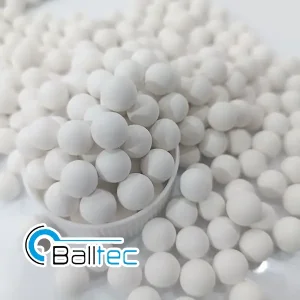
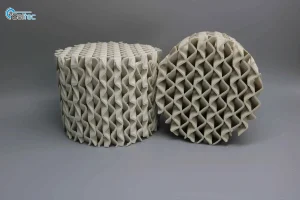
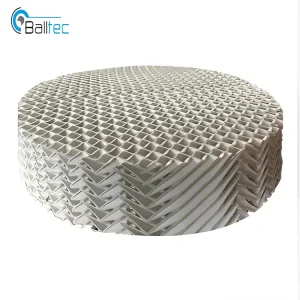
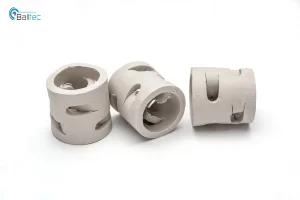
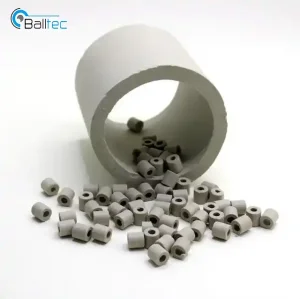
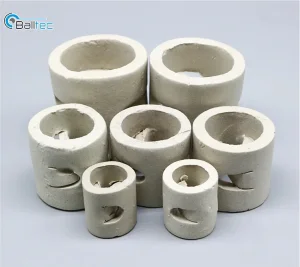
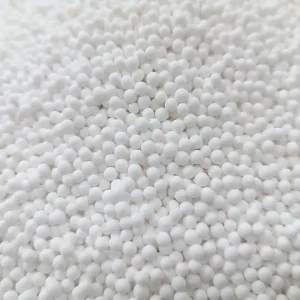
As a specialized manufacturer, our factory provides precision-engineered random tower packings, structured corrugated plate packings, and inert alumina bed support spheres tailored precisely to withstand the chemical compositions and hydraulic dynamics of Central Asian industrial plants.
Our ceramic packings are manufactured using high-grade kaolin, synthetic aluminosilicates, and micro-crystalline alumina ($Al_2O_3$). Controlled high-temperature sintering (up to 1650°C in automated tunnel kilns) guarantees maximum densification, ultra-low water absorption, and zero reactivity with concentrated acids (except hydrofluoric acid).
| Physical / Chemical Parameter | Inert Alumina Support Balls (17-99% Al₂O₃) | Ceramic Pall Rings (Chemical Grade Porcelain) | Ceramic Structured Packing (500Y / 250Y) | Acid-Resistant Raschig Rings |
|---|---|---|---|---|
| Al₂O₃ Content (%) | 17% – 99.7% | 23% – 30% | 28% – 35% | 22% – 28% |
| Acid Resistance (ASTM C279) | > 99.6% | > 99.8% | > 99.9% | > 99.5% |
| Water Absorption (%) | < 0.5% | < 0.5% | < 0.2% | < 1.0% |
| Bulk Density (kg/m³) | 1,350 – 2,050 | 550 – 680 | 480 – 620 | 600 – 750 |
| Void Fraction (%) | 40% – 45% | 72% – 78% | 75% – 85% | 65% – 72% |
| Max Operating Temp (°C) | 1,650°C | 1,100°C | 1,200°C | 1,050°C |
| Mohs Hardness | 7.5 – 9.0 | 7.0 – 7.5 | 7.5 | 7.0 |
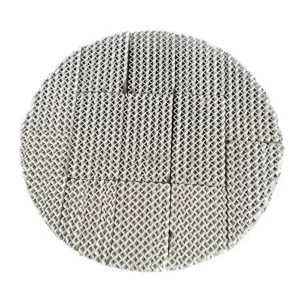
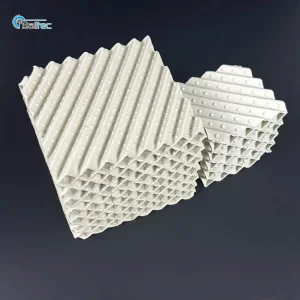
In packed column design for Uzbekistan's gas processing plants, optimizing the balance between liquid holdup, specific surface area ($m^2/m^3$), and pressure drop ($\Delta P/m$) is critical for minimizing compressor power consumption. Ceramic structured packing (such as 250Y and 500Y variants) provides superior liquid wetting characteristics compared to metallic alternatives under high surface tension liquid systems, achieving an Height Equivalent to a Theoretical Plate (HETP) value as low as 250-350 mm.
Our ceramic packing products are specifically integrated into critical processing units across key geographical manufacturing clusters in Uzbekistan:
Operational Context: In MDEA/DEA amine scrubbing towers treating high-sulfur sour gas from Central Asian deposits, gas streams carry significant concentrations of $H_2S$, $CO_2$, and organic sulfur compounds.
Our Solution: Sintered Chemical Porcelain Pall Rings and Structured Corrugated Packing provide ultra-low pressure drop, resisting surface scaling and amine degradation. 99% Inert Alumina Spheres act as non-reactive catalyst bed supports in Claus sulfur recovery units (SRU).
Operational Context: Hydrometallurgical extraction and refractory gold leaching plants utilize intensive acid scrubbing systems to capture toxic cyanic and sulfurous emissions from roasters.
Our Solution: Heavy-duty Ceramic Raschig Rings and Intalox Saddle packings installed in gas scrubbing towers withstand high-concentration hot sulfuric acid gas condensation without structural crumbling.
Operational Context: Nitric acid absorption towers and ammonia synthesis gas purification units require packings with high mass transfer co-efficients under oxidizing nitric gas environments.
Our Solution: High-density Ceramic Structured Packings deliver uniform liquid distribution across large column diameters (up to 4.5m ID), maximizing $NO_x$ absorption efficiency and lowering stack gas emission levels.
Operational Context: Atmospheric and vacuum distillation columns upgrading heavy crude oil fractions require packed internals capable of handling thermal shocks during vacuum pressure surges.
Our Solution: Ceramic Corrugated Plate Structured Packings offer exceptional mechanical rigidity, low pressure drop per theoretical stage, and zero thermal degradation under continuous high-temperature vacuum service.
As a direct-factory exporter located in China’s core industrial ceramic cluster, our digitalized Industry 4.0 production base guarantees total quality control and unbroken supply chains for global EPC contractors and Uzbek plant managers.
High-pressure CNC ceramic forming yields perfectly uniform internal density, eliminating structural voids and ensuring precise geometric tolerances across millions of mass-produced packing units.
Digitally monitored continuous tunnel kilns running on natural gas keep temperature variations within ±2°C at 1600°C, delivering consistent phase composition ($A\text{-Al}_2O_3$ mullite phases) batch after batch.
Leveraging direct China-Central Asia Block Train freight routes (Lianyungang/Xi'an to Tashkent/Sergeli), transit lead times are reduced to 12-16 days, providing rapid logistics compared to ocean freight routes.
The global chemical and gas processing sector is undergoing a rapid transition toward energy-efficient tower internals designed to reduce operational expenditure (OPEX) and lower carbon intensity. In Central Asia, where gas processing plants operate under stringent efficiency targets, the transition from conventional random packing (Raschig rings) to high-efficiency structured ceramic packings represents a step-change in performance.
While stainless steel (316L, Duplex 2205) and exotic alloys (Hastelloy) are frequently specified for scrubbing towers, their susceptibility to pitting corrosion under chloride, fluoride, or wet $H_2S$ conditions leads to premature tower failure. Engineered industrial ceramics offer complete chemical immunity across all pH spectrums (0 to 13), providing an operating service life exceeding 15–20 years without wall degradation.
As Uzbekistan moves toward decarbonizing its power and industrial sectors, post-combustion $CO_2$ capture units utilizing advanced amine solvents rely heavily on structured ceramic packing. Structured packings offer low pressure drops ($\Delta P < 1.0\text{ mbar/m}$), reducing parasitic blower fan power draw and improving net plant efficiency.
Choosing the correct mass transfer medium requires balancing chemical compatibility, mechanical strength, temperature limits, and economic life-cycle value.
| Evaluation Parameter | Technical Ceramics (Baitian Standard) | Stainless Steels (304 / 316L) | Thermoplastics (PP / PVDF / PTFE) |
|---|---|---|---|
| Acid Resistance (Strong Mineral Acids) | Exceptional (>99.8%) | Poor to Moderate (Pitting risk) | Good (Subject to oxidation) |
| Max Temperature Limit | 1,100°C – 1,650°C | 600°C – 800°C | 90°C (PP) / 150°C (PVDF) |
| Solvent Organic Resistance | 100% Inert | Excellent | Prone to swelling/dissolution |
| Compressive Crush Strength | Very High (>50 kN) | High (Plastic deformation) | Low (Creep under stack pressure) |
| Expected Plant Operating Lifespan | 15 – 25 Years | 3 – 8 Years (in sour gas) | 2 – 5 Years (thermal wear) |
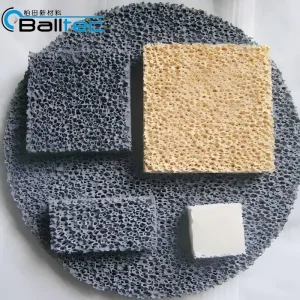
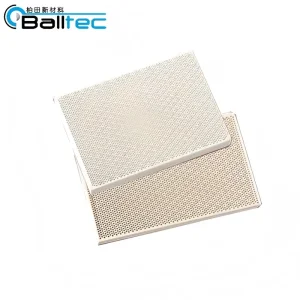
Browse our certified catalog of mass transfer packings, random tower media, micro-porous plates, and alumina balls delivered directly to your plant site in Uzbekistan.
Technical guidance from our senior process engineering team regarding specifications, logistics, installation, and performance guarantees.
Looking for reliable ceramic tower packings, structured packing plates, or inert alumina bed support spheres for your next engineering project or overhaul in Uzbekistan? Our technical engineering team is ready to provide customized recommendations, hydraulic calculations, and competitive factory-direct pricing.