Follow 


Direct factory supply of precision-engineered mass transfer media, ceramic filters, and refractory substrates tested to rigorous European chemical standards.
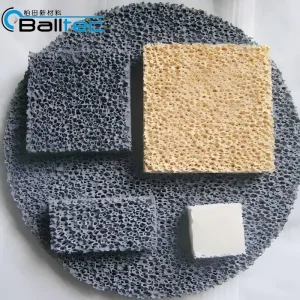
The chemical manufacturing, gas processing, and environmental engineering sectors across the United Kingdom are navigating a historic operational pivot. Driven by the UK Government’s legally binding commitment to achieve Net Zero carbon emissions by 2050, as well as stringent regulations enforced by the Environment Agency (EA) and the Health and Safety Executive (HSE), industrial operators in key regional clusters—such as Teesside, the Humber, Cheshire, Grangemouth, and South Wales—are modernising their mass transfer infrastructure. High-efficiency ceramic packing serves as a cornerstone material in this technological upgrade, replacing vulnerable metal or plastic tower packings in highly corrosive, high-temperature, and severe chemical environments.
As an established ceramic packing manufacturer and direct exporter serving the UK market, we supply chemical plant engineering teams, EPC contractors, and refinery procurement managers with chemical-grade tower packing solutions tailored to British process conditions. From concentrated sulfuric acid absorption towers in the North West of England to carbon capture amine stripper columns in Eastern England’s industrial decarbonisation hubs, our ceramic media deliver predictable hydraulics, long service life, and chemical inertness.
Industrial ceramic packing must endure aggressive thermal cycling and continuous contact with halogenated acids, organic solvents, and caustic scrubbers. Our formulations utilize high-purity chemical porcelain and microcrystalline alpha-alumina (α-Al₂O₃) matrix structures engineered with controlled silicate grain boundaries. This eliminates micro-porosity, preventing chemical leaching under continuous exposure to boiling nitric acid ( HNO₃ ), concentrated sulfuric acid ( H₂SO₄ ), hydrochloric acid ( HCl ), and chlorine-rich off-gases.
Extruded and pressed under hydraulic pressures exceeding 25 MPa, sintered at 1380°C–1450°C. Water absorption is maintained below 0.5%, avoiding liquid retention, crystallization cracking, or freeze-thaw degradation during UK winter plant shutdowns.
Engineered to withstand deep bed packing weights in columns over 25 metres tall. High point-load resistance prevents crushing during high-velocity gas surges or liquid flooding events, safeguarding column internals.
Specially formulated low thermal expansion coefficient allows ceramic packings, Pall rings, and structured plates to endure sudden temperature fluctuations up to 250°C/min without thermal spalling or structural fracturing.
International EPC firms, chemical facility engineers, and UK procurement directors demand more than basic material compliance. When sourcing industrial ceramic packing globally, engineering decisions are evaluated across three core operational metrics: Hydraulic Capacity, Mass Transfer Efficiency (HETP), and Lifetime Total Cost of Ownership (TCO).
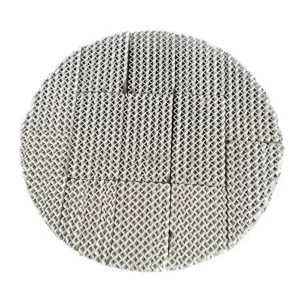
Transitioning a chemical absorption or distillation column from traditional random packing (such as Raschig or Pall rings) to corrugated ceramic structured packing (e.g., 250Y, 350Y, 500Y) dramatically impacts column hydrodynamics. Structured packing aligns liquid flow channels, creating uniform wetted surfaces while lowering gas-phase resistance.
| Performance Parameter | Ceramic Raschig Rings | Ceramic Pall Rings | Ceramic Corrugated Structured Packing (500Y) |
|---|---|---|---|
| Specific Surface Area (m²/m³) | 90 - 220 | 110 - 240 | 450 - 500 |
| Void Fraction (%) | 65% - 72% | 73% - 78% | 75% - 82% |
| Pressure Drop per Metre (mbar/m) | High (3.5 - 6.0) | Moderate (1.8 - 3.2) | Ultra-Low (0.3 - 0.9) |
| HETP (Height Equivalent to Theoretical Plate) | 600 - 900 mm | 450 - 650 mm | 200 - 350 mm |
| Fouling Sensitivity | Low | Low | Moderate (Requires clean liquid film) |
By adopting corrugated ceramic structured packing in re-boiled stripping towers or deep vacuum columns, UK process plants achieve up to a 30% reduction in reboiler steam consumption and significantly reduce parasitic fan electricity costs due to minimal pressure drops across the packing bed.
Proven operational performance across UK energy, chemical manufacturing, and environmental protection projects.
In Carbon Capture, Utilization, and Storage (CCUS) projects, amine-based solvents capture CO₂ from flue gases. Our high-efficiency ceramic corrugated structured packing (e.g., 250Y/350Y) provides large liquid-gas contact area while resisting oxidative amine degradation products and elevated temperatures during solvent stripping.
Commercial production of 98.5% H₂SO₄, oleum, and phosphoric acid demands ceramic materials that resist aggressive thermal shock and acidic corrosion. Our acid-resistant ceramic Raschig rings and Pall rings serve as durable packing media in drying and absorption towers operating under severe chemical duty.
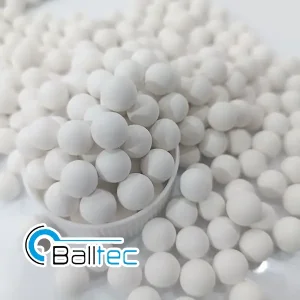
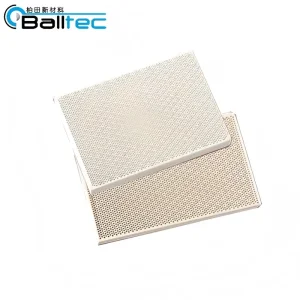
Regenerative Thermal Oxidizers (RTO) deployed across UK manufacturing facilities utilize inert alumina ceramic packing spheres and honeycomb beds to store and transfer process heat. Our 92% and 99% alumina media provide high volumetric heat capacity and mechanical strength, optimizing VOC destruction thermal efficiency.
Our technical R&D labs continue to advance ceramic mass transfer capabilities to meet evolving industrial demands. Through microstructural grain refinement, nano-composite additives, and advanced manufacturing techniques, our ceramic materials deliver elevated performance in high-pressure, thermal-cycling, and reactive gas operations.
Integrating sub-micron yttria-stabilized zirconia (3Y-TZP) phase particles into the alumina matrix induces stress-induced phase transformation toughening. This innovation raises fracture toughness ($K_{IC}$) to > 5.5 MPa·m½, rendering the ceramic packing resilient against severe hydraulic shock in multi-phase reaction towers.
By applying micro-etched ceramic surface patterns during extrusion, we lower the dynamic contact angle of aqueous liquids to under 15°. This ensures continuous liquid film spreading across corrugated structured packing surfaces even at low irrigation rates ($L < 2.5\text{ m}^3/\text{m}^2\cdot\text{h}$), eliminating dry spots and expanding column operational range.
Explore our export-ready range of random packings, corrugated structured plates, ceramic rings, and high-density grinding spheres engineered for UK and European buyers.
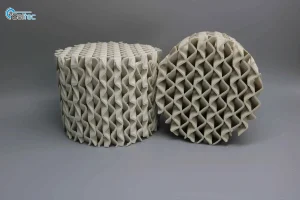
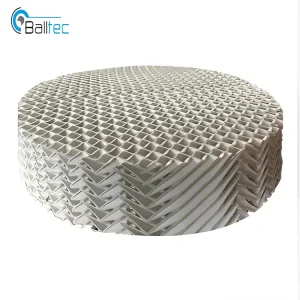
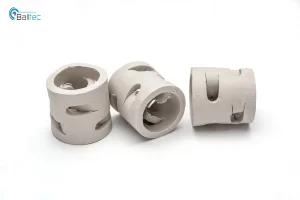
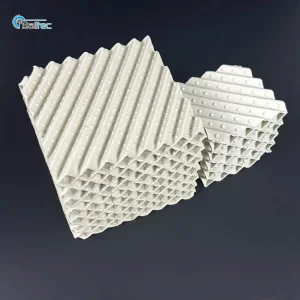
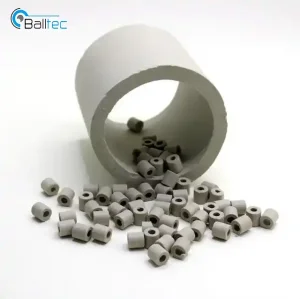
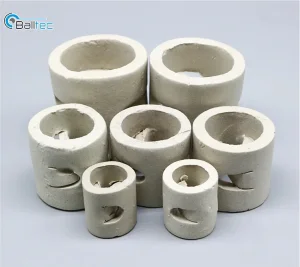
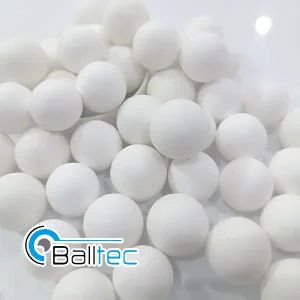
Exporting industrial ceramic packings to British chemical manufacturers and engineering contractors requires absolute compliance with European material safety standards and reliable international shipping protocols. We provide complete end-to-end supply chain integration tailored to UK procurement workflows.
Full material compliance support under UK REACH standards. All export batches are supplied with Material Safety Data Sheets (MSDS), Certificate of Analysis (COA), and chemical purity verification confirming freedom from SVHCs (Substances of Very High Concern).
Optimised container shipping routes to major British ports including Port of Felixstowe, Southampton, Liverpool, and Grangemouth. We provide FCL (Full Container Load) and LCL options packaged in heat-treated ISPM-15 compliant wooden crates and fumigated export pallets.
Our chemical process engineers assist UK engineering teams with column hydraulic calculations, packing bed height sizing ($HETP$), dry/wet packing bed installation guidance, and packing support grid design to ensure trouble-free startup.
Expert insights addressing key chemical compatibility, installation, and procurement questions.
Whether you are designing a new carbon capture column in Teesside, upgrading a sulfuric acid scrubber in Cheshire, or sourcing high-purity inert alumina balls for a refinery turnaround, our engineering team is ready to assist with technical recommendations and competitive factory-direct quotations.
Send Inquiry Now