Follow 


Engineered for extreme thermal resistance, acid survival, and optimized fluid dynamics in South American chemical and energy processing units.
As South America’s industrial powerhouse, Brazil presents a unique combination of large-scale bio-ethanol production, deepwater oil extraction (Pre-Salt fields), massive pulp and paper mills, and expanding chemical infrastructure. Operating within these sectors demands highly specialized chemical tower packings capable of withstanding corrosive organic acids, elevated hydraulic loads, and rigorous thermal cycling.
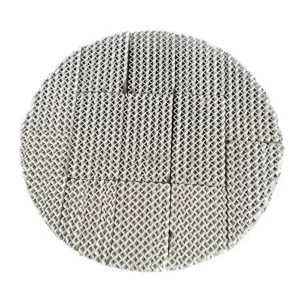
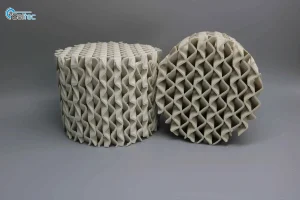
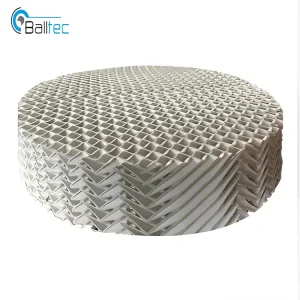
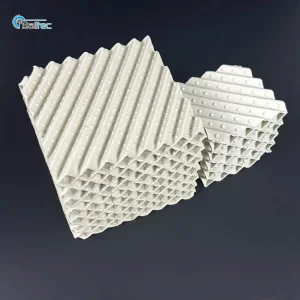
Brazil leads the world in sugarcane-based hydrous and anhydrous ethanol distillation. Modern bio-refineries located across São Paulo, Goiás, and Minas Gerais require custom structured ceramic corrugated packings. Our solutions ensure maximum vapor-liquid contact with minimal pressure drop, directly cutting boiler energy requirements and optimizing alcohol separation purity.
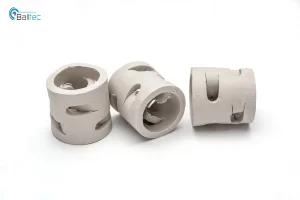
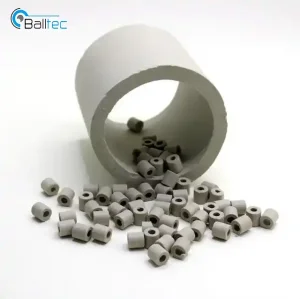
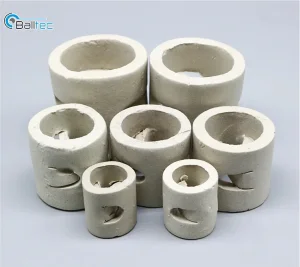
Downstream refining complexes like REPLAN, REDUC, and REPAR operate high-pressure hydroprocessing and gas sweetening towers. Ceramic Raschig and Pall rings deployed here must deliver exceptional crush strength, mechanical integrity under high liquid flux, and resistance to hydrogen sulfide ($H_2S$) and organic sulfur fouling.
Major forestry and pulp giants (e.g., Suzano, Klabin) utilize heavy-duty gas scrubbing towers and Regenerative Thermal Oxidizers (RTOs). Ceramic packings used in these acid recovery systems must resist aggressive $H_2SO_4$ concentrations at temperatures exceeding 300°C without mechanical degradation or silica leaching.
Selecting the ideal ceramic packing profile requires balancing specific surface area, void fraction, hydraulic loading limits, and chemical composition. Below is a detailed technical comparative analysis for EPC project managers and plant engineers.
| Packing Category / Geometry | Material Grade | Specific Surface Area ($m^2/m^3$) | Void Fraction ($\%$) | Bulk Density ($kg/m^3$) | Primary Industrial Application |
|---|---|---|---|---|---|
| Ceramic Corrugated 250Y | Porcelain / High Alumina | 250 | > 75% | 480 - 520 | Ethanol Distillation, Vacuum Dehydration Towers |
| Ceramic Corrugated 500Y | High Chemical Porcelain | 500 | > 70% | 550 - 620 | High-Purity Chemical Separation, Solvent Recovery |
| Ceramic Pall Ring (50mm) | Industrial Ceramic | 110 | 78% | 530 - 580 | Acid Gas Scrubbing, $H_2SO_4$ Drying Towers |
| Ceramic Raschig Ring (25mm) | Acid-Resistant Ceramic | 190 | 70% | 680 - 730 | Petrochemical Reaction Beds, Corrosive Liquid Contacting |
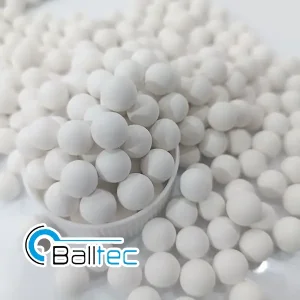
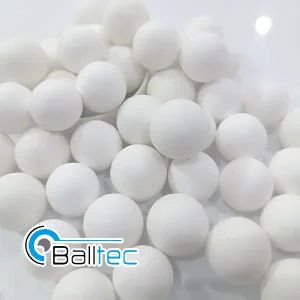
| Inert Alumina Balls (25%-99% $Al_2O_3$) | Synthetic Alpha-Alumina | N/A (Spherical) | 38 - 42% (Bed) | 1350 - 2050 | Refinery Catalyst Bed Support & Covering Media |
Custom kaolin-feldspar-alumina blending to guarantee zero free silica leaching in high-temperature alkaline or acid vapor streams.
High-pressure forming delivers uniform wall thickness, eliminating structural micro-cracks and ensuring high crush resistance.
Computer-controlled thermal profiles yield complete phase transformation to mullite and alpha-alumina crystalline matrices.
Every lot is subjected to thermal shock cycling ($1000^\circ\text{C}$ to ice water), acid loss verification, and mechanical loading test.
We supply comprehensive mass transfer packing schemes tailored to specific operational requirements across Brazilian chemical processing centers.
Replacing traditional random dump packings with Ceramic Corrugated Structured Packings (250Y / 500Y) reduces the Height Equivalent to a Theoretical Plate (HETP) by up to 35%. This transition dramatically minimizes liquid holdup, prevents channeling, and yields anhydrous ethanol concentrations meeting strict ANP (Agência Nacional do Petróleo) specifications.
Petrobras refineries require inert support media that will not plug catalyst beds or react with hydrocarbon feeds. Our Inert Alumina Packing Balls ($99\%\text{ }Al_2O_3$) feature low porosity, zero chemical reactivity, and exceptional crush resistance, supporting heavy catalyst beds in hydrocrackers, desulfurizers, and Claus units.
Located in Pingxiang, Jiangxi Province—China's global capital for industrial ceramic innovation—our integrated 100,000 m² campus combines automated raw material synthesis, precision molding, and digital quality control.
Our facility operates 6 high-capacity computer-controlled tunnel kilns capable of producing over 50,000 metric tons of chemical tower packing and ceramic media annually. This scale guarantees stable bulk pricing and reliable fulfillment for large-scale EPC revamps across South America.
From raw kaolin moisture analysis to X-ray fluorescence (XRF) element verification, every batch of ceramic packing undergoes extensive quality checks. We provide complete chemical assay certificates, crush test logs, and dimension inspection sheets prior to shipment.
Our direct export model eliminates intermediary markups. By maintaining long-term freight partnerships with major shipping lines connecting Ningbo/Shanghai directly to Santos and Paranaguá, we offer competitive CIF/DDP delivery terms.
Shipping heavy industrial ceramics across ocean routes requires strict compliance with international packaging regulations and Brazilian customs standards.
All structured packings and ceramic balls are packed in heavy-duty, moisture-proof, double-walled jumbo bags ($1000\text{ }kg$ capacity) or reinforced fumigated wooden crates compliant with ISPM-15 standards. This prevents moisture ingress during maritime transit across equatorial waters.
We provide full support for Brazilian customs clearance (Siscomex system integration), issuing precise NCM (Nomenclatura Comum do Mercosul) product classifications, Form E/Certificate of Origin, commercial invoices, and packing lists tailored for seamless clearance at Port of Santos and Paranaguá.
Every shipment is delivered with comprehensive batch test reports (Certificate of Analysis - COA) detailing chemical composition, water absorption rate, crush strength, and density, ensuring total compliance with your engineering team's specs.
Key technical and commercial queries regarding chemical packing selection, delivery to Brazil, and operational parameters.
Explore our complete range of random packings, corrugated structured blocks, and microcrystalline grinding media exported directly to Brazilian industrial buyers.
Looking for optimized mass transfer efficiency, lower pressure drop, or robust catalyst support media tailored for your Brazilian industrial plant? Speak directly with our chemical ceramic engineering team.
Send Inquiry Now