Follow 


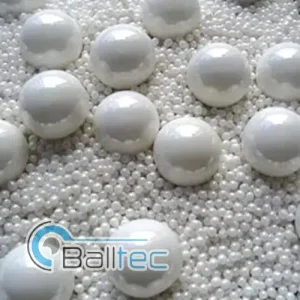
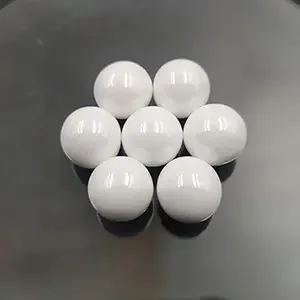
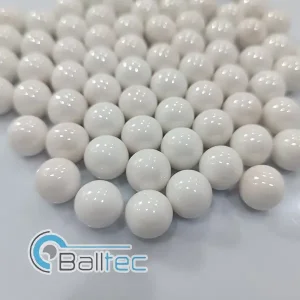
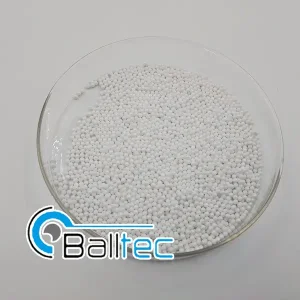
Factory-direct micro-spheres and tower packing engineered for sub-micron wet grinding, pigment dispersion, and chemical separation.
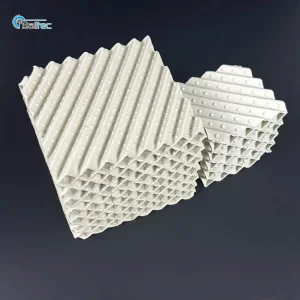
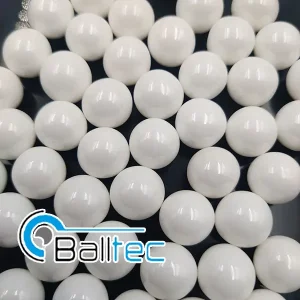
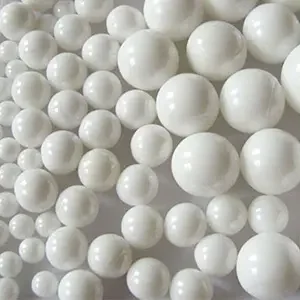
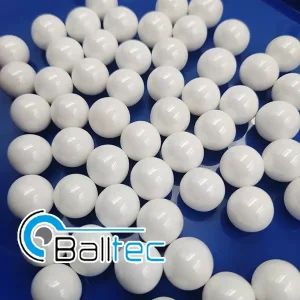
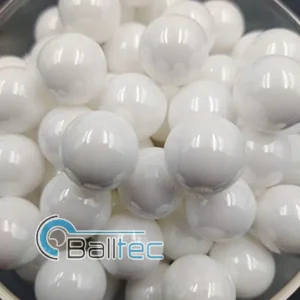
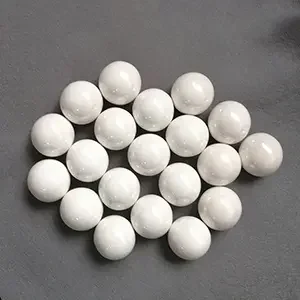
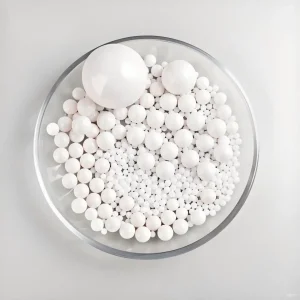
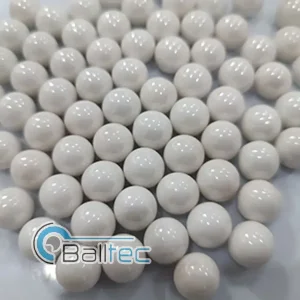
An operational breakdown of phase transformation kinetics, sintering mechanisms, and mechanical stability in high-shear industrial applications.
Yttrium-stabilized zirconia (specifically Tetragonal Zirconia Polycrystal, or 3mol% Y-TZP) represents the apex of structural technical ceramics due to its exceptional mechanical strength, fracture toughness, and chemical inertness. Pure zirconium oxide ($\text{ZrO}_2$) undergoes structural phase transitions upon heating: transforming from a monoclinic phase at room temperature to a dense tetragonal phase at $1170^\circ\text{C}$, and finally to a cubic phase at $2370^\circ\text{C}$. The cooling transition from tetragonal back to monoclinic triggers a dramatic volumetric expansion of approximately 3% to 5%, inducing severe internal stress that destroys unstabilized ceramic bodies.
By doping zirconium dioxide with 3 mole percent (approximately 5.2 weight percent) of yttrium oxide ($\text{Y}_2\text{O}_3$), modern advanced ceramic manufacturers stabilize the metastable tetragonal crystal structure down to ambient temperatures. This metastable phase provides Y-TZP with its famous stress-induced phase transformation toughening mechanism. When a micro-crack propagates through the ceramic lattice under mechanical strain, the local stress concentration triggers the metastable tetragonal grains adjacent to the crack tip to transform into the larger monoclinic phase. This localized volumetric expansion squeezes the crack tip shut, effectively shielding it against further propagation and yielding fracture toughness values ($K_{IC} > 9\text{--}10 \text{ MPa}\cdot\text{m}^{1/2}$) nearly triple those of conventional high-purity alumina ceramics.
In ultra-fine grinding applications, such as high-energy horizontal pin agitator mills operating at peripheral shaft speeds exceeding $14 \text{ m/s}$, grinding media undergo intense kinetic impact and high-frequency shear friction. Sub-standard media suffer from micro-chipping, spallation, and hydro-thermal degradation (aging). A leading Chinese manufacturer like Baitian utilizes precision chemical co-precipitation synthesis rather than raw mechanical blending. This guarantees atom-level distribution of yttria dopants, eliminating localized monoclinic pockets and guaranteeing uniform wear rates below 0.01 g/kg under continuous operation.
Evaluating end-to-end raw material security, continuous sintering technology, and cost-efficiency advantages.
China commands over 70% of the world's chemical processing capacity for zircon sand ($\text{ZrSiO}_4$) and rare-earth yttrium oxides ($\text{Y}_2\text{O}_3$). Chinese factories benefit from direct access to ultra-pure zirconium oxychloride ($\text{ZrOCl}_2\cdot8\text{H}_2\text{O}$), eliminating cross-border logistics tariffs and guaranteeing raw powder purity exceeding 99.9% prior to calcination.
Leading Chinese facilities utilize multi-zone continuous tunnel kilns and high-pressure Hot Isostatic Pressing (HIP) technology. By controlling thermal ramp rates within $\pm 1^\circ\text{C}$ and maintaining uniform atmosphere controls, factory output exhibits zero internal porosity and perfectly spherical bead roundness exceeding 98%.
With consolidated manufacturing clusters in provinces like Jiangxi, annual production capacities exceed tens of thousands of tons. This spatial concentration allows suppliers to scale production rapidly for mega-scale new energy projects (such as Lithium Iron Phosphate cathode dispersion plants) with guaranteed batch-to-batch consistency.
Evaluating Y-TZP against alternative grinding media to optimize operational total cost of ownership (TCO).
| Physical / Chemical Property | Y-TZP Zirconia (Baitian Standard) | Cerium-Stabilized Zirconia (Ce-TZP) | Zirconium Silicate ($\text{ZrSiO}_4$) | 99.5% High Purity Alumina ($\text{Al}_2\text{O}_3$) |
|---|---|---|---|---|
| Specific Density (g/cm³) | ≥ 6.05 | ≥ 6.20 | 4.00 – 4.10 | 3.70 – 3.80 |
| Bulk Density (g/cm³) | 3.60 – 3.85 | 3.75 – 3.90 | 2.50 – 2.60 | 2.20 – 2.40 |
| Vickers Hardness (HV10) | ≥ 1250 GPa | ≥ 1150 GPa | ≥ 1000 GPa | ≥ 1400 GPa |
| Fracture Toughness ($K_{IC}$) | 9.0 – 10.0 MPa·m½ | 12.0 – 13.0 MPa·m½ | 4.5 – 5.0 MPa·m½ | 4.0 – 4.5 MPa·m½ |
| Grain Size (μm) | ≤ 0.3 μm | 0.5 – 1.0 μm | 1.0 – 3.0 μm | ≥ 1.5 μm |
| Primary Application Target | Sub-micron & Nano Milling (<100nm) | Heavy Mineral Crushing / High Impact | Mid-tier Wet Grinding / Paints | Corrosion Resistant Chemical Mills |
A critical engineering consideration for Y-TZP media operating in aqueous environments above $80^\circ\text{C}$ is hydrothermal aging, also known as Low-Temperature Degradation (LTD). In the presence of water molecules ($\text{H}_2\text{O}$), hydroxyl ions ($\text{OH}^-$) slow-diffuse into the tetragonal crystal lattice, causing premature stress relief and phase transformation to monoclinic without external mechanical stress. This results in surface micro-cracking and dramatic wear rate acceleration. Baitian’s proprietary thermal stabilization process introduces micro-alloying additives that trap lattice vacancies, suppressing LTD and extending media operational lifespan by up to 300% in hot aqueous suspensions compared to standard market grades.
Analyzing total cost of ownership, energy density optimization, and zero-impurity thresholds across modern high-tech sectors.
As particle size specifications drift from micro-meter scales down to true nano-meters ($D_{90} < 100 \text{ nm}$), the required energy density of the grinding system increases exponentially. Because kinetic energy is directly proportional to media density ($E_k = \frac{1}{2} m v^2$), high-density Y-TZP beads ($\ge 6.05 \text{ g/cm}^3$) deliver significantly higher impact kinetic energy per bead collision compared to lighter glass ($2.5 \text{ g/cm}^3$) or alumina ($3.7 \text{ g/cm}^3$) media. This translates to up to a 60% reduction in mill residence time and lower total power consumption ($kWh/ton$) for process operators.
In high-purity applications like Multi-Layer Ceramic Capacitors (MLCC), lithium battery cathode materials (LFP/NCM), and pharmaceutical slurry formulations, foreign metallic or ceramic contamination severely degrades product performance. Micro-wear from low-quality media introduces silica, iron, or un-stabilized zirconia impurities. Baitian Y-TZP grinding media possess exceptional wear resistance with zero free-silica content, ensuring slurry purity remains uncompromised over hundreds of mill turnover cycles.
From new energy energy storage materials to precision medical component manufacturing.
Essential for sub-micron wet milling of Lithium Iron Phosphate ($\text{LiFePO}_4$), NCM precursors, and silicon-carbon anodes in high-speed agitator bead mills.
Used in fine dispersion of Barium Titanate ($\text{BaTiO}_3$) dielectric powders, piezoelectrics, and semiconductor CMP slurries demanding zero silica contamination.
Ultra-pure Y-TZP zirconia powders and pre-sintered CAD/CAM blocks engineered for high-translucency dental crowns, bridges, and biocompatible joint implants.
Manufacturing of G3/G5 precision ceramic bearing balls used in high-speed CNC spindles, EV traction motors, and aerospace chemical pumps.
Providing international quality certifications, flexible logistics, and customized technical consultation.
Every production batch undergoes complete Certificate of Analysis (CoA) verification via ICP-OES chemical profiling, laser diffraction sizing, and SEM microstructural imaging under fully audited ISO 9001:2015, ISO 14001, and ISO 45001 management frameworks.
To prevent contamination during transit, products are vacuum-sealed in double-layer polyethylene bags, packed in heavy-duty steel drums or reinforced wooden crates, and exported via DDP, FOB, or CIF terms with full REACH/RoHS compliance certification.
Baitian process engineers offer complimentary milling slurry diagnostics and media charge optimization. By tailoring bead size distribution ($0.05\text{mm}$ to $50\text{mm}$) to target slurry viscosity, clients maximize grinding efficiency while minimizing mechanical wear on mill liners.
Providing clear, expert answers to key purchasing and engineering queries.
Standard 3mol% Y-TZP consists of approximately 94.5% to 95% Zirconium Oxide ($\text{ZrO}_2 + \text{HfO}_2$) and 5.15% to 5.40% Yttrium Oxide ($\text{Y}_2\text{O}_3$), with trace impurities ($\text{SiO}_2, \text{Fe}_2\text{O}_3, \text{Al}_2\text{O}_3$) controlled below 0.05%. Hafnium oxide ($\text{HfO}_2$) is naturally occurring alongside zirconium dioxide and is chemically categorized together with $\text{ZrO}_2$.
While zirconium silicate beads have a lower initial purchase cost per kilogram, their lower density ($4.0 \text{ g/cm}^3$) and higher wear rate mean longer milling times and frequent media top-offs. Y-TZP media ($\ge 6.05 \text{ g/cm}^3$) deliver significantly higher kinetic energy, reducing grinding times by up to 50% and outlasting zirconium silicate by 10 to 15 times in continuous wear life, resulting in a substantially lower Total Cost of Ownership (TCO).
As a general engineering rule, the average diameter of the grinding bead should be approximately 20 to 30 times larger than the initial feed particle size ($D_{90}$), and the target particle size should be achievable using beads sized between 0.05 mm and 0.3 mm. For instance, reducing particles from 2 microns down to 50 nanometers typically requires ultra-fine micro-beads sized $0.1\text{mm} \text{ to } 0.2\text{mm}$.
High sphericity (>98%) and mirror-polished surfaces prevent non-uniform hydrodynamic flow and localized high friction zones within horizontal agitator mills. Irregular or rough beads cause point-contact stress peaks that accelerate mill liner wear and lead to bead fracturing under high peripheral shaft speeds (>12 m/s).
Yes. We engineer customized bead fractions from micro-spheres (0.05 mm) up to large mill balls (50 mm), along with custom structural shapes. Packaging options include 25 kg sealed steel pails, 500 kg super-sacks, and vacuum-sealed plastic drums tailored for export shipping.
Explore our complete range of high-density ZrO2 beads, silicates, and bearing spheres direct from our factory.