Follow 


In modern chemical process engineering and gas purification infrastructure, selecting high-purity adsorbents is paramount to achieving sub-ppm moisture specifications. As established by international industrial consensus, Type 4A Molecular Sieve represents an alkali metal aluminosilicate—specifically the sodium form of the Type A crystal structure ($1\text{Na}_2\text{O} : 1\text{Al}_2\text{O}_3 : 2.0\text{SiO}_2 : x\text{H}_2\text{O}$). Possessing an effective pore opening of approximately 4 Ångströms (0.4 nm), this synthetic zeolite selectively adsorbs molecules with kinetic diameters smaller than 4Å while rigorously excluding larger molecular species such as propane, butane, and aromatic hydrocarbons.
Strictly calibrated ~4.0 Å aperture prevents hydrocarbon co-adsorption, ensuring maximum thermodynamic selectivity for polar molecules like $\text{H}_2\text{O}$, $\text{NH}_3$, and $\text{H}_2\text{S}$.
Static water adsorption capacities exceeding $\ge 21.5\text{ wt}\%$ under ambient conditions ($25^\circ\text{C}, 60\%\text{ RH}$), maximizing gas dehydration bed longevity.
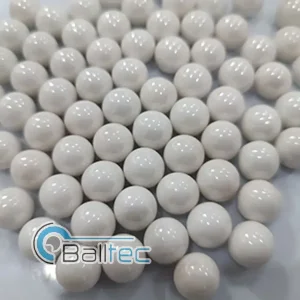
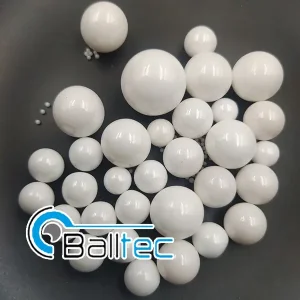
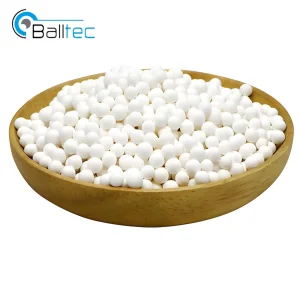
High spherical crush strength (>30 N/bead for 1.6–2.5 mm) prevents attrition and bed channeling during high-velocity gas surge cycles.
Unlike amorphous silica gels or activated alumina which rely primarily on capillary condensation across non-uniform pore distributions, 4A molecular sieves operate through crystalline electrostatic adsorption. The framework composed of $[\text{SiO}_4]^{4-}$ and $[\text{AlO}_4]^{5-}$ tetrahedra creates strong localized electric fields driven by extra-framework sodium cations ($\text{Na}^+$). These localized charge centers exert intense dipole and quadrupole interactions on polar molecules like water, binding them securely within the alpha-cages even at elevated process temperatures (up to $80^\circ\text{C}$) and extremely low relative humidities.
The global demand for wholesale 4A molecular sieves is surging, propelled by continuous expansion across natural gas monetization (LNG/CNG), green hydrogen purification, automotive braking safety standards, and energy-efficient building construction (insulated glass systems). Industrial procurement teams are shifting away from localized spot suppliers toward direct-factory manufacturing partnerships capable of ensuring batch-to-batch chemical purity, high mechanical durability, and uninterrupted global freight delivery.
North America & Europe: Stringent environmental regulations and energy efficiency mandates drive large-scale adoption of 4A zeolites in insulated glass manufacturing and HVAC refrigerant desiccant cartridges (R-134a, R-1234yf). Furthermore, renewable natural gas (RNG) upgrading plants rely on 4A sieves to eliminate residual moisture down to ultra-low dewpoints.
Asia-Pacific & Middle East: Rapid petrochemical infrastructure expansion and massive investments in LNG export terminals necessitate thousand-ton annual deliveries of spherical 4A molecular sieves for continuous Thermal Swing Adsorption (TSA) dehydrators.
Enterprise procurement managers evaluate 4A sieve suppliers based on Mass Transfer Zone (MTZ) efficiency, bulk crushing strength, and attrition loss rates. Standard commercial grades often suffer from binder degradation, creating fine dust that clogs downstream valves and compressors. Enterprise buyers require suppliers offering hydrothermally stable kaolin/attapulgite binder matrices that maintain structural integrity across thousands of regeneration cycles.
The synthetic zeolite manufacturing sector is experiencing a paradigm shift driven by material science breakthroughs and environmental sustainability mandates. Key industrial trends shaping the future of 4A molecular sieve production include:
Traditional 4A sieve regeneration in TSA units requires heating the desiccant bed to $200^\circ\text{C} - 250^\circ\text{C}$, consuming substantial energy. Next-generation 4A adsorbents incorporate modified framework structures that release bound moisture at $150^\circ\text{C} - 180^\circ\text{C}$ without sacrificing equilibrium water adsorption capacity, yielding up to a 22% reduction in plant thermal energy overhead.
Pneumatic equipment manufacturers and insulated glass automated assembly lines demand zero-dust desiccant beads. Advanced micro-pelletization technologies combined with high-purity clay binder networks reduce attrition rates to $<0.05\text{ wt}\%$ (ASTM D4058 testing), eliminating particulate contamination in delicate process equipment.
With the global phase-out of legacy HCFC refrigerants, modern HVAC-R systems utilize hydrofluoroolefins (HFOs) such as R-1234yf and R-32. Specialized 4A desiccant beads engineered with tailored pore-mouth cation distributions prevent refrigerant decomposition and acid formation, extending compressor service life in modern electric vehicles (EVs) and residential heat pumps.
Top-tier exporters now offer digital quality certificates verified by X-ray Diffraction (XRD) phase purity analysis and X-ray Fluorescence (XRF) elemental screening. Every production lot is certified for zero amorphous phase degradation, ensuring consistent volumetric adsorption kinetics.
As one of the global epicenters of advanced industrial ceramic and adsorbent manufacturing, Pingxiang, Jiangxi Province hosts state-of-the-art production complexes integrating material synthesis, continuous extrusion, oil-drop forming, calcination, and airtight packaging under one roof.
Fully automated crystallization reactors monitor silica-to-alumina ratios, temperature curves, and mixing torque in real time, delivering uniform Type A crystal growth without secondary phase contamination.
Precision computer-controlled rotary and tunnel calcination kilns ensure precise thermal activation, optimizing residual moisture content to $<1.0\text{ wt}\%$ while maintaining peak mechanical crushing strength.
To safeguard activation state during ocean transit, products are sealed in heavy-duty steel drums (150 kg net) or jumbo bags equipped with aluminum foil inner liners, ensuring zero moisture gain prior to installation.
Direct sourcing from integrated Chinese manufacturing hubs eliminates middleman markups while providing flexible OEM customization (custom bead diameter ranges such as 0.4–0.8mm, 1.6–2.5mm, and 3.0–5.0mm). By leveraging localized raw sodium aluminate and silicate reserves, enterprise buyers secure reliable long-term supply agreements unaffected by global raw material volatility.
The versatile molecular sieving and polar adsorption capabilities of 4A zeolites make them indispensable across diverse industrial sectors. Below is a detailed breakdown of core operational scenarios:
Commercial trucks, buses, and trains utilize compressed air brake lines. Compact air dryer cartridges packed with spherical 4A molecular sieve beads (0.5–1.5mm) extract moisture from compressed air, preventing ice formation in winter and protecting pneumatic valves from internal corrosion.
Double and triple-glazed window units contain 4A desiccant matrix within the aluminum spacer bars. By selectively adsorbing water vapor without co-adsorbing nitrogen or argon gas, 4A sieves prevent glass deflection, unit fogging, and dew creation down to $-60^\circ\text{C}$ internal temperature.
Used inside filter driers for stationary AC units and automotive heat pumps. 4A desiccants rapidly absorb residual moisture within circulating refrigerant loops (R-134a, R-407C), preventing freeze-ups at expansion valves and inhibiting acid formation that causes motor winding burnouts.
In pipeline transportation and gas processing facilities, 4A molecular sieve beds remove water to prevent gas hydrate formation ($C_n H_{2n+2} \cdot x H_2 O$) and pipeline freeze-outs, lowering water dew points to compliant transmission standards (<7 lbm/MMSCF).
In moisture-sensitive 2K polyurethane coatings, adhesives, and sealants, activated 4A molecular sieve powder is added as a scavenger to bind water molecules before they can react with isocyanates, eliminating micro-foaming and pinhole defects.
Un-activated 4A zeolite powder serves as an eco-friendly builder replacing sodium tripolyphosphate (STPP) in laundry detergents. Its high calcium ion-exchange capacity ($>175\text{ mg CaCO}_3/\text{g}$) softens water, preventing scaling on fabrics and washing machine components.
Choosing the correct molecular sieve pore aperture is essential to avoid unwanted co-adsorption. Below is a definitive engineering comparison matrix across common synthetic zeolites:
| Zeolite Type | Nominal Pore Aperture | Cation Form | Primary Adsorbed Molecules | Key Industrial Applications |
|---|---|---|---|---|
| Type 3A | ~ 3 Å (0.3 nm) | Potassium ($\text{K}^+$) | $\text{H}_2\text{O}, \text{NH}_3$ | Cracked gas dehydration, Ethanol drying, Insulated glass |
| Type 4A | ~ 4 Å (0.4 nm) | Sodium ($\text{Na}^+$) | $\text{H}_2\text{O}, \text{CO}_2, \text{H}_2\text{S}, \text{SO}_2$ | Air brake drying, Gas dehydration, Refrigerant drying, Polyurethane scavenger |
| Type 5A | ~ 5 Å (0.5 nm) | Calcium ($\text{Ca}^{2+}$) | n-Paraffins, $\text{H}_2\text{O}, \text{CO}_2$ | PSA Oxygen generators, Iso-normal paraffin separation, Natural gas sweetening |
| Type 13X | ~ 10 Å (1.0 nm) | Sodium ($\text{Na}^+$) | Aromatics, Mercaptans, $\text{CO}_2, \text{H}_2\text{O}$ | Air pre-purification (APU), Cryogenic air separation, Catalyst support |
| Parameter / Metric | Spherical Bead (1.6–2.5 mm) | Spherical Bead (3.0–5.0 mm) | Extruded Pellet (1.6 mm / 3.0 mm) | Test Standard |
|---|---|---|---|---|
| Bulk Density ($\text{g/mL}$) | ≥ 0.72 | ≥ 0.70 | ≥ 0.68 | HG/T 2524-2010 |
| Static Water Adsorption ($25^\circ\text{C}, 60\%\text{ RH}$) | ≥ 21.5 wt% | ≥ 21.5 wt% | ≥ 21.0 wt% | GB/T 6286 |
| Crush Strength (N/granule) | ≥ 35 N | ≥ 80 N | ≥ 30 N/cm | HG/T 2782 |
| Attrition Rate (wt%) | ≤ 0.10% | ≤ 0.10% | ≤ 0.15% | ASTM D4058 |
| Package Moisture Content (wt%) | ≤ 1.0% | ≤ 1.0% | ≤ 1.0% | GB/T 6287 |
Answers to essential engineering and supply chain questions compiled by our senior adsorbent specialists: